Ceiling Water Damage in Phoenix, AZ
A stain on the ceiling is the visible end of a leak that started somewhere else — an attic supply line, an upstairs bathroom, a roof leak, or an AC condensate drain. And a ceiling that sags or bulges is holding water, which makes it a safety problem before it is a repair problem. This page explains what to do first, where ceiling water comes from in Phoenix homes, how ceilings are dried, and where the drying job ends and the rebuild begins.
Need help with water damage?
Call Now to reach a local water damage professional. Describe the water, where it is, and what it has touched.
Hours: Mon–Fri 7:00 AM–10:00 PM ET · Sat 8:00 AM–10:00 PM ET · Sun 7:00 AM–9:00 PM ET
What this service does
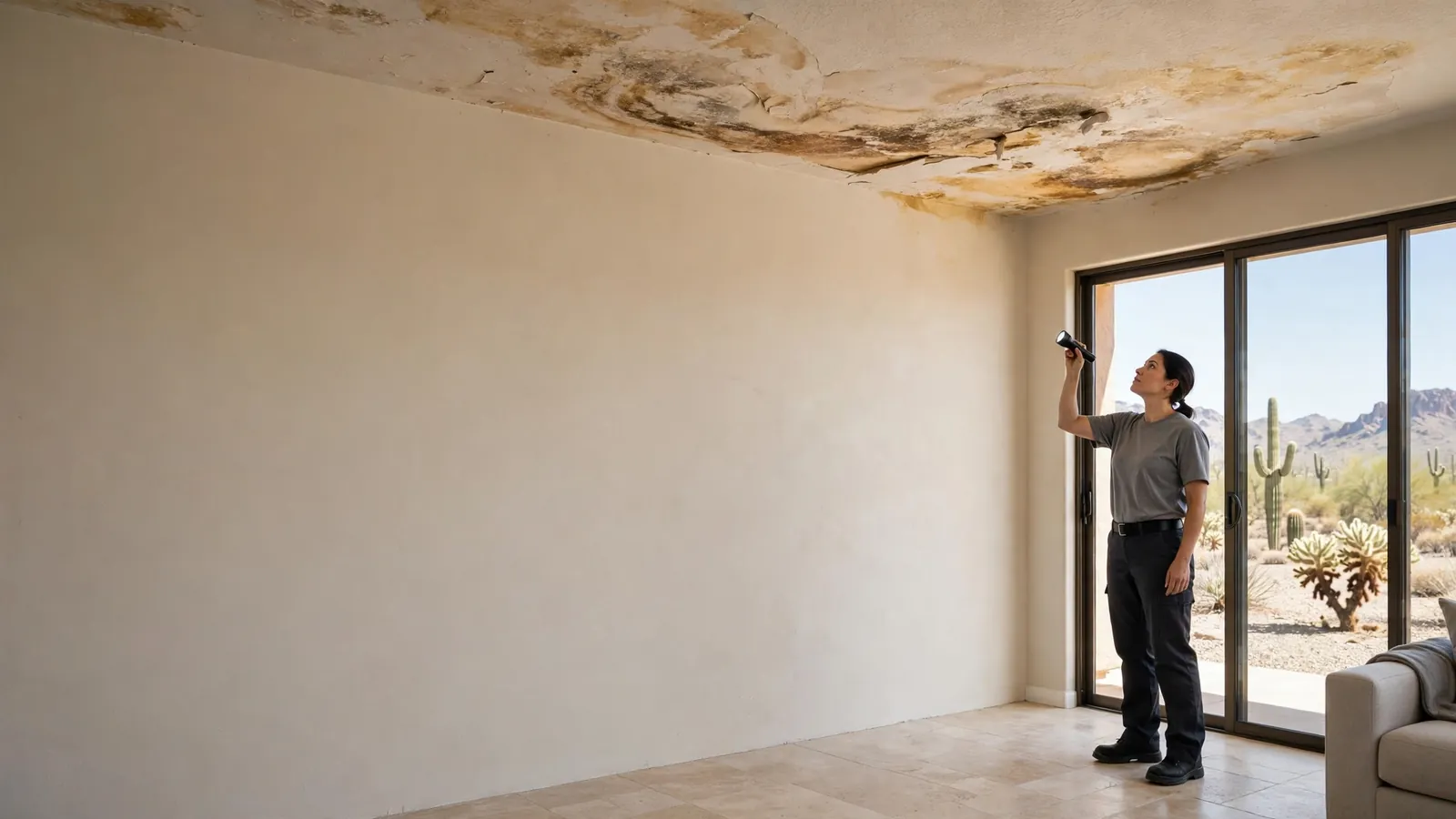
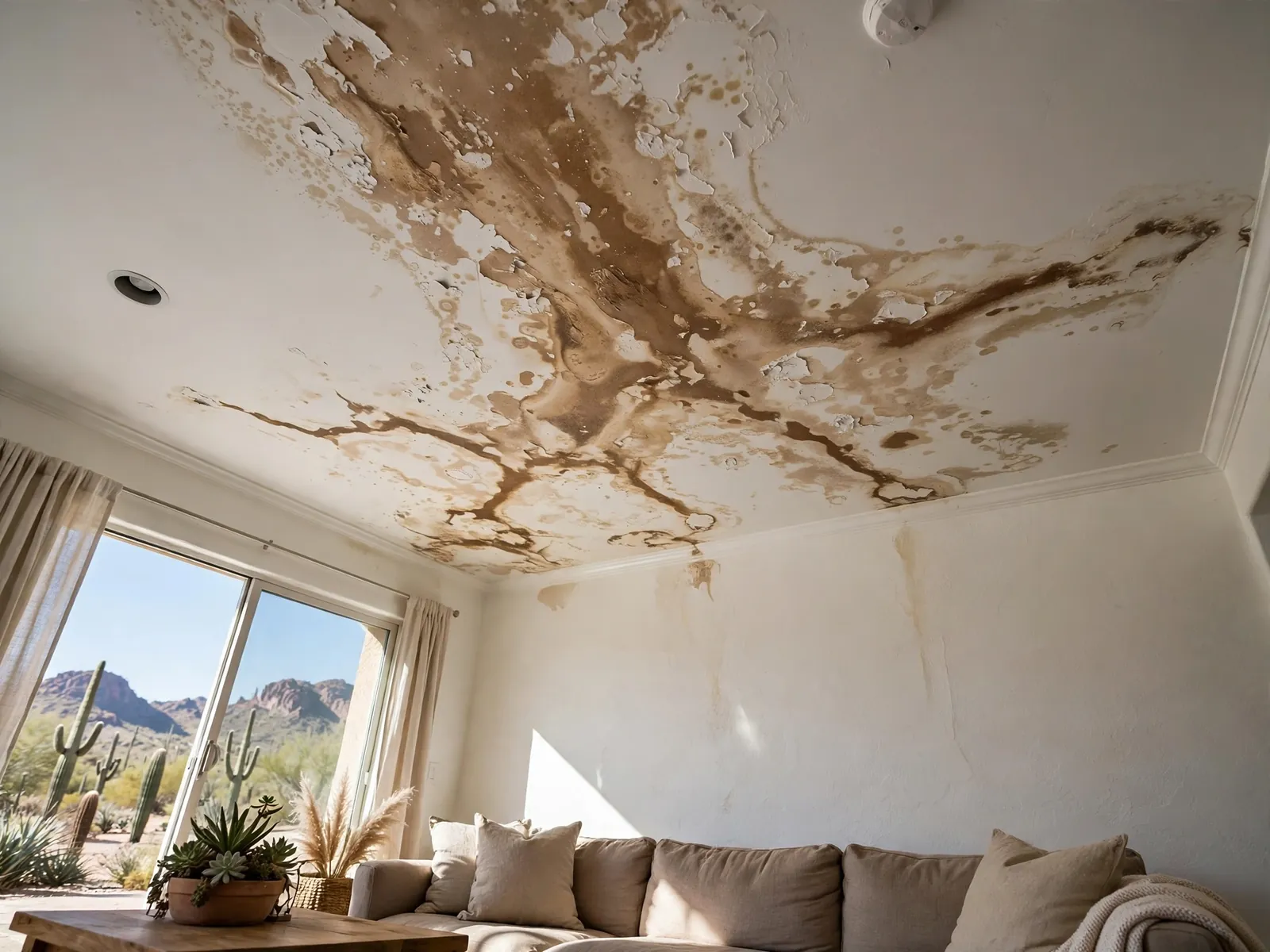
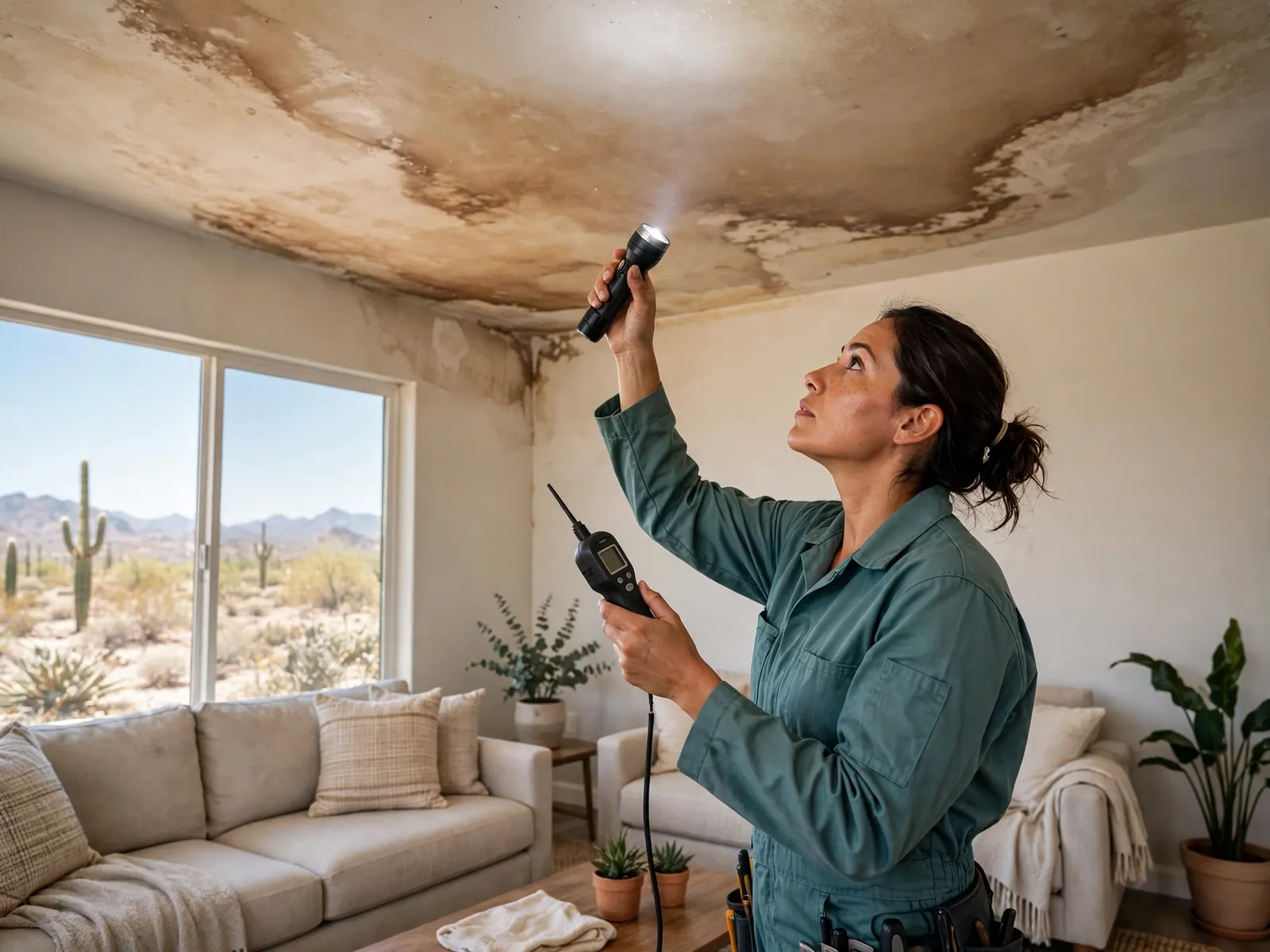
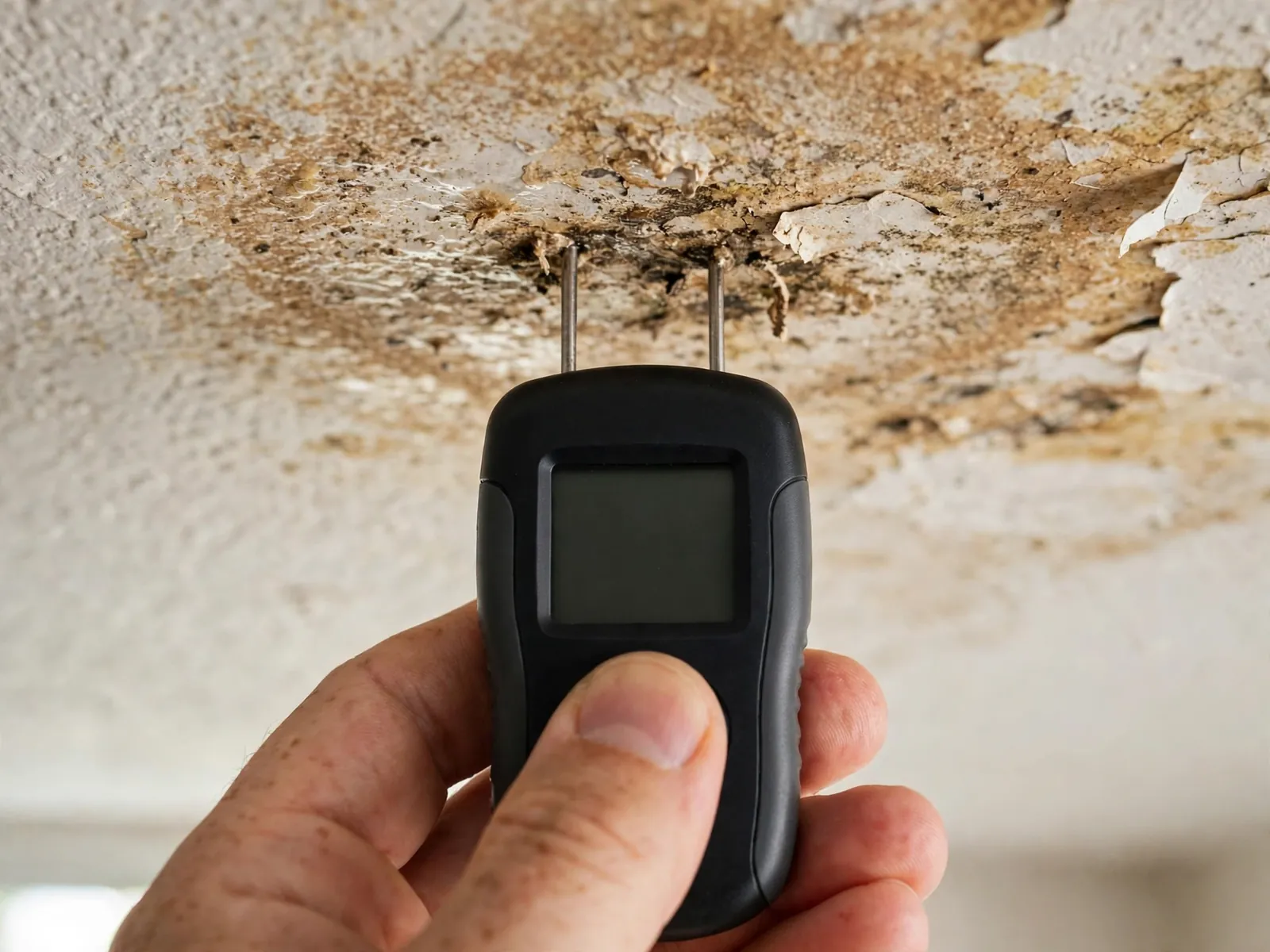
A ceiling stain is easy to dismiss. It is small, it is above eye level, and it does not drip — so it waits. But a stain on a ceiling means water has already travelled through the floor above, the ceiling drywall, and possibly the insulation between them. The surface can look dry while the inside of the drywall and the insulation above it are still wet, and the smell arrives weeks later. A ceiling stain is checked with a moisture meter even when it looks old and dry.
A sagging or bulging ceiling is a different matter, and it is urgent. The ceiling is holding water — sometimes a surprising amount of it — and its weight is what brings it down. Stay out from under it. Keep everyone else out too. Do not poke it, do not push on it, and do not put a bucket under it and wait. Move furniture out of the way if you can do so safely, and call. The ceiling is not going to get better on its own.
Phoenix ceilings have their own sources. Attic supply lines run through attics that reach 150 to 170 degrees in July, and a fitting that lets go up there sends water down through the ceiling below. Upstairs bathrooms sit directly above the ceilings that stain — a toilet valve, a shower drain, or a supply hose in the bathroom above becomes the stain in the room below. Roof leaks during monsoon bursts come through the attic and land on the ceiling first. And AC condensate drains, clogged with hard-water minerals, drip from attic air handlers onto the ceiling below.
The job of this page is to separate three questions that get mixed together: is the ceiling safe, where is the water coming from, and can the ceiling be dried or does it need to come down. The first is answered in minutes. The second takes a moisture map and a look at the space above the ceiling. The third is decided by readings, not by the look of the stain.
One thing people get wrong about ceiling water damage is the order of the work. The ceiling is dried only after the source is stopped — drying a ceiling while the pipe above it is still leaking is drying a ceiling that will be wet again tomorrow. The source is fixed first, by a plumber or a roofer as the source requires, and the drying follows.
Before you call
- Shut off the main water supply if it is safe to do so.
- Move valuables, rugs and electronics off wet floors.
- Take photos of the water and the damage for your records.
- Stay away from wet outlets, switches and light fixtures.
- Note when the water started and what caused it, if you know.
Where ceiling water comes from in a Phoenix home
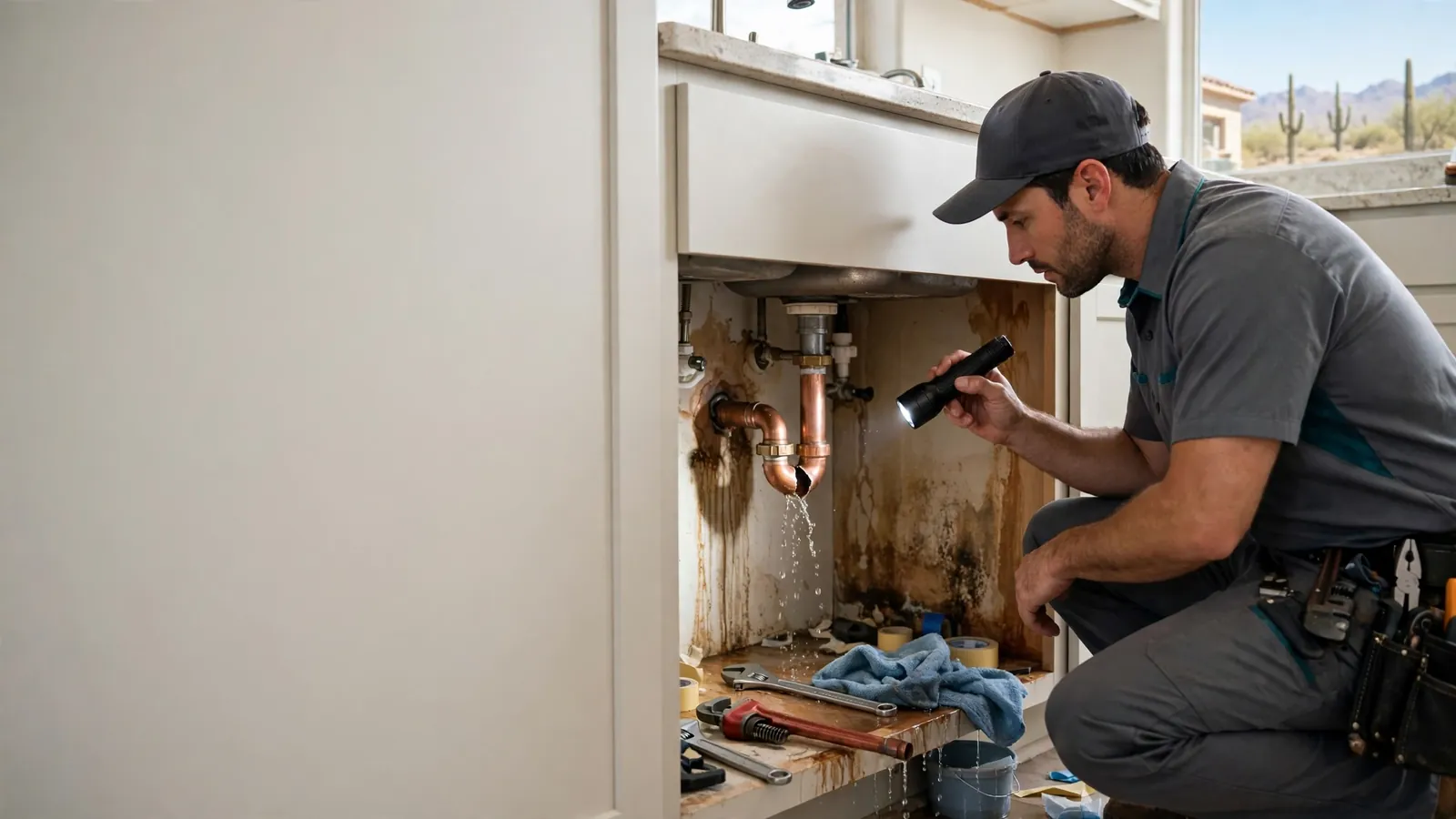
The first step is to find the source, because the source decides everything else. An attic supply line leaves water in the attic insulation and the ceiling below it. An upstairs bathroom leaves water in the floor of the bathroom above and the ceiling of the room below. A roof leak leaves water in the attic first, then the ceiling. An AC condensate leak leaves water around the air handler, then the ceiling beneath it. The stain looks the same from below; the map above it tells them apart.
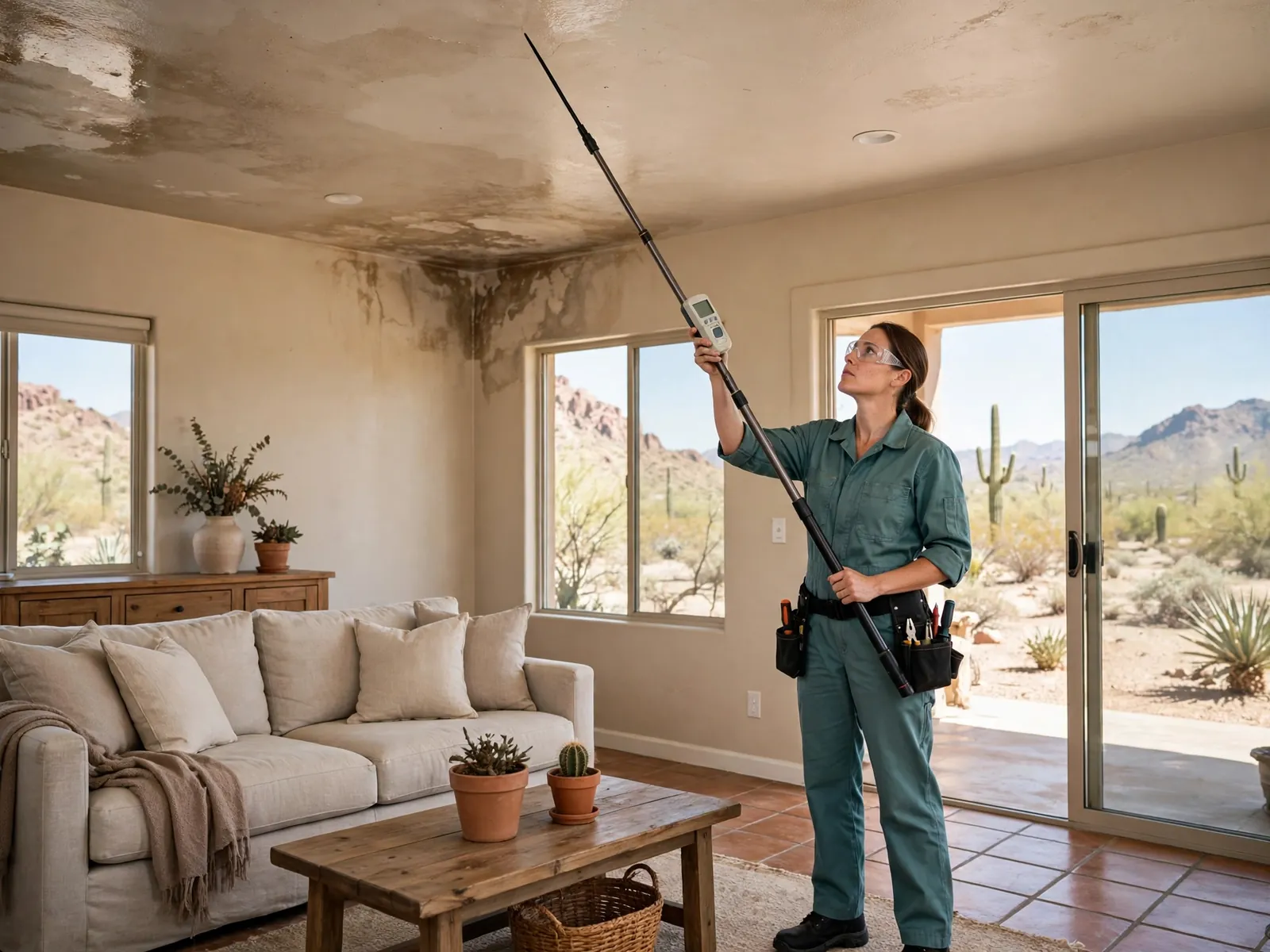
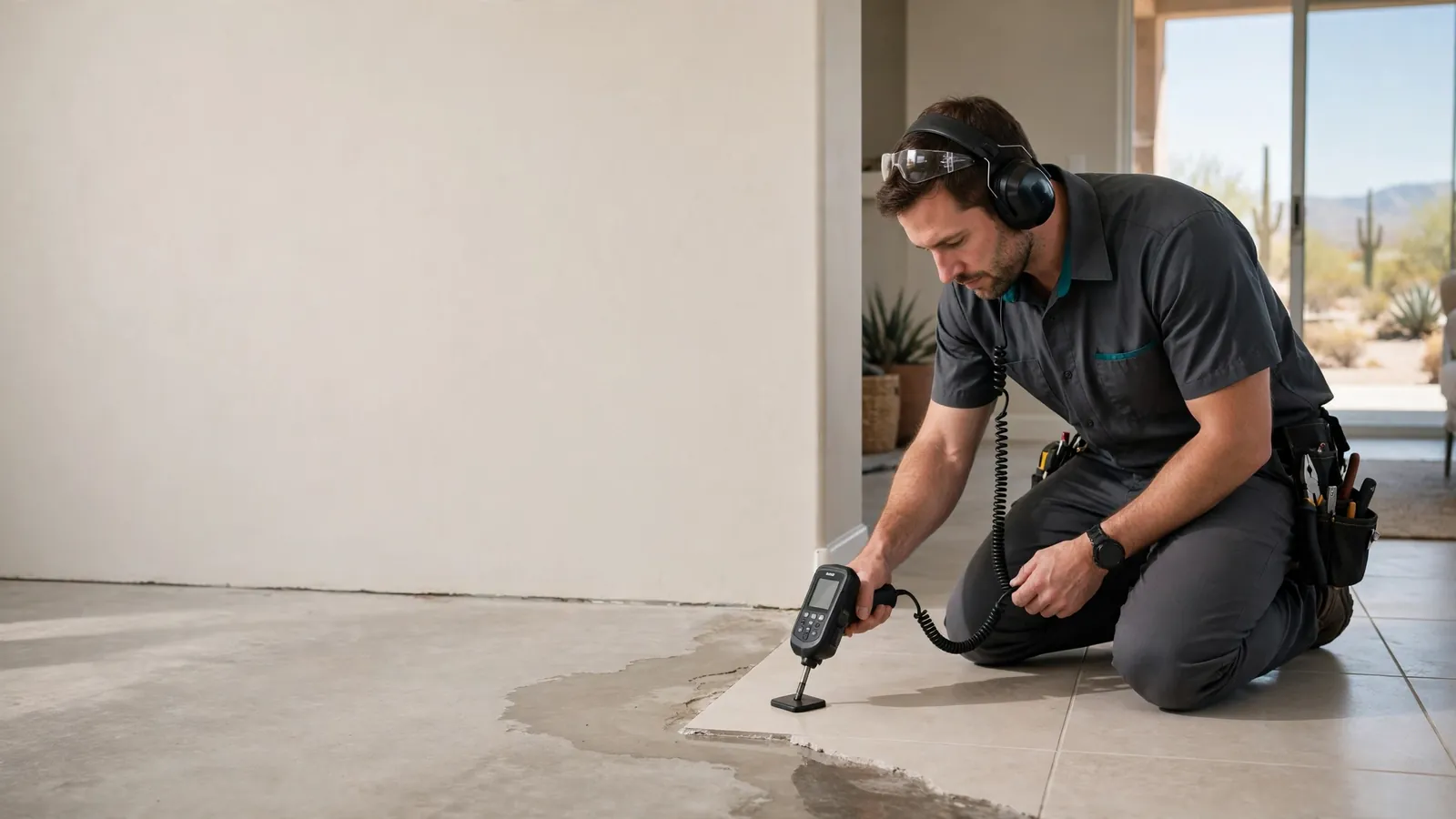
Moisture readings are taken from below, through the drywall, and the space above the ceiling is checked where it can be reached — the attic, or the floor of the room above. A thermal camera can show where water has travelled behind the ceiling and under the flooring, where a meter alone would take longer to map. The readings are written down, because the drying plan and the final check both depend on knowing what was wet at the start.
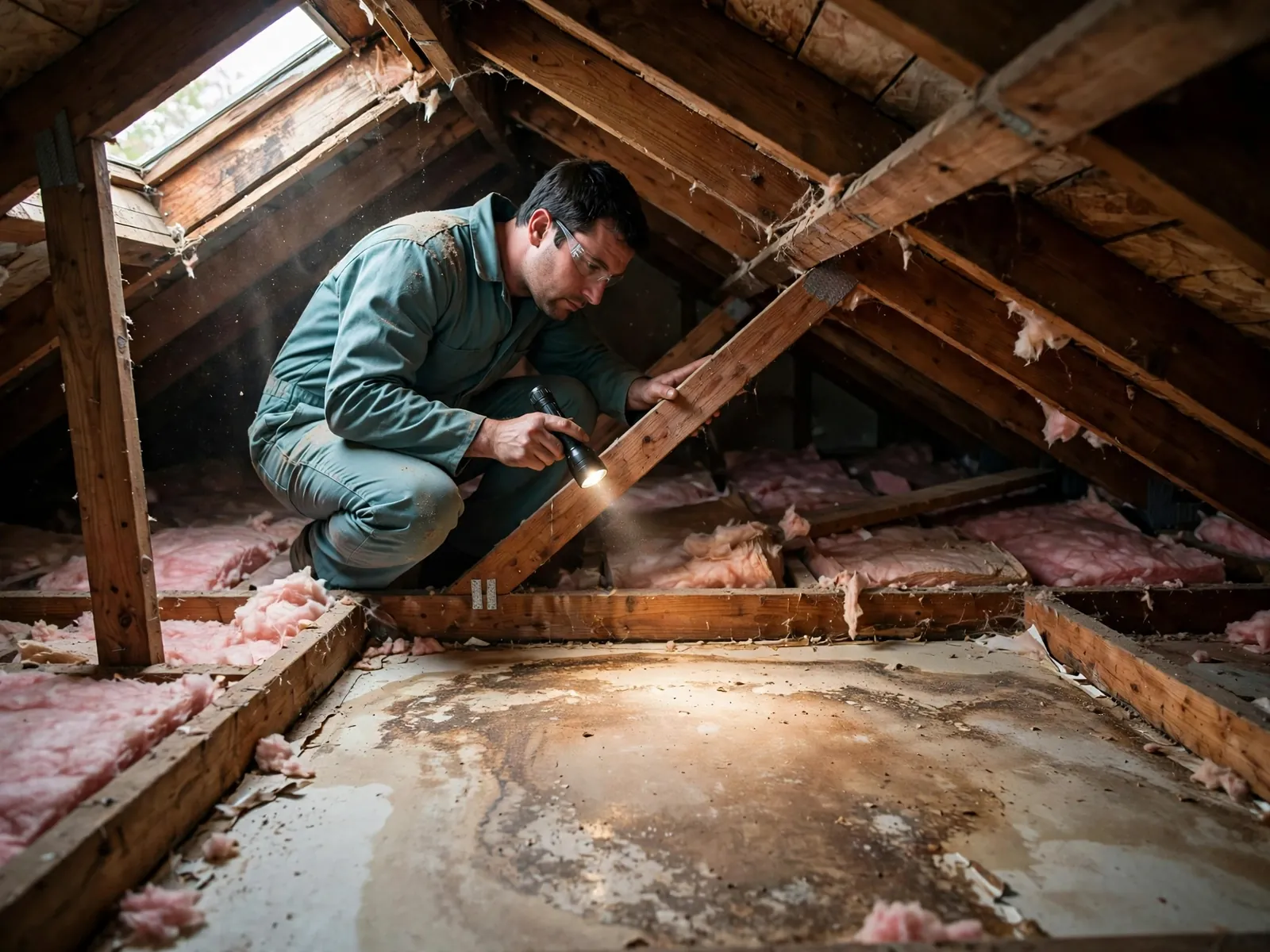
The insulation above the ceiling deserves its own check. Wet insulation that stays wet loses its shape and holds moisture against the structure — and it cannot always be dried in place. Insulation that has soaked through is usually removed, so the space above the ceiling can dry. Insulation that is only damp at the surface may dry with airflow. The check is made by looking at it, not by guessing from below.
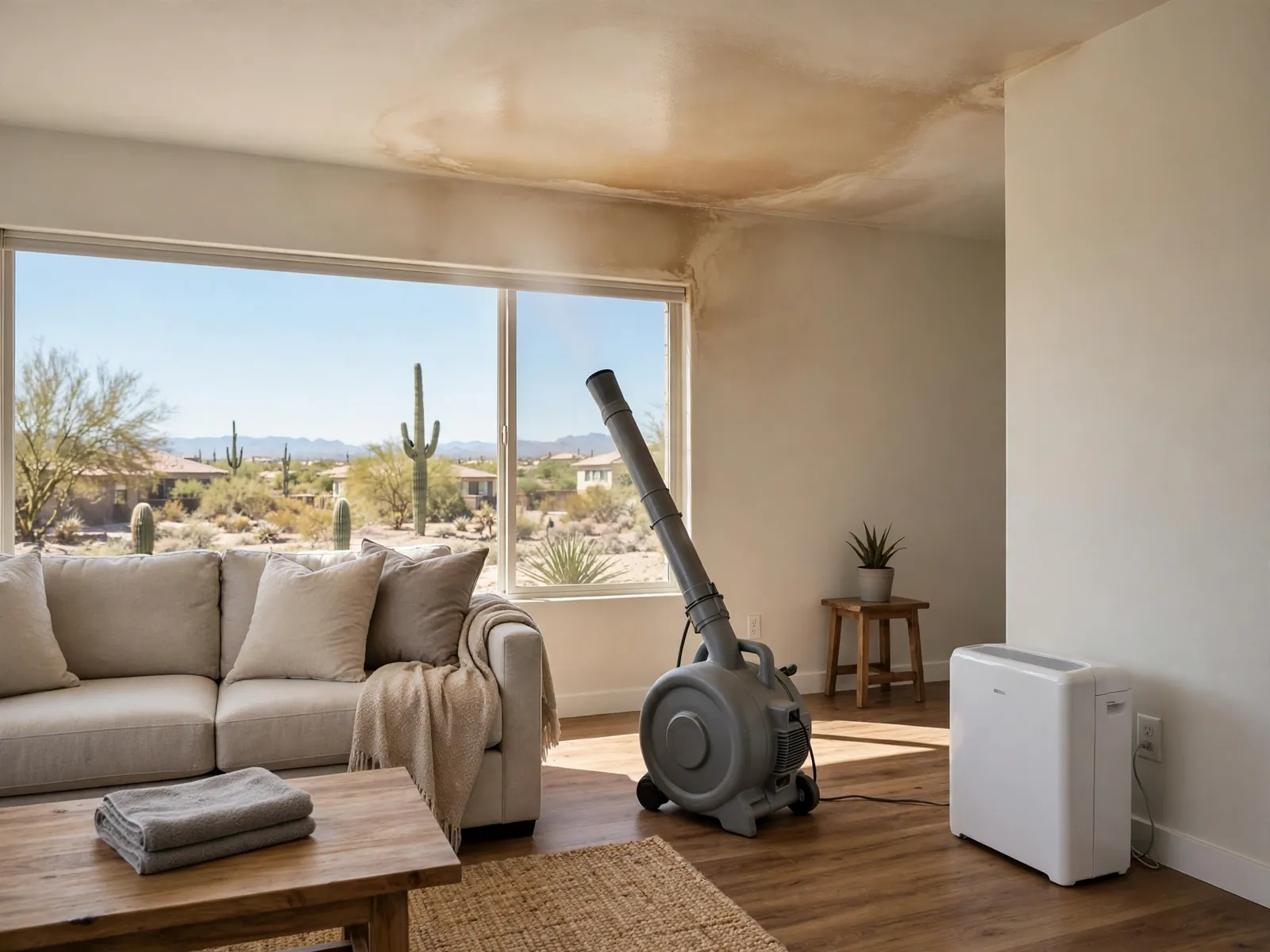
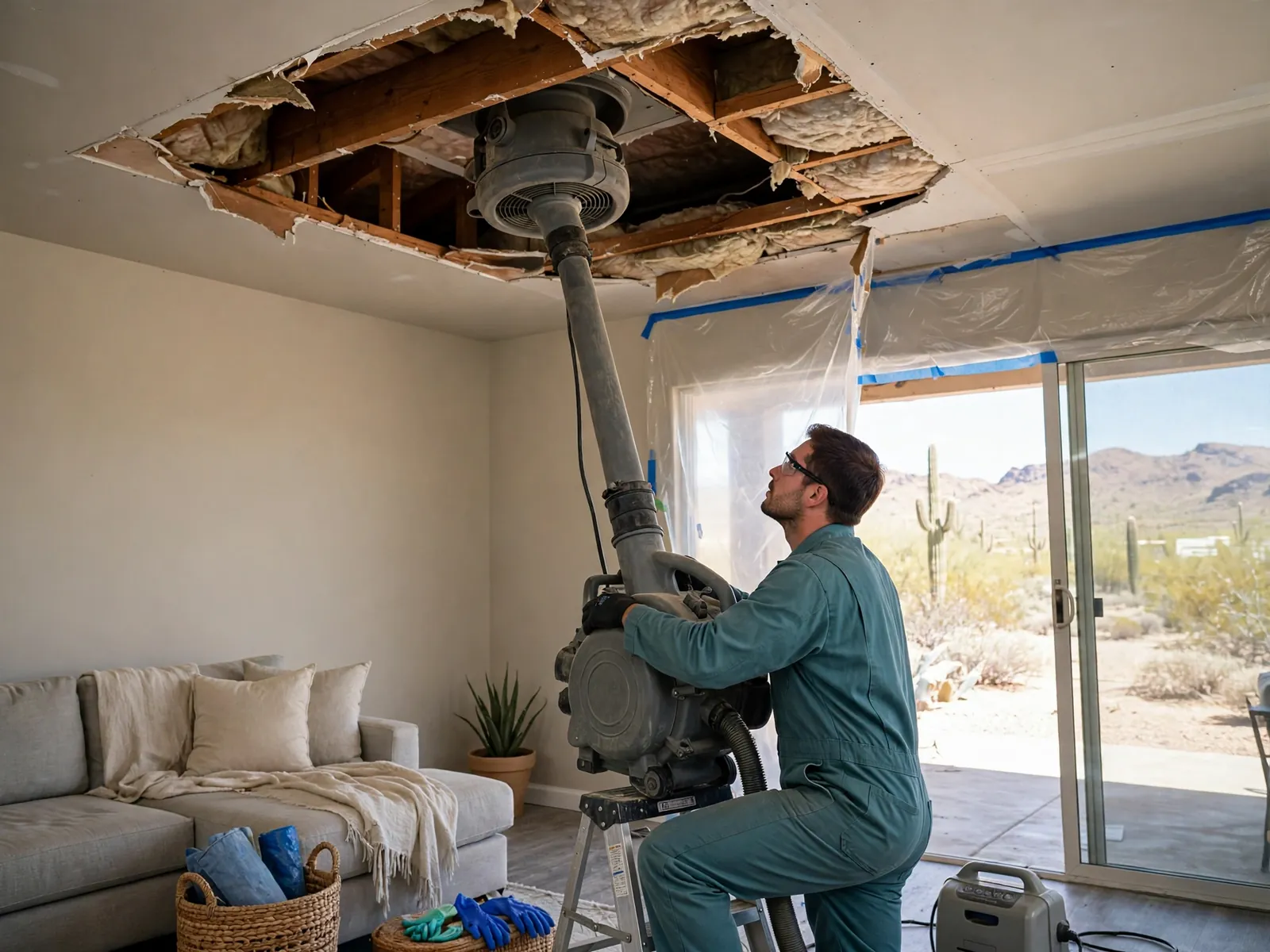
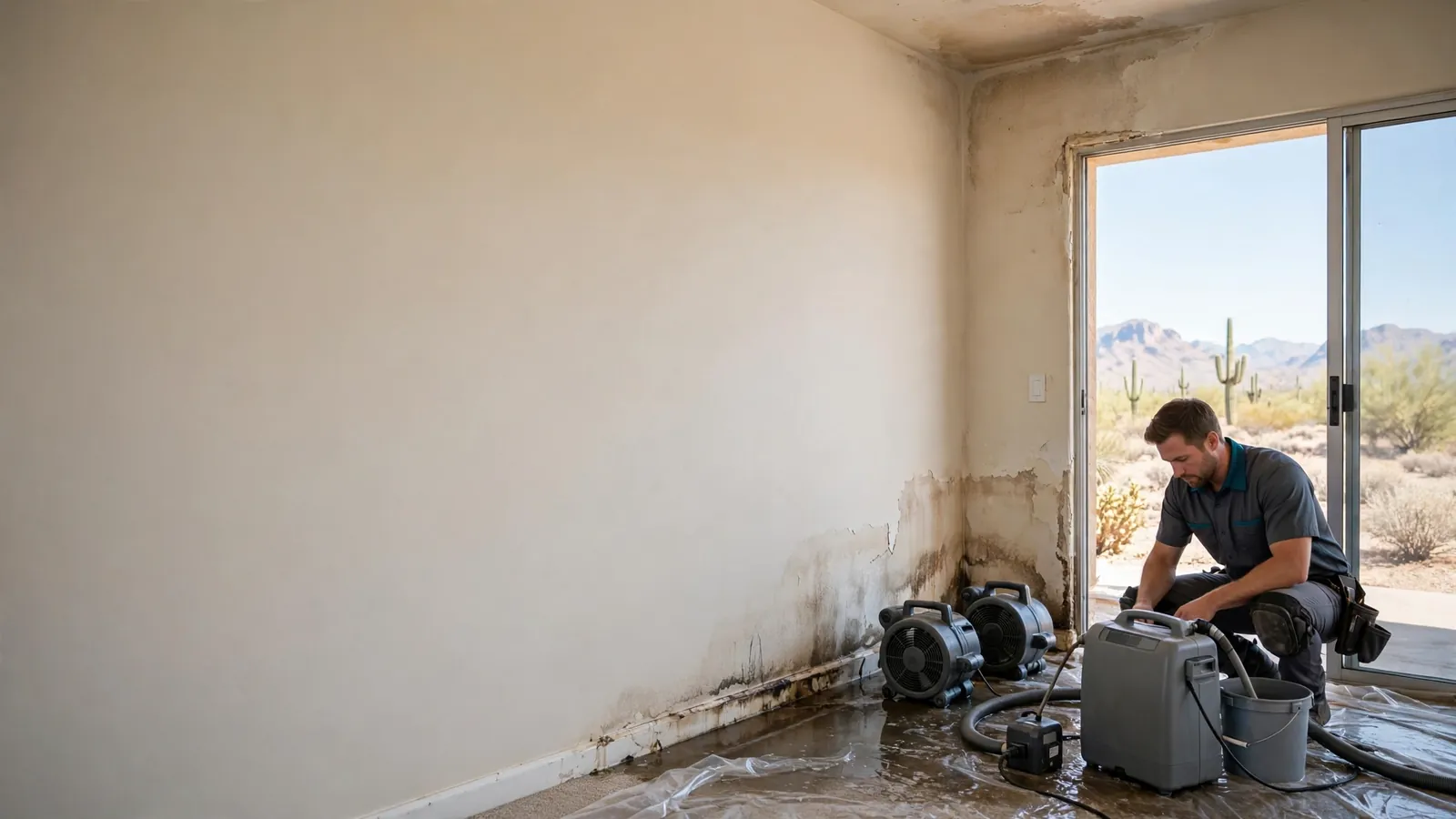
Drying a ceiling is not the same as drying a floor. Water sits in the ceiling drywall, in the insulation above it, and in the floor structure of the room above. Air movers push dry air across the ceiling surface, and dehumidifiers pull the moisture out of the air. Where the ceiling drywall is too wet to dry in place, it is removed — a flood cut or a section cut — so the space above it can dry directly. The readings decide, not the look of the stain.
What the service includes
Ceiling safety check
The ceiling is checked first: whether it sags, bulges, or holds water, and whether the room below it is safe to enter.
Water source tracing
The source is traced — attic supply line, upstairs bathroom, roof leak, or AC condensate drain — so the drying does not start while the leak is still running.
Moisture mapping
The ceiling, the insulation above it, and the floor of the room above are checked with moisture meters, so the wet area is mapped, not guessed.
Standing water removal
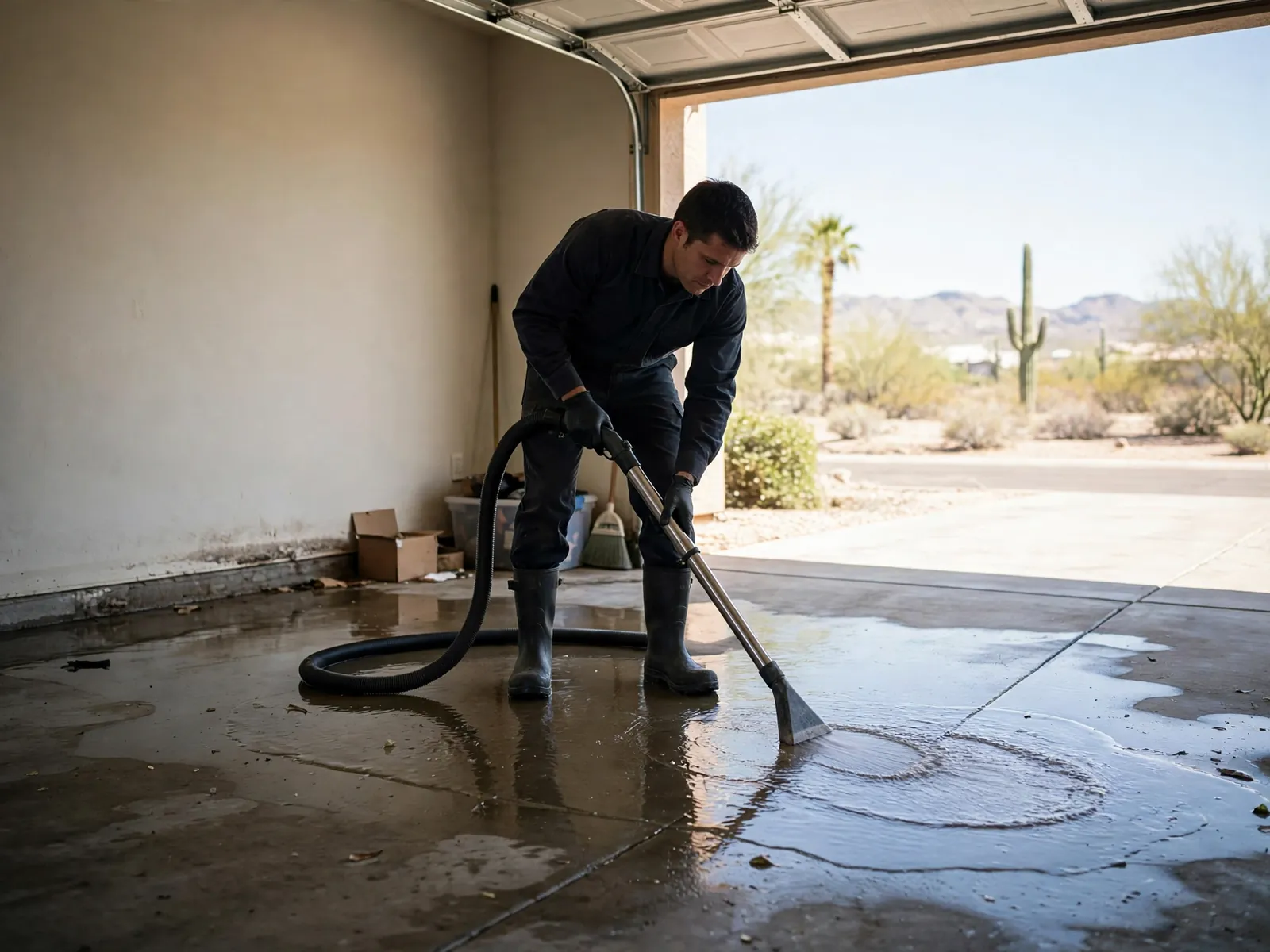
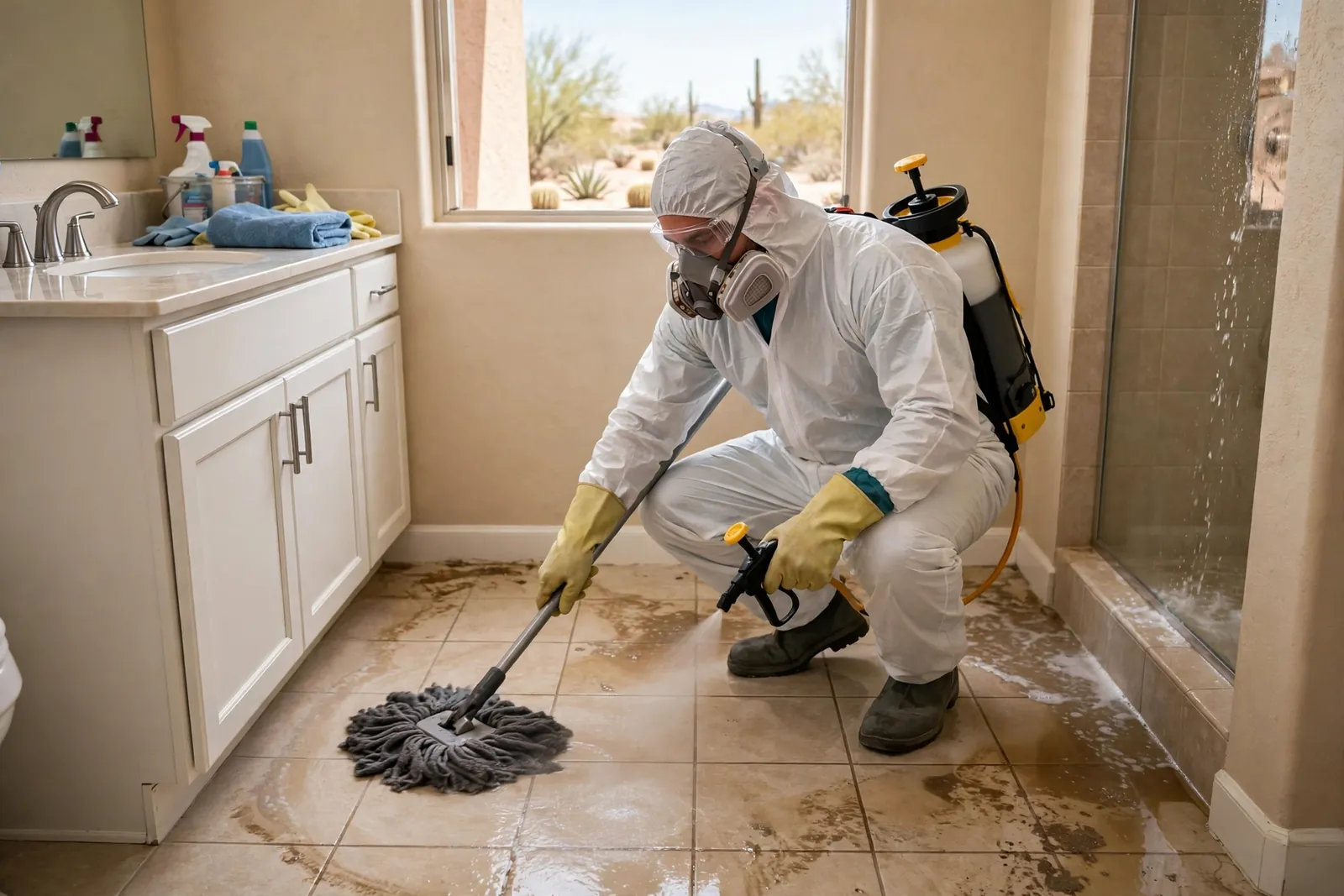
Water that has pooled on the floor below the ceiling is extracted, and any water trapped above the ceiling is released safely by the crew.
Ceiling drying
Air movers and dehumidifiers dry the ceiling drywall and the space above it, with readings taken during drying.
Insulation check
The insulation above the ceiling is checked: damp insulation may dry in place, soaked insulation is removed so the structure can dry.
Drywall removal where needed
Ceiling drywall that is too wet to dry in place is removed, so the space above it can dry directly and the ceiling can be rebuilt afterwards.
Photo and reading record
Photos of the ceiling, the source, and the damage, plus written moisture readings, give you a record for your insurer.
Source handover
The source is written down — which pipe, which fixture, which roof area — so the plumber or roofer who fixes it starts informed.
Next-step plan
You are told what was wet, what the drying plan is, and what to watch for — a stain that grows, a smell, or a ceiling that changes shape.
How the work runs
Call and describe the ceiling
Say where the stain or sag is, whether it drips, whether the ceiling sags or bulges, and what is above it — a bathroom, an attic, or the roof.
Stay out from under a sagging ceiling
If the ceiling sags or bulges, keep everyone out from under it. Do not poke it or push on it. Move furniture out of the way if you can do so safely.
Stop the source
The water supply to the leaking fixture or line is shut off where it is safe to do so. A roof leak is contained from below until the rain stops.
Map the hidden water
Moisture meters and a thermal camera map the ceiling, the insulation above it, and the floor of the room above, so nothing wet is left unrecorded.
Dry or remove
Ceiling drywall that can be dried is dried in place with air movers and dehumidifiers. Drywall that is too wet is removed so the space above it can dry.
Check and confirm dry
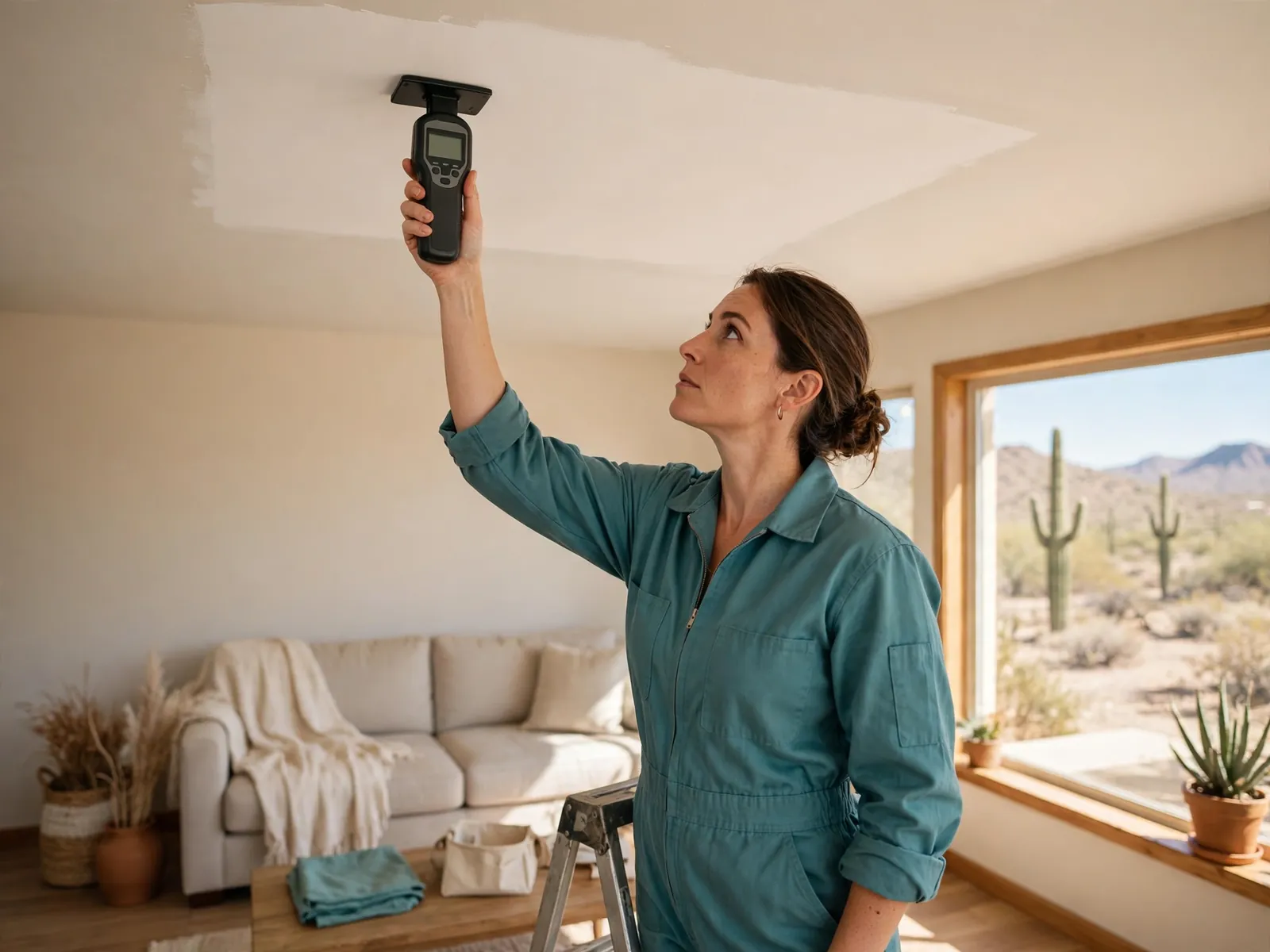
Readings are taken again during drying. Work is complete when readings show the materials are dry, not when the surface feels dry.
Tools and methods used
Moisture meters
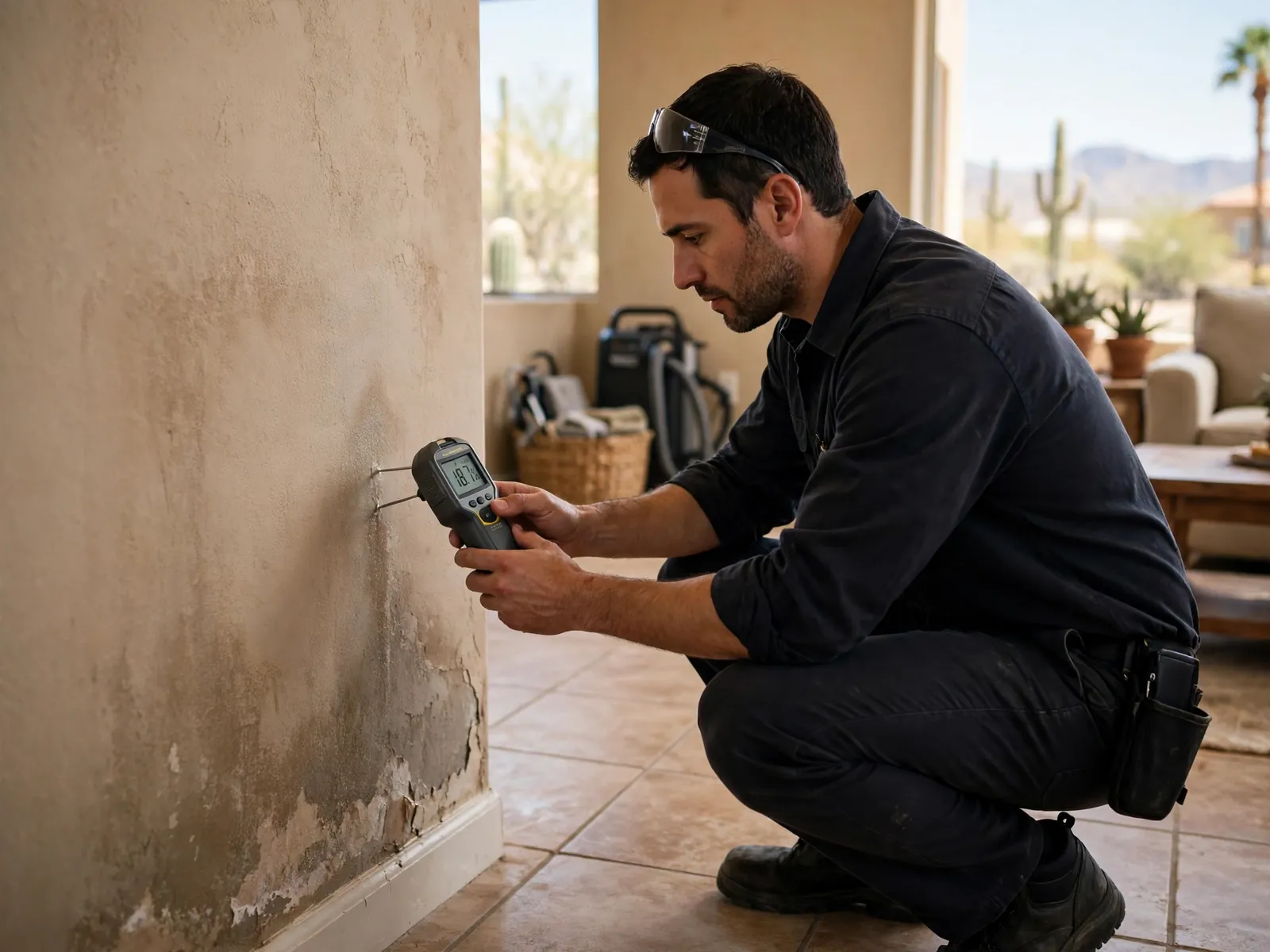
Pin and pinless meters read moisture inside ceiling drywall, insulation, and the floor above, so wet areas are found even when the surface looks dry.
Infrared cameras
A thermal camera shows where water has travelled above the ceiling and under the flooring above it, where a meter alone would take longer to map.
Air movers
High-volume fans push dry air across the ceiling surface and into the space above it, speeding evaporation from materials.
Dehumidifiers
Commercial dehumidifiers pull moisture out of the air, so the water the air movers lift off the surfaces has somewhere to go.
Hygrometers
Humidity readings in the room show whether the drying is working — the air has to get dry before the materials can.
Ladders and access equipment
Safe access to the ceiling and the attic above it, so the space above the ceiling can be checked and dried directly.
Drying vs removal: how the decision is made
A ceiling can be dried in place, or it can be removed — and the decision is made by readings, not by the look of the stain. Drywall that reads wet through, but not soaked, can often be dried with air movers and dehumidifiers, with the readings checked during drying. Drywall that is saturated, sagging, or soft to the touch has to come down, because it will not dry back to its original shape and it holds water against the structure above it.
The insulation above the ceiling is decided the same way. Insulation that is damp at the surface may dry in place. Insulation that has soaked through is removed, because it cannot be dried back to its original shape and it holds moisture against the wood above it. The check is made by looking at the insulation, not by guessing from below.
Removing a section of ceiling drywall is not a rebuild — it is part of the drying. The section comes down so the space above it can dry directly, and the ceiling is rebuilt afterwards as a separate step. That boundary matters: the drying job ends when the readings show dry, and the rebuild is arranged separately.
Mitigation vs rebuild: where this job ends
Water damage work has two phases, and they are often confused. Mitigation is the urgent phase: stop the water, get the standing water out, map the hidden water, dry the structure, and check the work with readings. Rebuild is the second phase: putting back the drywall, the insulation, the paint, and the finishes that were removed during mitigation.
This page covers mitigation — the urgent phase. The ceiling is made safe, the source is traced, the wet areas are mapped and dried, and the readings confirm dry. The rebuild — new drywall, new insulation, paint — is a separate job, arranged separately, after the drying is confirmed.
No page on this site promises a rebuild, a timeline for one, or a finish. What it promises is the mitigation: the water stopped, the ceiling mapped and dried, and the readings that show when it is dry. That is the job the call arranges, and the rebuild follows from it.
A stained or sagging ceiling, with water still travelling through the space above it.
Water that is left standing keeps spreading — into walls, under flooring, and into the next room.
The source is stopped, the ceiling is mapped and dried, and the readings show dry.
The work is checked with moisture readings, not a look at the surface.
Problems ceiling water damage causes
- A ceiling that sags and can fall, if the trapped water is left in place.
- Wet insulation above the ceiling, holding moisture against the structure.
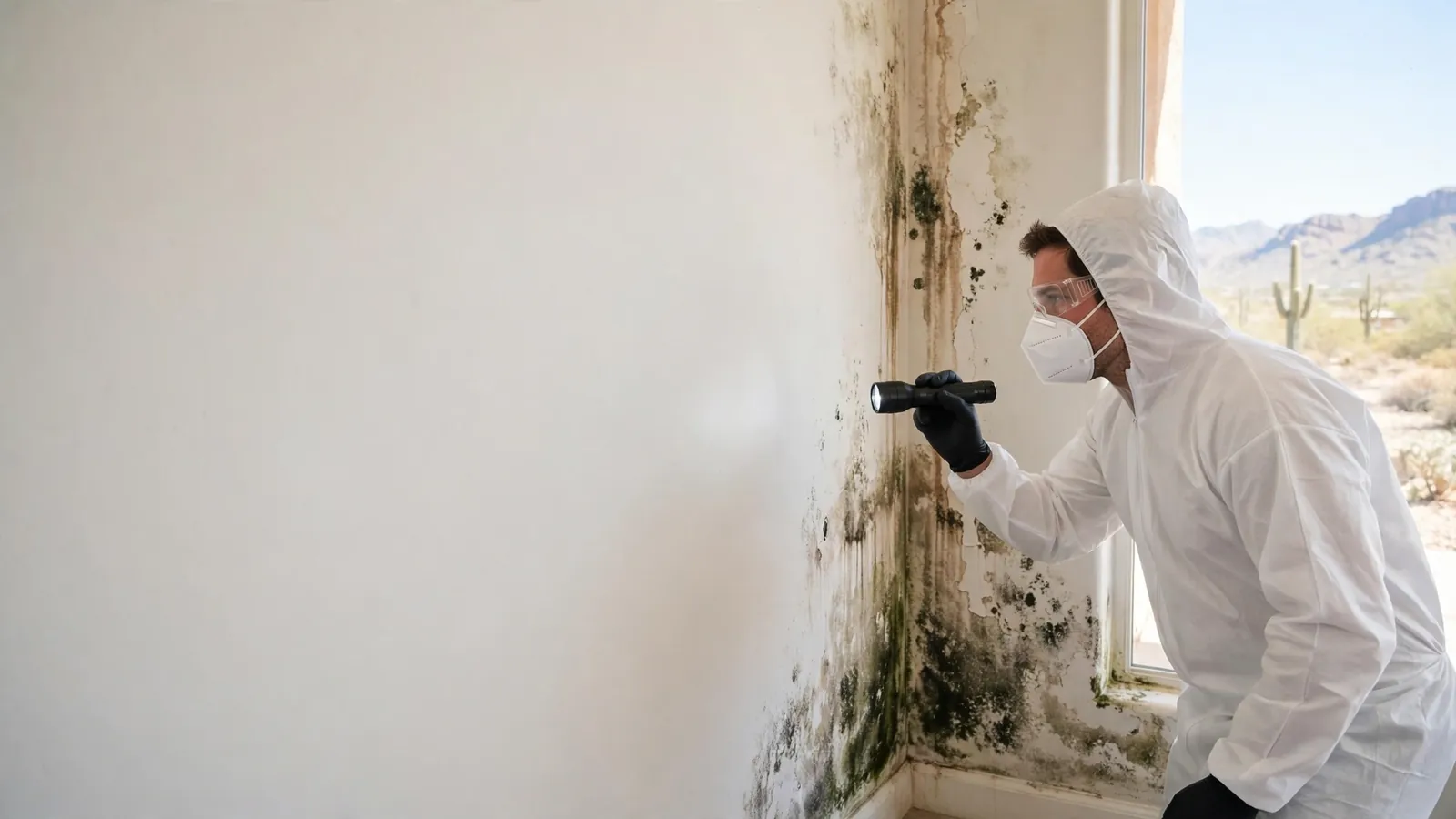
- Wet drywall that softens, stains, and loses its shape.
- Water that travels sideways through the ceiling into the next room.
- A musty smell from materials that stayed wet.
- Damage to light fixtures and wiring where water reached them.
- Flooring damage in the room above, where the leak started.
- A stain that keeps coming back, because the source was never fixed.
Signs of ceiling water damage
- A brown or yellow stain on the ceiling that grows over days.
- Paint that bubbles or peels on the ceiling.
- A ceiling that sags or bulges — it is holding water.
- A drip from the ceiling, or water that appears after rain or after the upstairs shower runs.
- A musty smell in the room below, even when the ceiling looks dry.
- Drywall that feels soft when pressed gently.
- A stain on the ceiling directly below an upstairs bathroom or kitchen.
- Water marks around a ceiling light fixture — stay away from wet fixtures and call.

Related problems
Roof Leak Water Intrusion · AC Condensate Leak · Appliance Leak
Industries that use this service
Apartments and Condos · Commercial Offices · All industries →
Frequently asked questions
Questions people ask about ceiling water damage, answered plainly.
Yes. A ceiling that sags or bulges is holding water, and its weight is what brings it down. Stay out from under it, keep everyone else out too, and do not poke it or push on it. Move furniture out of the way if you can do so safely, and call. The ceiling is not going to get better on its own.
If the ceiling sags or bulges, stay out from under it first. Then shut off the water supply to the leaking fixture or line if it is safe to do so — or the main supply at the meter box. Move valuables off the wet floor below, stay away from wet light fixtures and switches, take photos, and call.
Both are possible, and the readings decide. Drywall that reads wet through, but not soaked, can often be dried in place with air movers and dehumidifiers. Drywall that is saturated, sagging, or soft to the touch has to come down, because it will not dry back to its original shape and it holds water against the structure above it.
Attic supply lines that let go in attics reaching 150 to 170 degrees in July, upstairs bathrooms — a toilet valve, shower drain, or supply hose above the stained ceiling — roof leaks during monsoon bursts, and AC condensate drains clogged with hard-water minerals dripping from attic air handlers onto the ceiling below.
By a moisture reading, not by looking at it. A meter reads through the drywall, and a thermal camera can show where water has travelled above the ceiling. The surface can look dry while the inside of the drywall and the insulation above it are still wet — and the smell arrives weeks later.
Insulation that is damp at the surface may dry in place. Insulation that has soaked through is removed, because it cannot be dried back to its original shape and it holds moisture against the wood above it. The check is made by looking at the insulation, not by guessing from below.
No — the stain usually stays even after the ceiling is dry. A stain is discolouration in the drywall and paint, and drying does not remove it. The stain is covered during the rebuild, after the readings show the ceiling is dry. A stain that grows or darkens again means the source is still leaking.
Not always. A roof leak is one of four common sources in Phoenix homes — the others are an attic supply line, an upstairs bathroom, and an AC condensate drain. The stain looks the same from below, so the source is traced by checking the space above the ceiling: the attic, the floor of the room above, or the roof.
It depends on how much water there was and what it soaked. Drying usually takes days, with moisture readings checked along the way. A ceiling with wet insulation takes longer than a ceiling where only the drywall surface is wet. The readings decide when the materials are dry.
Mitigation is the urgent phase: stop the water, get the standing water out, map the hidden water, dry the structure, and check the work with readings. Rebuild is the second phase: putting back the drywall, the insulation, the paint, and the finishes that were removed. This site covers mitigation; the rebuild is a separate job, arranged separately, after the drying is confirmed.
Water damage in your Phoenix home?
Call Now to reach a local water damage professional. Describe the water, where it is, and what it has touched.
Call now for water damage help
Tap Call Now to reach a local water damage professional. Tell them where the water is, what it has touched, and whether it is still coming in.
Hours: Mon–Fri 7:00 AM–10:00 PM ET · Sat 8:00 AM–10:00 PM ET · Sun 7:00 AM–9:00 PM ET
Before you call
- Shut off the main water supply if it is safe to do so.
- Move valuables, rugs and electronics off wet floors.
- Take photos of the water and the damage for your records.
- Stay away from wet outlets, switches and light fixtures.
- Note when the water started and what caused it, if you know.