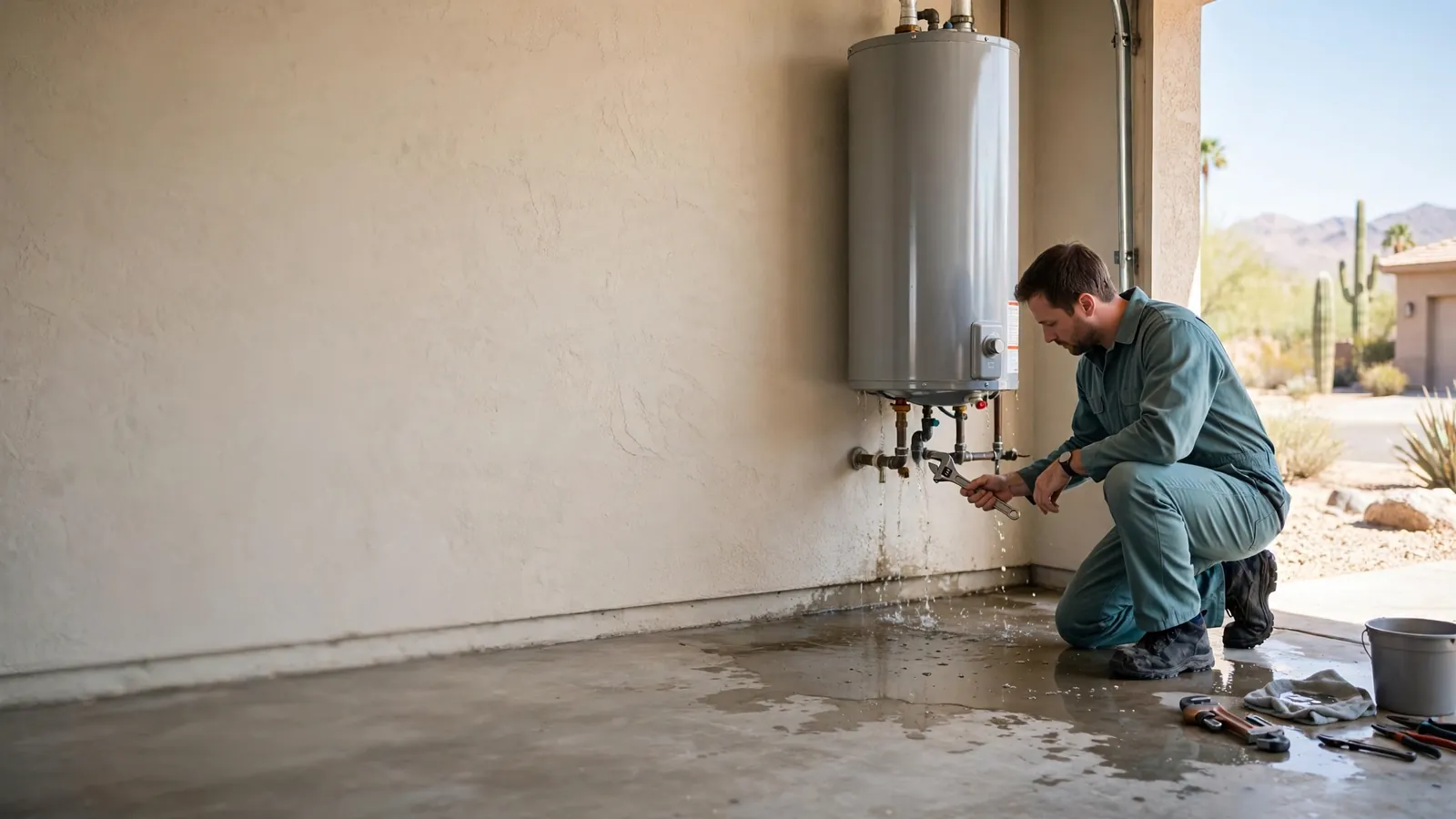
Water Heater Leak Water Damage in Phoenix, AZ
A water heater that lets go in a Phoenix garage or closet can put out a surprising amount of water in a short time — and the job it creates has two halves. A plumber fixes or replaces the tank. A restoration crew handles the water the tank left behind: the extraction, the moisture mapping, and the drying of the floor, the walls, and the rooms the water reached. This page explains both halves, what to do first, and how the drying works.
Need help with water damage?
Call Now to reach a local water damage professional. Describe the water, where it is, and what it has touched.
Hours: Mon–Fri 7:00 AM–10:00 PM ET · Sat 8:00 AM–10:00 PM ET · Sun 7:00 AM–9:00 PM ET
What this service does
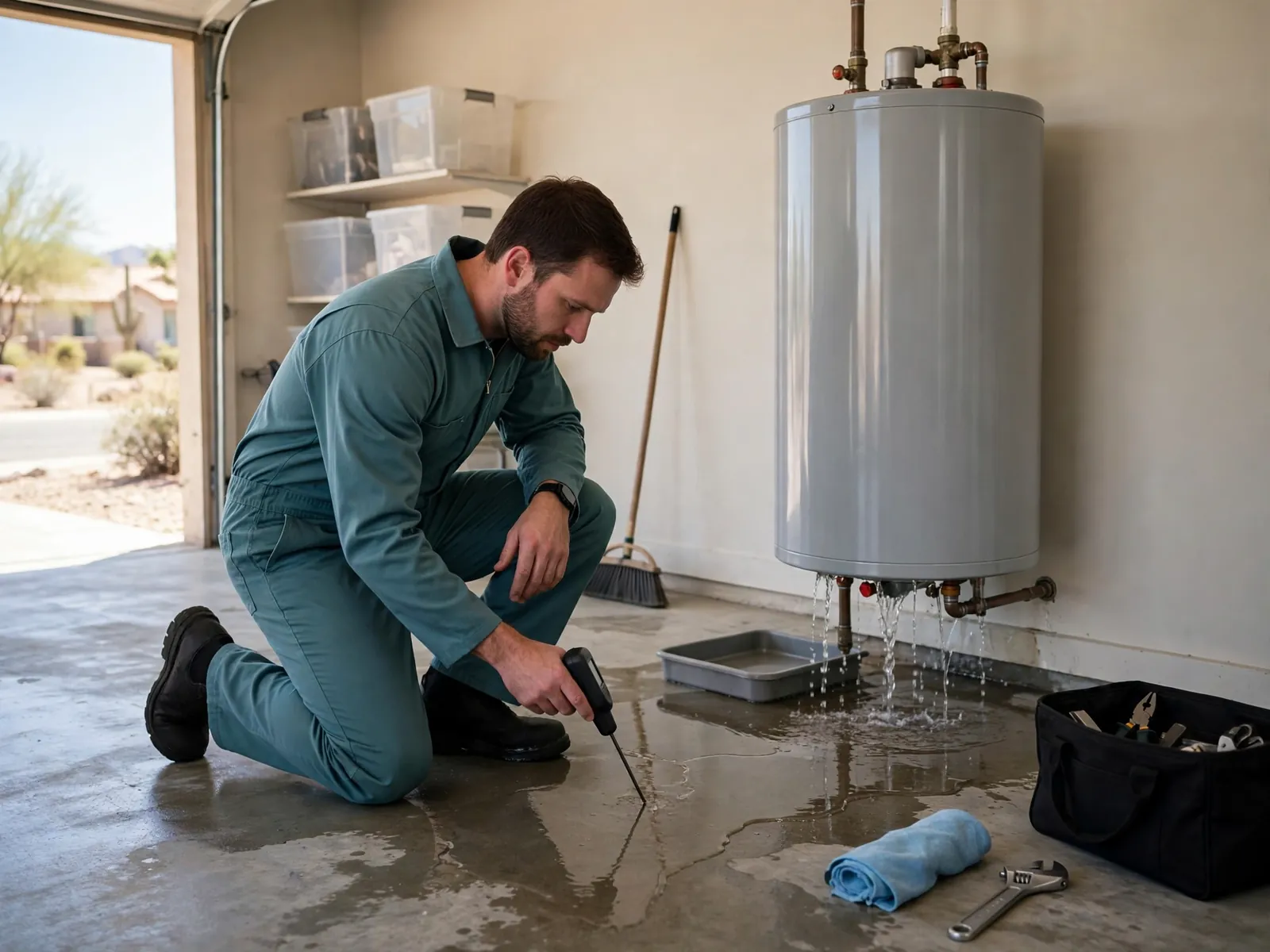
Most Phoenix homes keep the water heater in the garage or in a closet, and most of them hold a full tank of hot water — tens of gallons, under pressure, sitting above a concrete floor. When a tank fails, it rarely drips politely. The bottom of the tank gives way, or a fitting at the top lets go, and the water runs across the garage floor, under the door into the hallway, and into the rooms beyond. The first job is to stop the flow; the second is to deal with the water that has already spread.
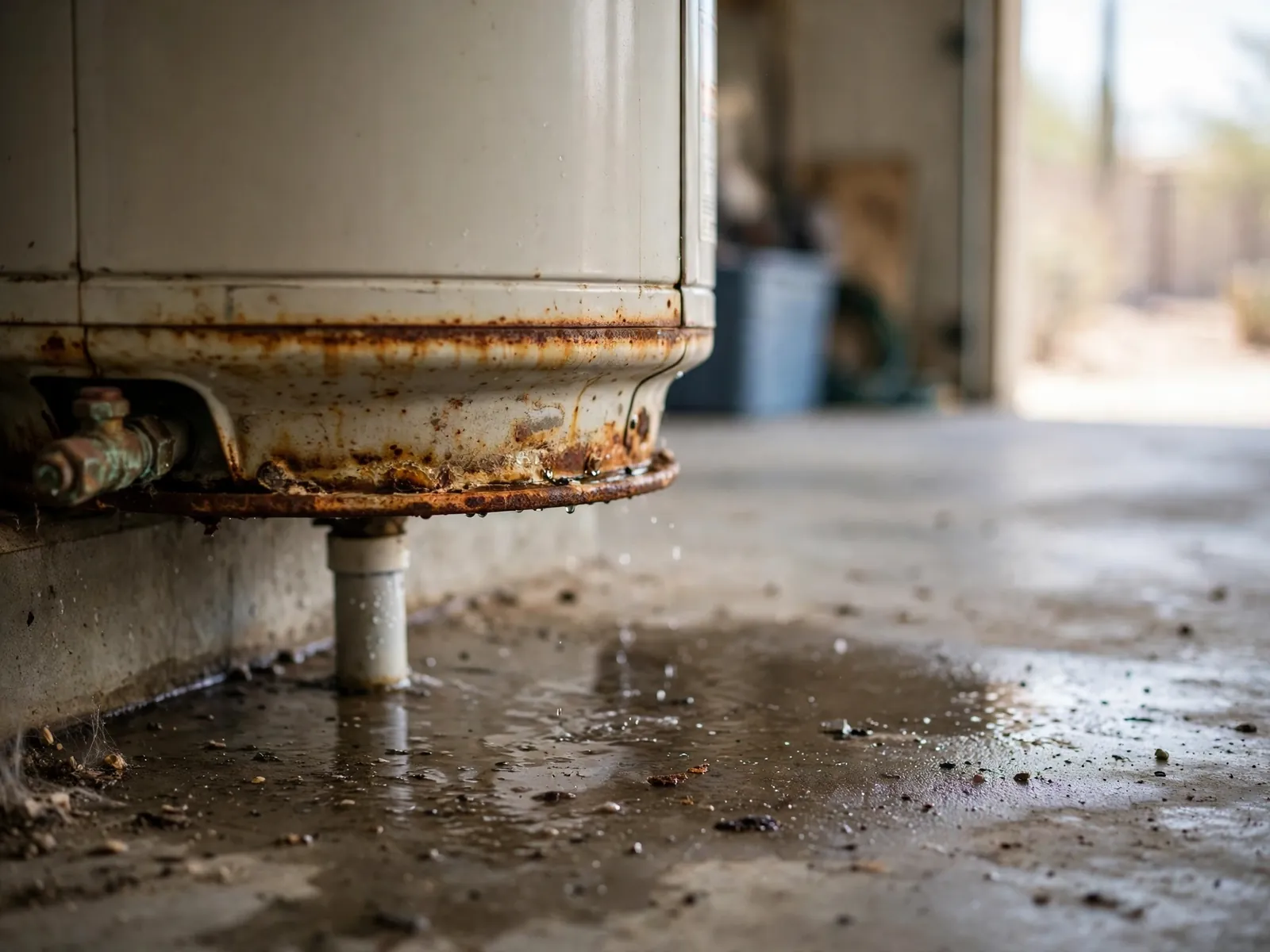
Hard water is the reason Phoenix tanks fail the way they do. The Valley's water carries a heavy mineral load — 14 to 22 grains per gallon — and those minerals settle as sediment at the bottom of the tank. Sediment insulates the bottom of the tank from the water above it, the metal overheats in that spot, and the tank weakens from the inside. A tank that is eight to twelve years old, in hard water, with sediment that has never been flushed, is a tank living on borrowed time. The failure often shows no warning until the puddle appears.
The signs are worth knowing, because a tank usually signals before it fails. A puddle at the base of the tank that comes back after you mop it. Rusty or discoloured water from the hot taps. A pilot light that keeps going out, or a tank that makes rumbling or popping sounds as it heats. A damp wall behind the tank, or a floor that feels soft near the closet. A water bill that rises without explanation. Any one of these is a reason to have the tank looked at — by a plumber, before it becomes a water damage call.
Tankless water heaters fail differently. There is no tank to burst, so a tankless failure is usually a fitting, a valve, or a condensate line — a smaller amount of water, but one that can run for a long time before anyone notices, because it drips behind a wall or inside a closet. The water damage from a tankless leak is often a slow, hidden soak rather than a flood, and the moisture map matters more than the puddle.
One thing people get wrong about a water heater leak is who to call. The tank itself is a plumber's job — nobody else should replace a tank, touch a gas valve, or relight a pilot. The water on the floor is a restoration job — extraction, mapping, and drying. Calling the right party first saves a day: a plumber stops the water at its source, and the drying crew deals with what the water has already soaked.
Before you call
- Shut off the main water supply if it is safe to do so.
- Move valuables, rugs and electronics off wet floors.
- Take photos of the water and the damage for your records.
- Stay away from wet outlets, switches and light fixtures.
- Note when the water started and what caused it, if you know.
How a water heater leak works in a Phoenix home
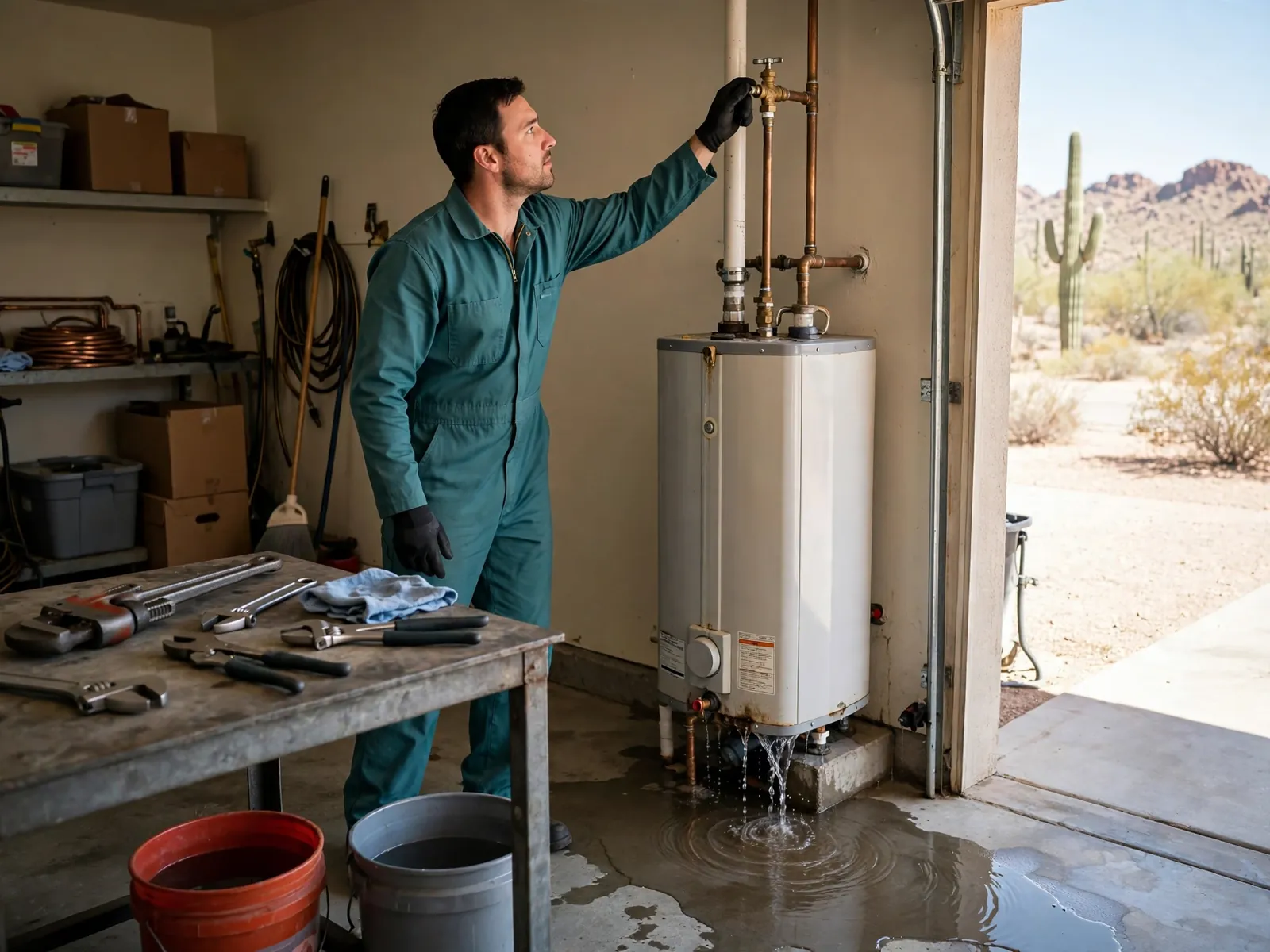
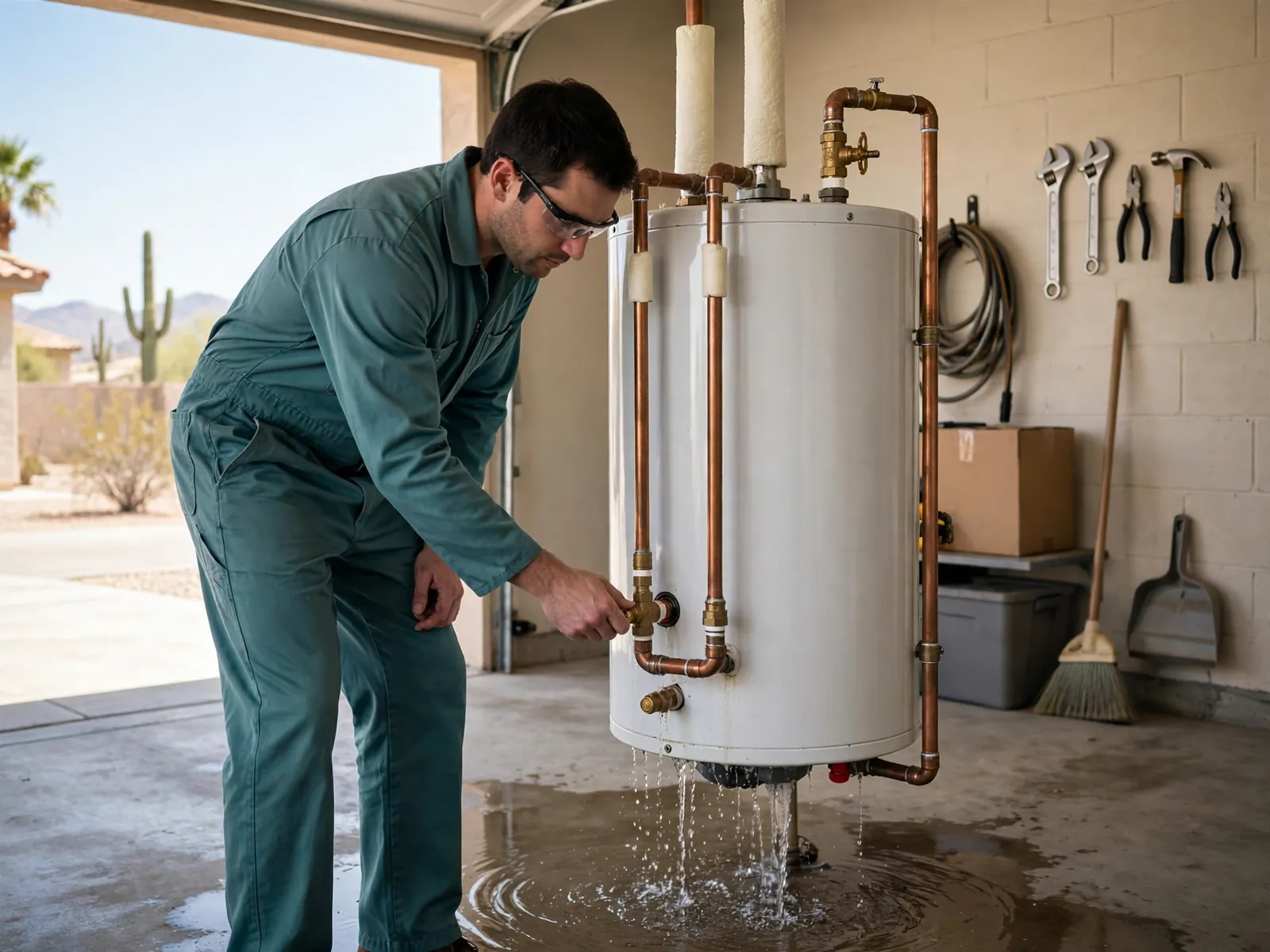
The work starts with the source, and the source is the tank. If water is still coming out, the water supply to the tank is shut off — most Phoenix tanks have a shutoff valve on the cold-water line into the top of the tank, and the main supply can be shut off at the meter box near the street if the tank valve cannot be reached. Do not touch the gas valve, and do not try to relight a pilot light. A plumber handles the gas and the tank; the drying crew handles the water.
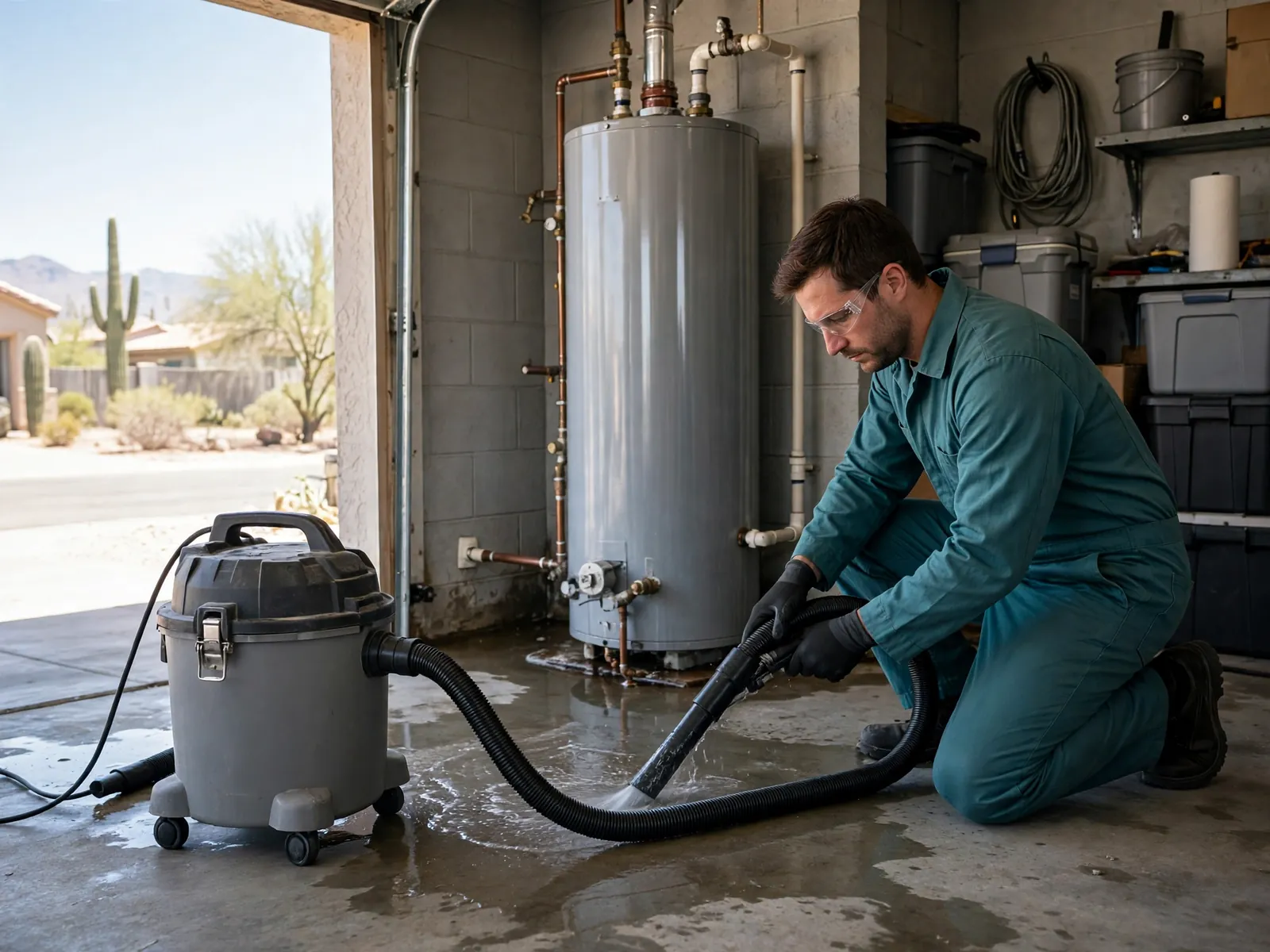
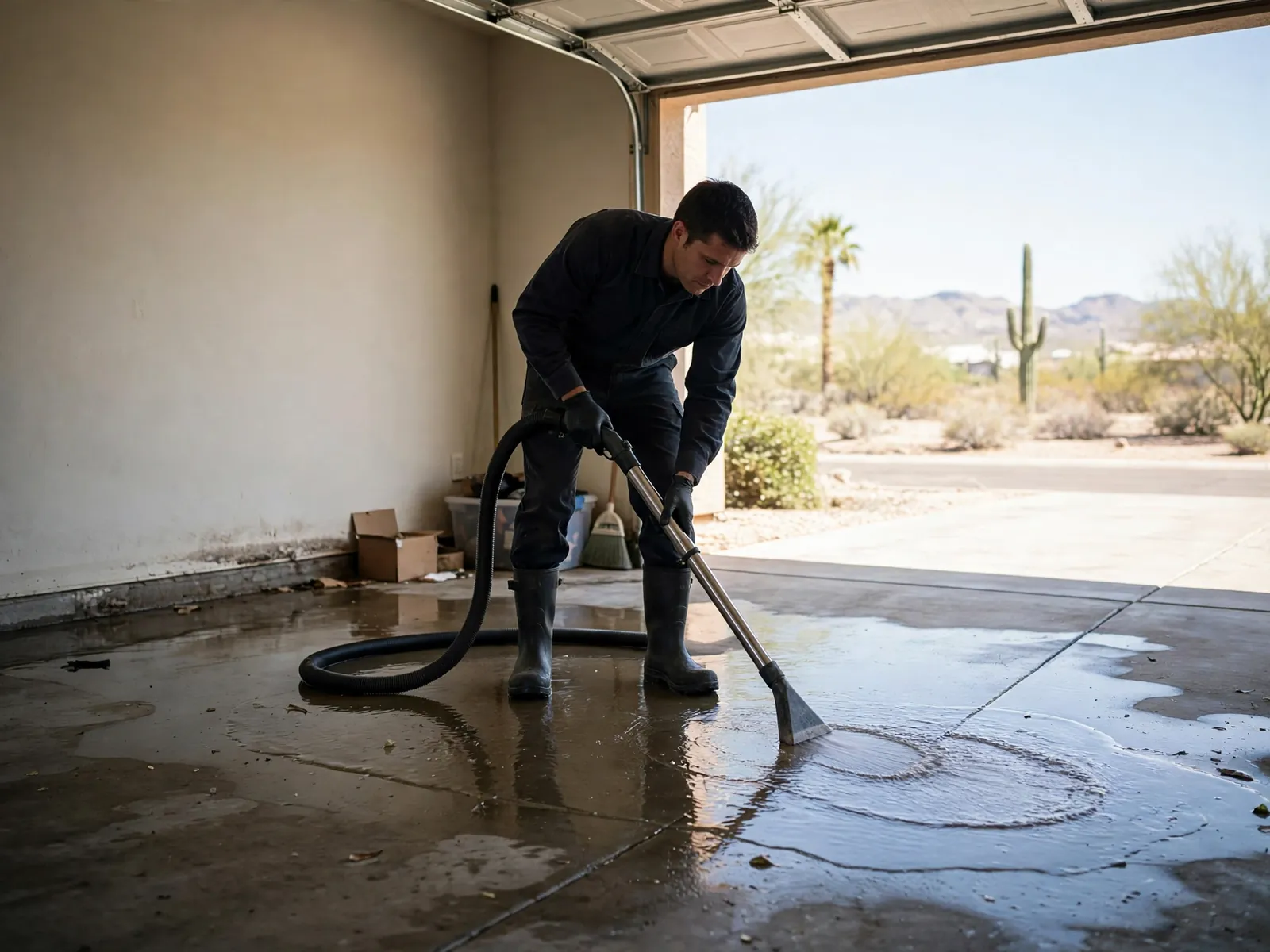
After the flow stops, the standing water is removed room by room, starting where it is deepest — usually the garage — and working toward the rooms the water reached. Garage floors are concrete, and water on concrete spreads fast and far: under the door into the hallway, along the baseboards, and into the carpet or flooring of the next room. A garage that looks like the only wet room often has a wet hallway behind it.
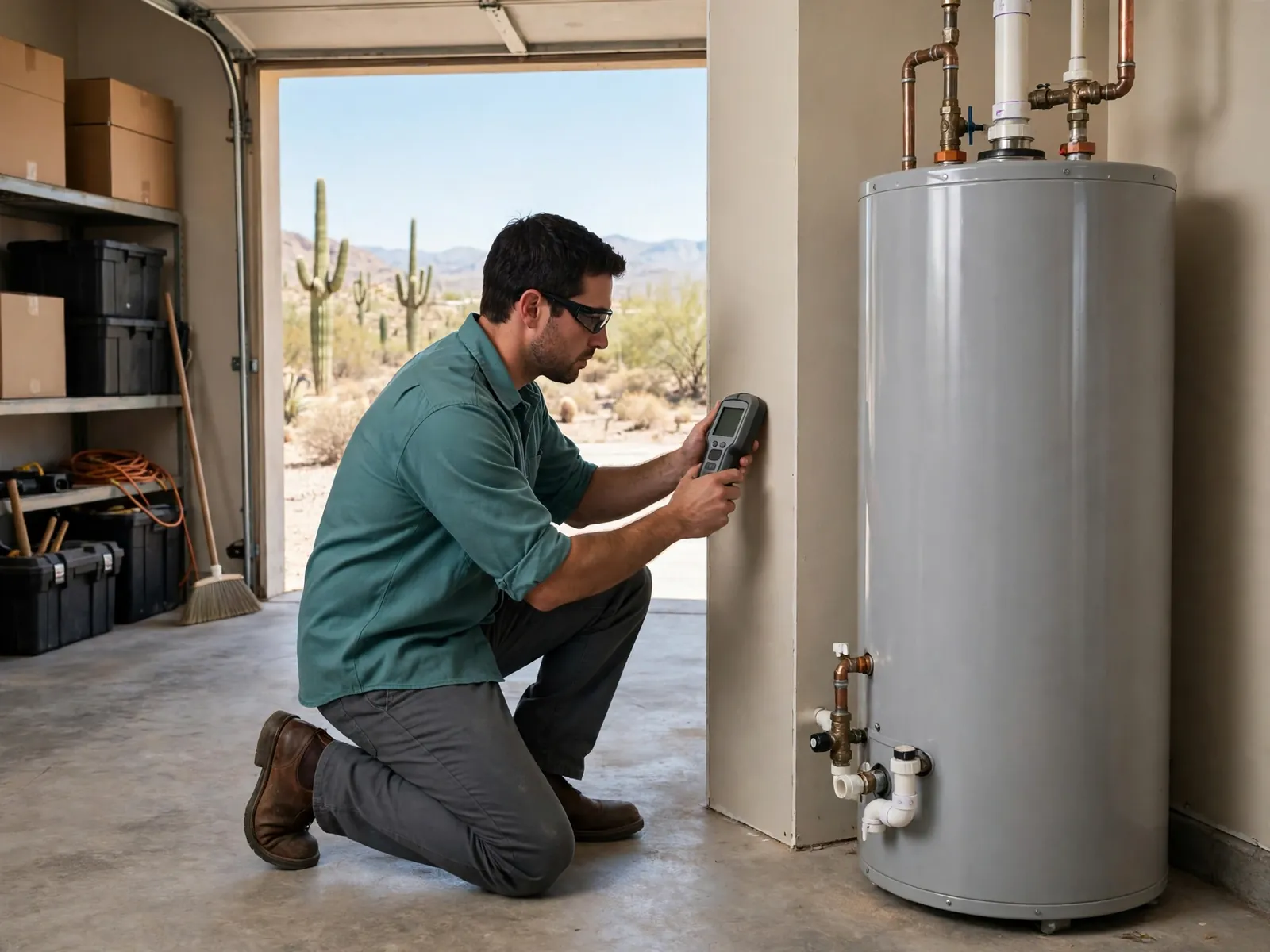
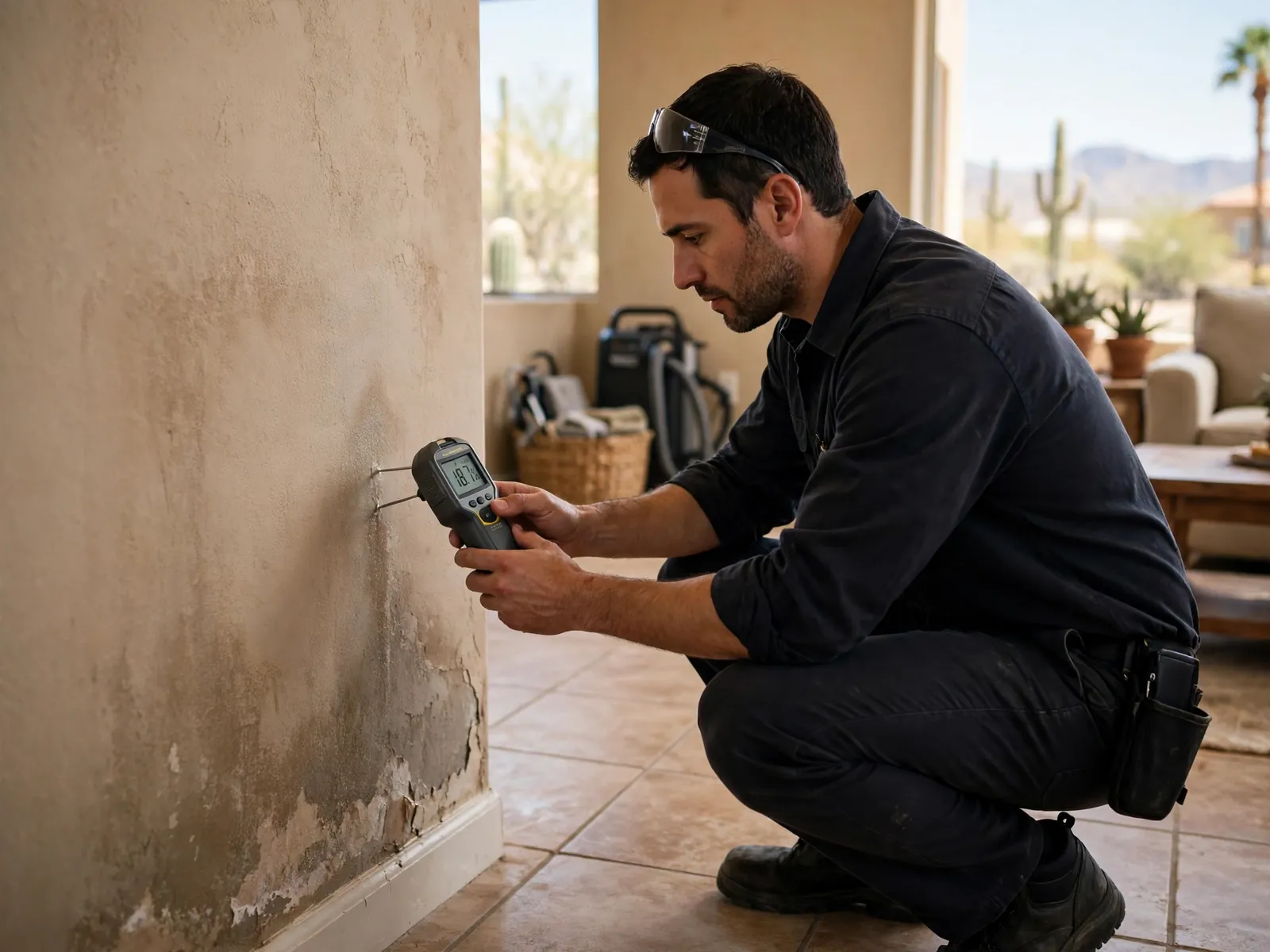
Then comes the moisture map. A meter reads the walls at the base, the flooring, and the slab underneath where it can be reached. Drywall wicks water upward from the floor line, so a wall that looks dry at eye level can be wet at the base. Baseboards trap moisture behind them. Carpet pad holds water for days, and a carpet that feels dry on top can still be wet underneath. Readings are written down, because the drying plan and the final check both depend on knowing what was wet at the start.
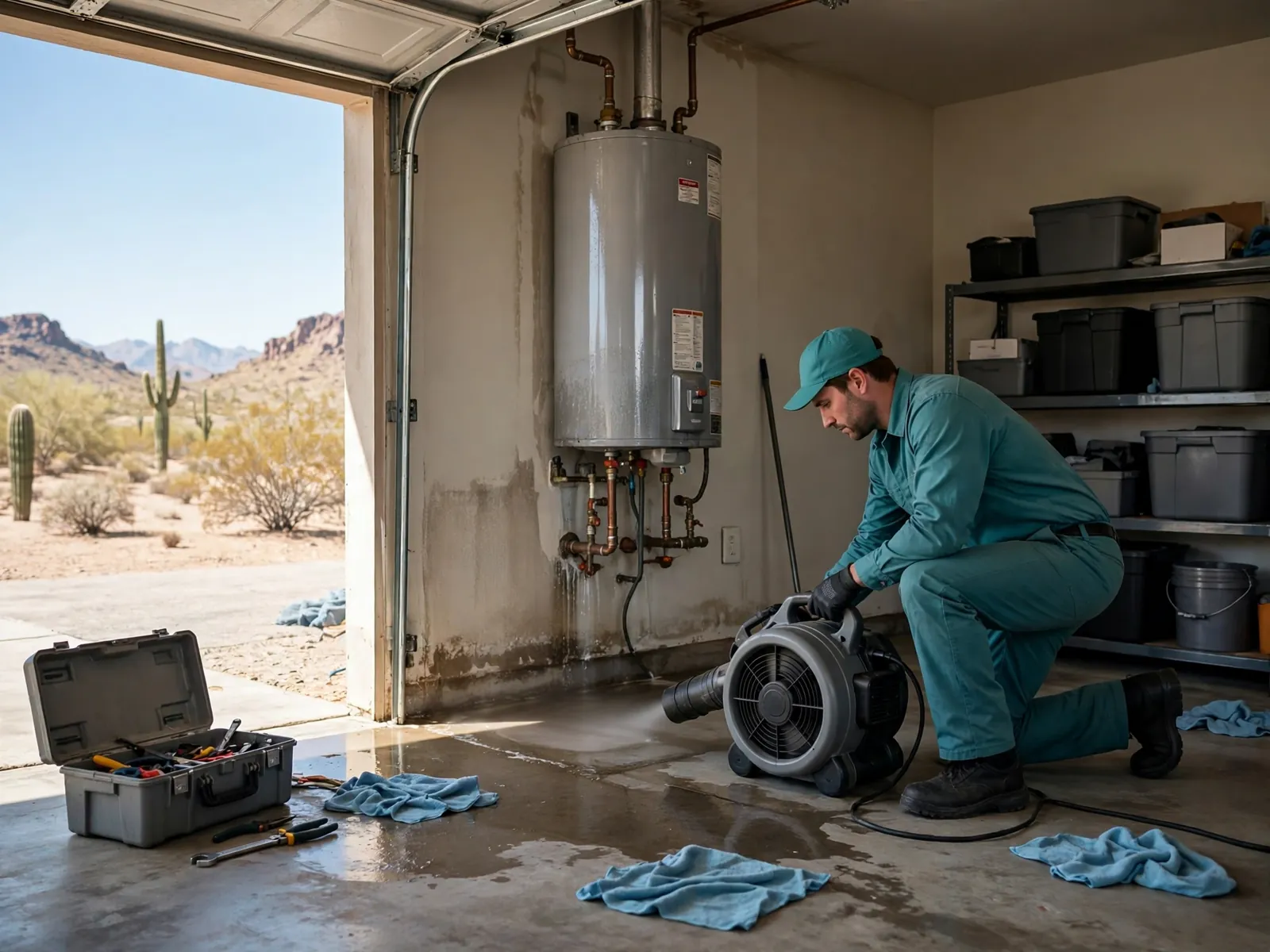
Drying follows the map. Air movers push dry air across the wet surfaces, and dehumidifiers pull the moisture out of the air. In a garage the drying is usually fast — concrete dries well with airflow. Inside the house it takes longer: drywall, baseboards, and flooring hold water, and the readings are checked during drying rather than guessed from the calendar. The EPA notes that mold can begin to grow on damp surfaces within 24 to 48 hours, which is why extraction and drying are treated as one job, not two separate visits.
What the service includes
Standing water removal
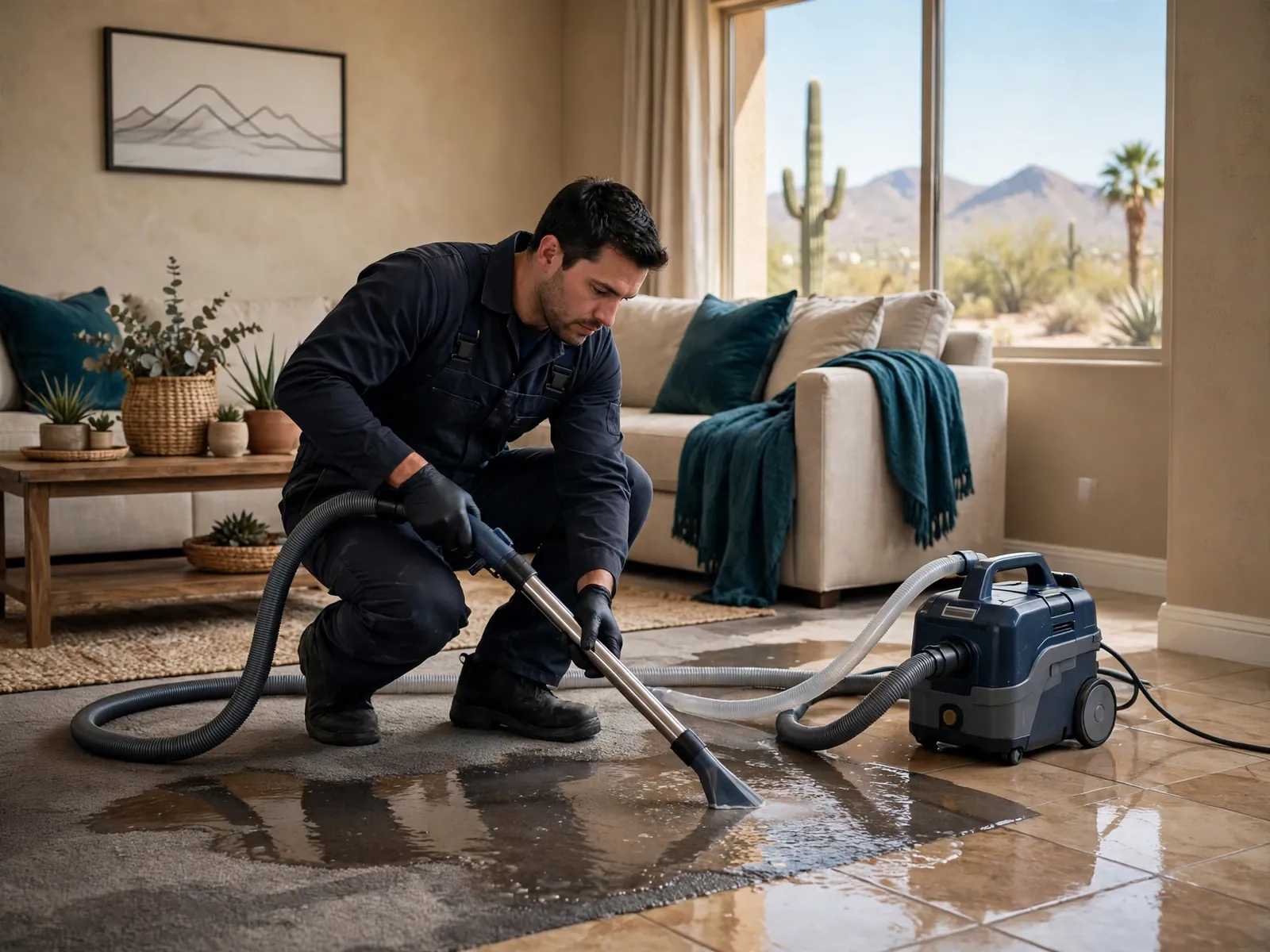
Extraction machines pull standing water from the garage floor, tile, wood, laminate, carpet and concrete, including low spots where water collects.
Water source check
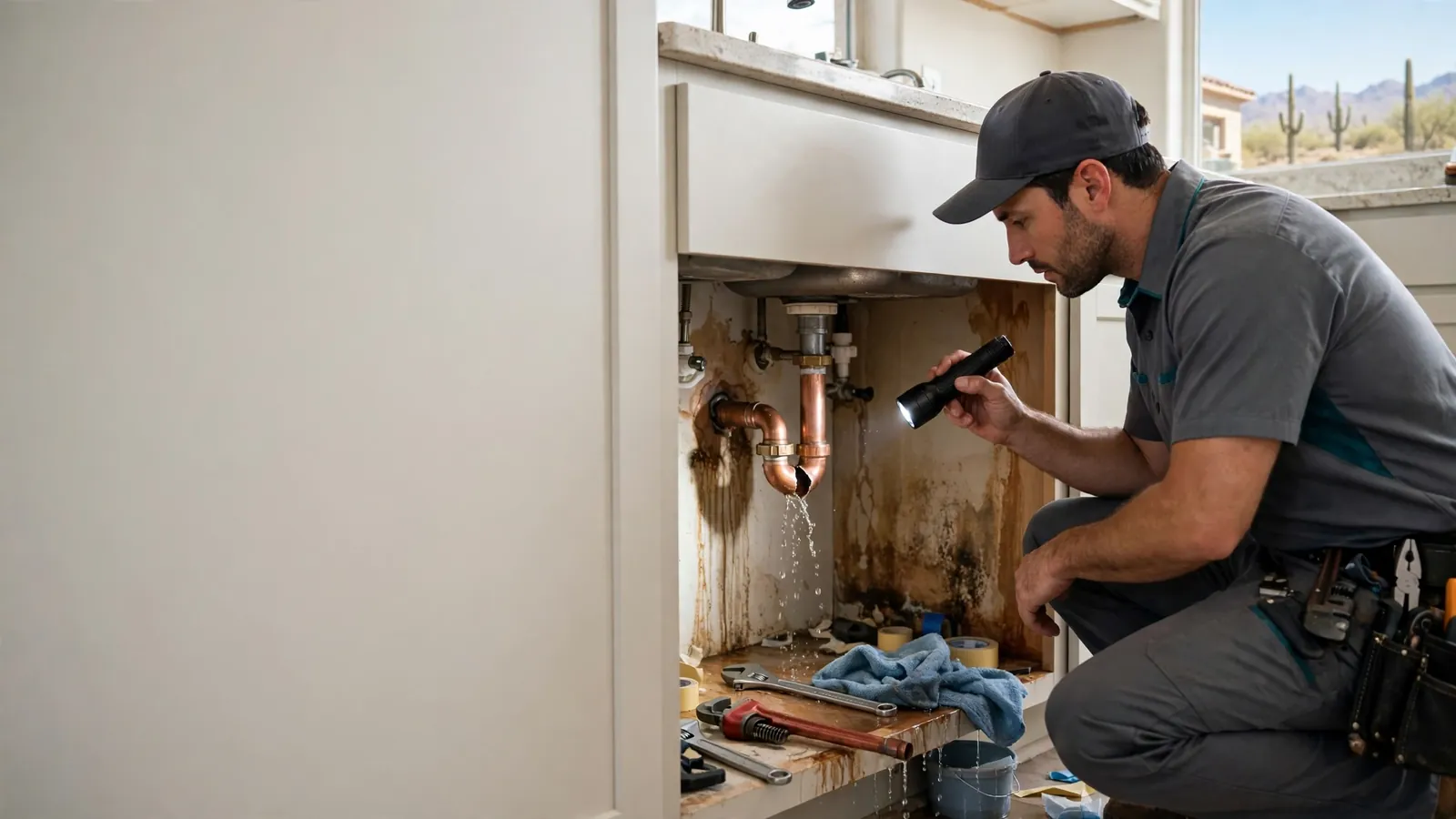
The visible source is identified where possible: the tank itself, the fittings at the top of the tank, the supply line, or the drain valve at the base.
Moisture mapping
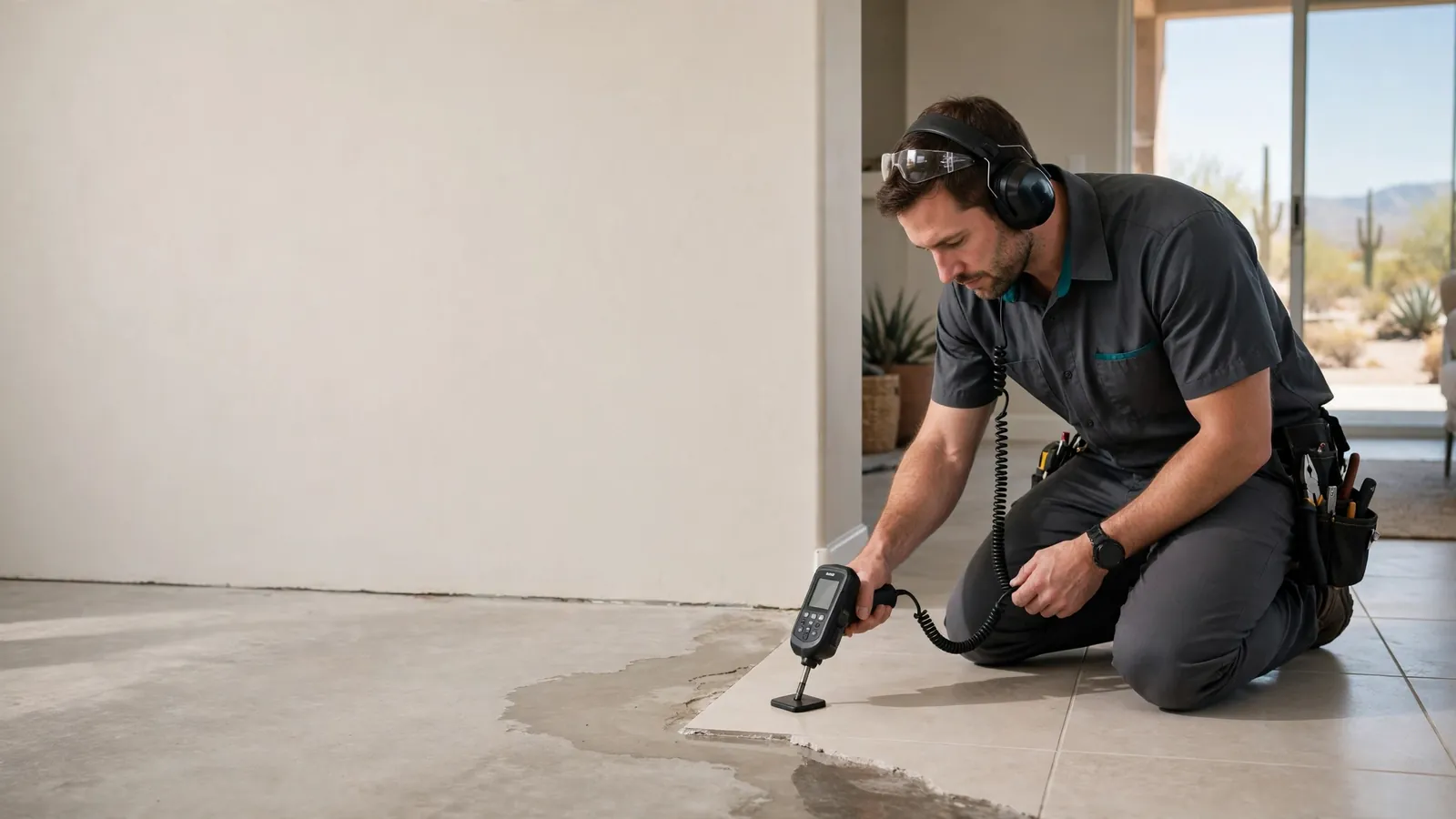
Walls, floors and baseboards are checked with moisture meters so the wet area is mapped, not guessed — including rooms that look dry.
Garage and hallway drying
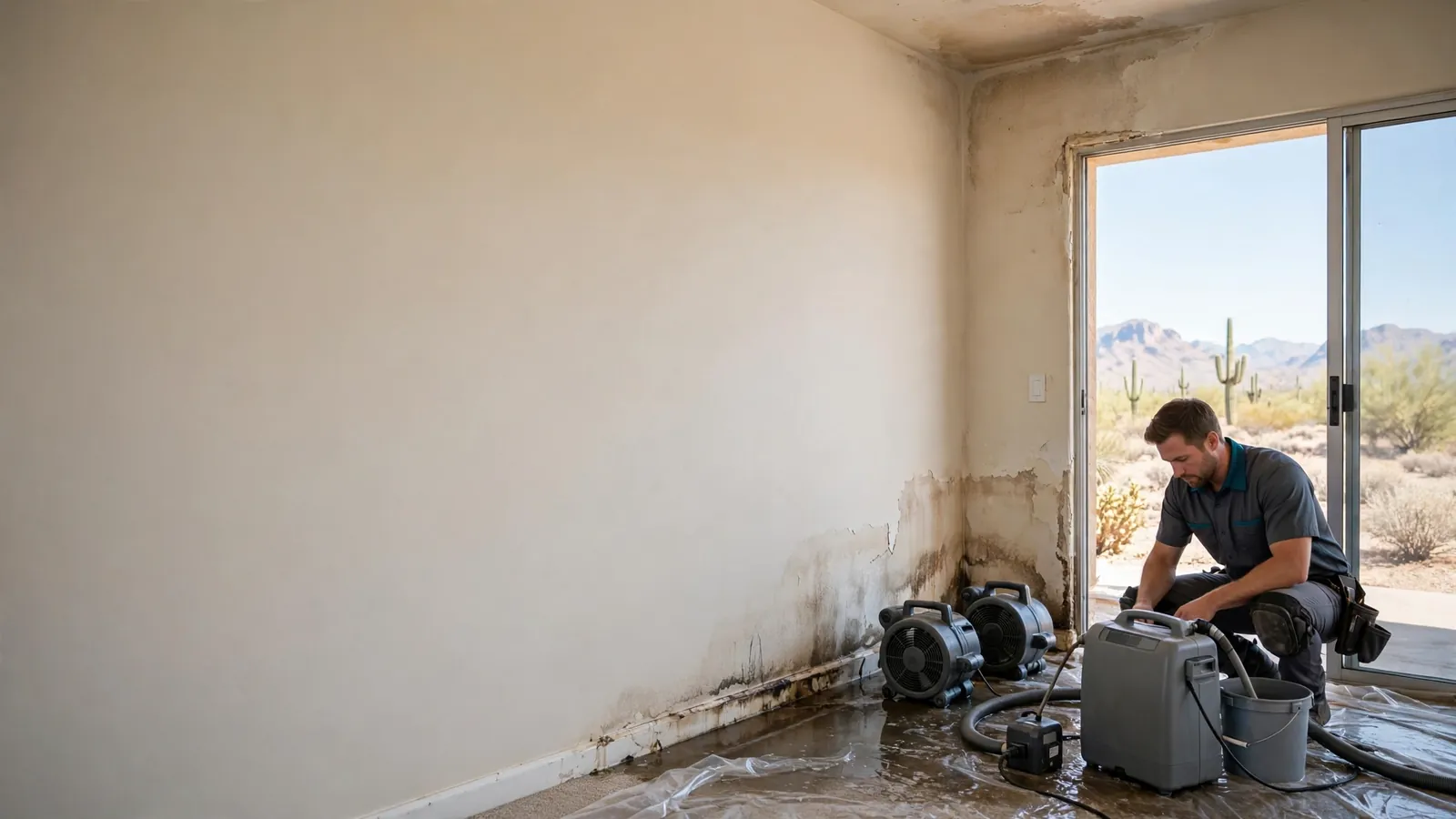
Air movers and dehumidifiers dry the garage floor, the hallway, and every room the water reached, based on the moisture map.
Wall and baseboard check
Drywall at the floor line and the baseboards behind it are checked for trapped moisture, and wet sections are dried or removed depending on the reading.
Carpet and pad extraction
Water is pulled from carpet fibres and the pad underneath, where surface mopping cannot reach and where water lingers longest.
Contents moved and protected
Boxes, tools, and belongings in the garage are moved off wet floors or blocked up so air can circulate underneath them.
Photo and reading record
Photos of the water and the damage, plus written moisture readings, give you a record for your insurer.
Plumber handover
The tank itself is left for the plumber: what was found, where the water came from, and what the tank looks like are written down so the plumber starts informed.
Next-step plan
You are told what was wet, what the drying plan is, and what to watch for — a stain, a smell, or flooring that changes shape.
How the work runs
Call and describe the water
Say where the water is, how deep it looks, whether it is still coming in, and whether it came from the water heater. That decides what equipment comes to the door.
Stop the water if it is safe
Shut off the water supply to the tank, or the main supply at the meter box. Stay away from wet outlets and switches. Do not touch the gas valve or relight a pilot.
Extract the standing water
Machines remove the visible water room by room, starting at the deepest point — usually the garage — and working back toward the rooms the water reached.
Map the hidden water
Moisture meters check walls, baseboards, flooring and the slab so nothing wet is left unrecorded.
Set up drying
Air movers and dehumidifiers are placed on the mapped wet areas, and the first readings are written down.
Check and confirm dry
Readings are taken again during drying. Work is complete when readings show the materials are dry, not when the surface feels dry.
Tools and methods used
Extraction machines
Truck-mounted and portable extractors pull water from garage floors, tile, and carpet pad far beyond what a household wet vacuum can move.
Moisture meters
Pin and pinless meters read moisture inside drywall, wood and concrete, so wet areas are found even when the surface looks dry.
Air movers
High-volume fans push dry air across wet surfaces and into wall cavities, speeding evaporation from materials.
Dehumidifiers
Commercial dehumidifiers pull moisture out of the air, so the water the air movers lift off the surfaces has somewhere to go.
Infrared cameras
A thermal camera can show where water has travelled behind walls and under flooring, where a meter alone would take longer to map.
Hygrometers
Humidity readings in the room show whether the drying is working — the air has to get dry before the materials can.
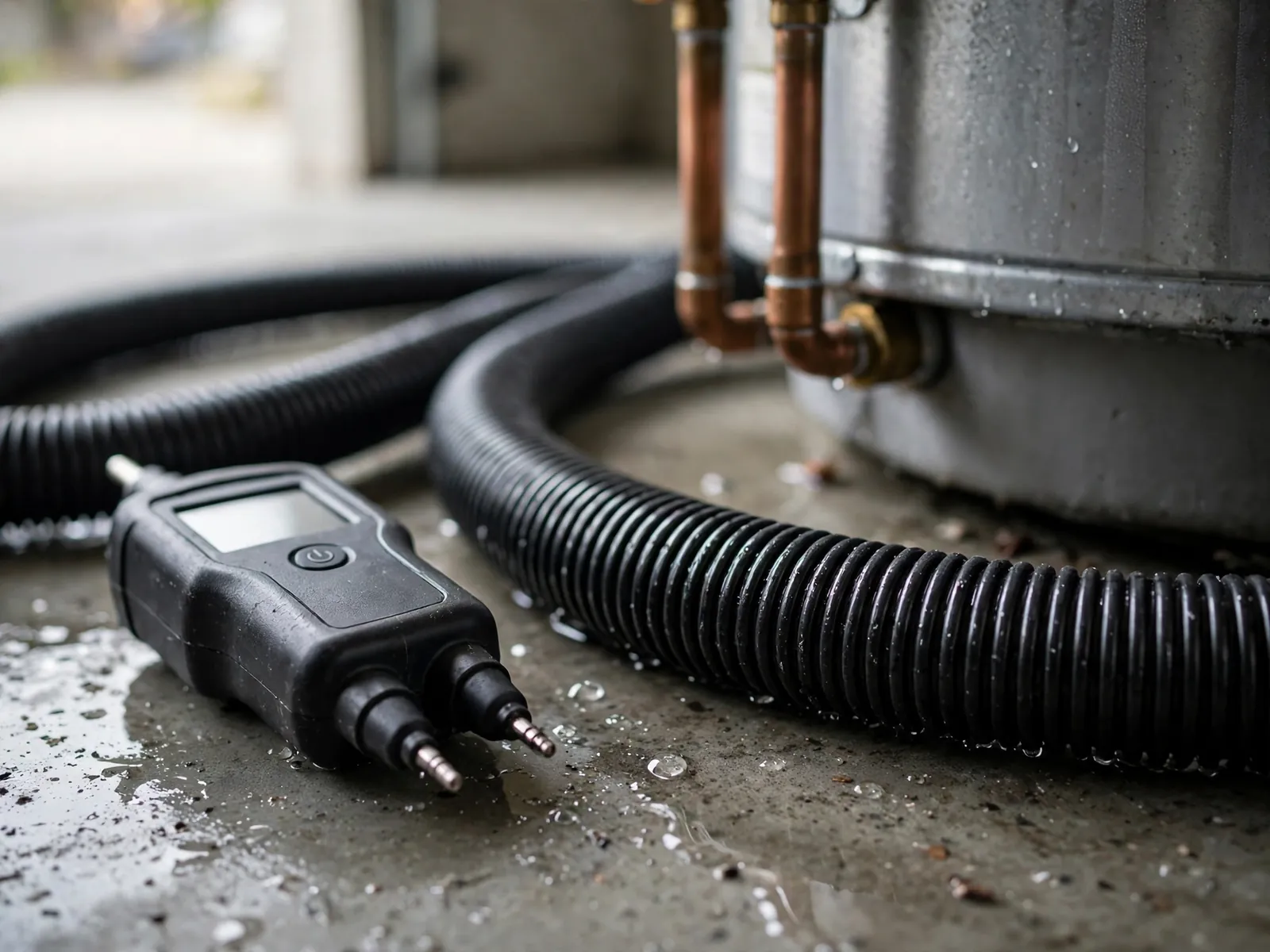
Who does what: plumber vs restoration
A water heater leak has two jobs, and two different people do them. The plumber fixes or replaces the tank: shutting off the gas or power to it, draining it, removing it, and fitting the replacement. The restoration crew handles the water the tank left behind: extraction, moisture mapping, drying, and the record for your insurer.
The order matters. The plumber stops the water at its source; the drying crew deals with what the water has already soaked. If the drying starts before the tank is fixed, the water keeps coming. If the tank is fixed but the water is never dried, the floor and walls stay wet — and the EPA notes that mold can begin to grow on damp surfaces within 24 to 48 hours.
Do not ask the drying crew to replace the tank, and do not ask the plumber to dry the house. Each one does their own half, and the handover between them is part of the job: what was found, where the water came from, and what the tank looks like are written down so the plumber starts informed.
Tank vs tankless: different leaks, different damage
A tank water heater holds a full tank of hot water, so when it fails the water comes out fast and in volume — a flood across the garage floor in minutes. A tankless water heater has no tank, so its failures are smaller and slower: a fitting, a valve, or a condensate line that drips behind a wall or inside a closet, sometimes for weeks before anyone notices.
The damage follows the same split. A tank failure is a wide, fast spread — garage, hallway, and the rooms beyond. A tankless failure is a narrow, slow soak — one wall, one closet, one patch of flooring, wet for a long time. The slow soak is often the worse drying job, because the materials have been wet for weeks and the moisture has travelled further than the stain suggests.
Either way, the response is the same: stop the water, extract what is standing, map what is hidden with moisture meters, and dry to readings. The difference is only in how far the map has to reach.
A leaking water heater keeps filling the garage and the rooms beyond it.
Water that is left standing keeps spreading — into walls, under flooring, and into the next room.
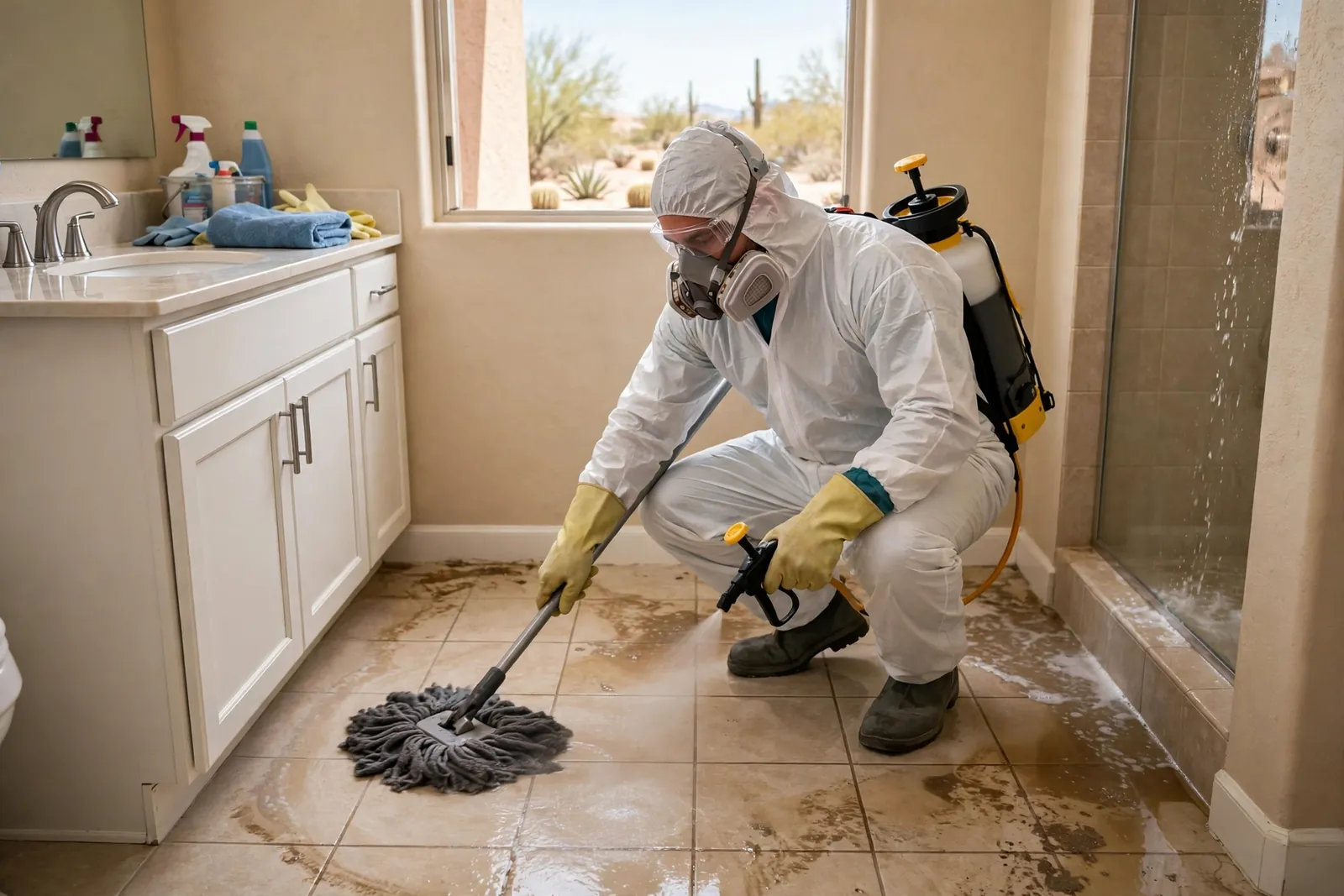
The water is out, the wet areas are mapped, and the drying is checked with readings.
The work is checked with moisture readings, not a look at the surface.
Problems a water heater leak causes
- Standing water across the garage floor, spreading under doors into the house.
- Wet drywall and baseboards where the water reached the hallway and nearby rooms.
- Wet carpet and pad in the rooms the water travelled through.
- A damp wall behind the tank, holding moisture where it cannot be seen.
- A musty smell from materials that stayed wet.
- Flooring that lifts, cups, or changes shape after soaking.
- A tank that keeps leaking because the source was never fixed.
- Damage to boxes, tools, and belongings stored on the garage floor.
Signs your water heater is leaking
- A puddle at the base of the tank that comes back after you mop it.
- Rusty or discoloured water from the hot taps.
- A pilot light that keeps going out, or a tank that rumbles or pops as it heats.
- A damp wall behind the tank, or a floor that feels soft near the closet.
- A water bill that rises without explanation.
- Water pooling on the garage floor with no rain and no other source.
- A musty smell in the garage or the closet where the tank sits.
- Hot water that runs out faster than it used to, or water that is never quite hot enough.
Related problems
Industries that use this service
Rental Properties · Apartments and Condos · All industries →
Frequently asked questions
Questions people ask about water heater leak water damage, answered plainly.
It can be. A tank that has let go can put out a large amount of water in a short time, and the water spreads across the garage floor and under doors into the house. If water is still coming out, shut off the water supply to the tank if it is safe to do so and call. A slow drip behind the tank is less urgent, but it still needs a plumber — and a moisture reading, because slow leaks soak further than they look.
Both, for different halves of the job. A plumber fixes or replaces the tank: shutting off the gas or power, draining it, removing it, and fitting the replacement. A restoration crew handles the water the tank left behind — extraction, moisture mapping, and drying. Do not ask the drying crew to replace the tank, and do not ask the plumber to dry the house.
Shut off the water supply to the tank if it is safe to do so — most Phoenix tanks have a shutoff valve on the cold-water line into the top of the tank — or shut off the main supply at the meter box. Move valuables and boxes off the wet garage floor, stay away from wet outlets and switches, take photos, and call. Do not touch the gas valve, and do not try to relight a pilot light.
That is a plumber's decision, not a restoration decision. A failed fitting or valve can sometimes be repaired; a tank whose bottom has given way usually cannot. The restoration crew can tell you where the water came from and what it soaked — the plumber decides what happens to the tank itself.
Look at the base of the tank first: a puddle that comes back after you mop it, rusty water from the hot taps, or a damp wall behind the tank all point to the tank. If the garage floor is wet but the tank is dry, the water may have come from elsewhere — a washing machine hose, a slab leak, or water pushed under the garage door in a storm. Moisture readings show where the water travelled from, even when the source is not obvious.
The Valley's water carries a heavy mineral load — 14 to 22 grains per gallon — and those minerals settle as sediment at the bottom of the tank. Sediment insulates the bottom of the tank from the water above it, the metal overheats in that spot, and the tank weakens from the inside. A tank that is eight to twelve years old, in hard water, with sediment that has never been flushed, is a tank living on borrowed time.
Most Phoenix homes keep the tank in the garage or in a closet — often a closet off the hallway or the laundry area. A garage tank that fails floods the garage first, then the hallway; a closet tank that fails soaks the wall and floor around the closet, and the rooms on the other side of that wall.
It depends on how much water there was and what it soaked. A garage floor dries fast with airflow. Drywall, baseboards, and carpet pad inside the house take longer — drying usually takes days, with moisture readings checked along the way. The readings decide when the materials are dry.
Sudden, accidental water damage from inside the home is often covered by a standard homeowners policy — and a tank failure is usually sudden. Flooding from outside usually needs a separate flood policy. The tank itself is a different question from the water damage it caused, so check your policy and keep photos and readings for the claim.
Concrete garage floors dry well with airflow. Inside the house, drywall wicks water upward from the floor line, baseboards trap moisture behind them, and carpet pad holds water for days. Wet sections are checked with a moisture meter and dried or removed depending on the reading — the reading decides, not the look of the surface.
Water damage in your Phoenix home?
Call Now to reach a local water damage professional. Describe the water, where it is, and what it has touched.
Call now for water damage help
Tap Call Now to reach a local water damage professional. Tell them where the water is, what it has touched, and whether it is still coming in.
Hours: Mon–Fri 7:00 AM–10:00 PM ET · Sat 8:00 AM–10:00 PM ET · Sun 7:00 AM–9:00 PM ET
Before you call
- Shut off the main water supply if it is safe to do so.
- Move valuables, rugs and electronics off wet floors.
- Take photos of the water and the damage for your records.
- Stay away from wet outlets, switches and light fixtures.
- Note when the water started and what caused it, if you know.