Water Damage in Rental Properties in Phoenix, AZ
A leak in a rental is a different job from a leak in a home the owner lives in. There is a tenant living with the water, a landlord who owns the building, and sometimes a property manager in between — and the water does not wait for them to agree on who calls. This page explains who does what, what to do first, and what to document, so the job moves while the paperwork catches up.
Need help with water damage?
Call Now to reach a local water damage professional. Describe the water, where it is, and what it has touched.
Hours: Mon–Fri 7:00 AM–10:00 PM ET · Sat 8:00 AM–10:00 PM ET · Sun 7:00 AM–9:00 PM ET
Who calls when a rental has water damage
The first question after a leak in a rental is usually who is supposed to call. The answer depends on the lease, but the shape of it is the same in most rentals: the landlord or property manager handles the building — the pipes, the water heater, the walls, the flooring — and the tenant handles their own belongings. The tenant is usually the one who finds the water, because they live with it. The landlord or manager is usually the one who arranges the work on the building. Neither side needs to wait for the other to report the water: the tenant can report it the moment it is found, and the landlord or manager can arrange the call from there.
A property manager sits in the middle of this. Managers look after several rentals at once, so they often have a process for water calls: the tenant reports the leak, the manager arranges access, and the crew is let in with the keys on file. If you are a tenant and your manager has a maintenance line or an online portal, use it first — but if water is still coming in, call directly as well. A portal ticket does not stop water; a shutoff valve does.
This page is a plain explanation, not legal advice. Leases differ, and so do policies. If the question is who pays, the lease and the insurance policy are the documents that decide it. What matters in the first hour is not the paperwork — it is stopping the water, getting the standing water out, and writing down what happened.
One point of confusion comes up often: the tenant finding the water does not make the tenant responsible for the leak. A supply hose that splits, a water heater that lets go in the garage, or a condensate drain that clogs are building problems, and they happen in rentals the same way they happen in any Phoenix home. What the tenant controls is the speed of the report — and that speed is what keeps a small leak from becoming a large drying job.
Why rentals cannot wait
A rental that sits wet loses money in two directions at once. The first is the repair itself: drywall wicks water upward from the floor, wood flooring absorbs it at the edges, and carpet pad holds it for days. The EPA notes that mold can begin to grow on damp surfaces within 24 to 48 hours, so a leak found on Friday and left until Monday is a different job from the same leak dealt with on Friday.
The second is the tenancy. A tenant living with wet carpet, a damp smell, or a ceiling stain is a tenant who may ask to move, withhold rent, or leave at the end of the lease. A unit that cannot be shown cannot be rented, and every week of turnover is a week without rent coming in. Drying is not only about the building — it is about getting the unit back to a condition where someone can live in it.
Turnover makes rentals urgent in another way. A leak found between tenants, during the days when the unit is empty and being prepared for the next tenant, is easy to miss: nobody is living there to notice the damp patch or the smell. A walk-through that checks under sinks, behind the water heater, and around the AC drain line catches what an empty unit hides. The easiest day to find a leak is the day the unit is empty; the hardest day is the day the new tenant moves in and finds it.
Phoenix rentals add their own causes. Many rental houses in Mesa, Glendale, and central Tempe were built before 1990 with copper supply lines, and copper in hard water develops pinhole leaks over time. Tempe rentals near Arizona State University see upstairs-neighbour leaks in multi-unit buildings, where one tenant's washing machine hose becomes the ceiling stain in the unit below. And every rental with an attic air handler shares the Valley's most common summer cause: a condensate drain clogged with hard-water minerals, dripping onto the ceiling below.
How water spreads in a rental
Water in a rental rarely stays in one room. In a single-family rental it spreads across the slab: a leak in the kitchen reaches the hallway carpet, then the bedroom wall, then the baseboards in the next room. Drywall wicks water upward from the floor line, so a puddle that looks small at the floor can mean a wet wall two feet up. The moisture map matters more than the puddle — readings show where the water went, including rooms that look dry.
In a multi-unit rental the spread goes up and down as well as sideways. A supply line or drain leak in an upstairs unit sends water through the floor into the ceiling of the unit below, and the tenant downstairs is often the first to see it — as a stain, a drip, or a sagging patch of ceiling. Finding the source means checking the unit above, not only the room with the stain. That is why access to both units matters, and why the manager's keys and the tenant's cooperation decide how fast the source is found.
Shared walls and shared plumbing make rental leaks harder to trace. A damp wall in one unit may be fed by a pipe in the next unit, or by a drain line that serves both. Moisture meters read through drywall and flooring, so the wet area can be mapped without opening every wall. The map is also the record: it shows what was wet at the start, which rooms the drying plan covers, and what the readings were when the job finished.
Flood water from outside is a different spread again. Monsoon bursts from June 15 to September 30 can push water under doors and through low thresholds, and a rental on a low street or near a wash takes water first. Water that comes in from outside is treated as flood water, and it is handled differently from a clean supply-line leak — it is not water to mop up with household tools.
What happens on the call
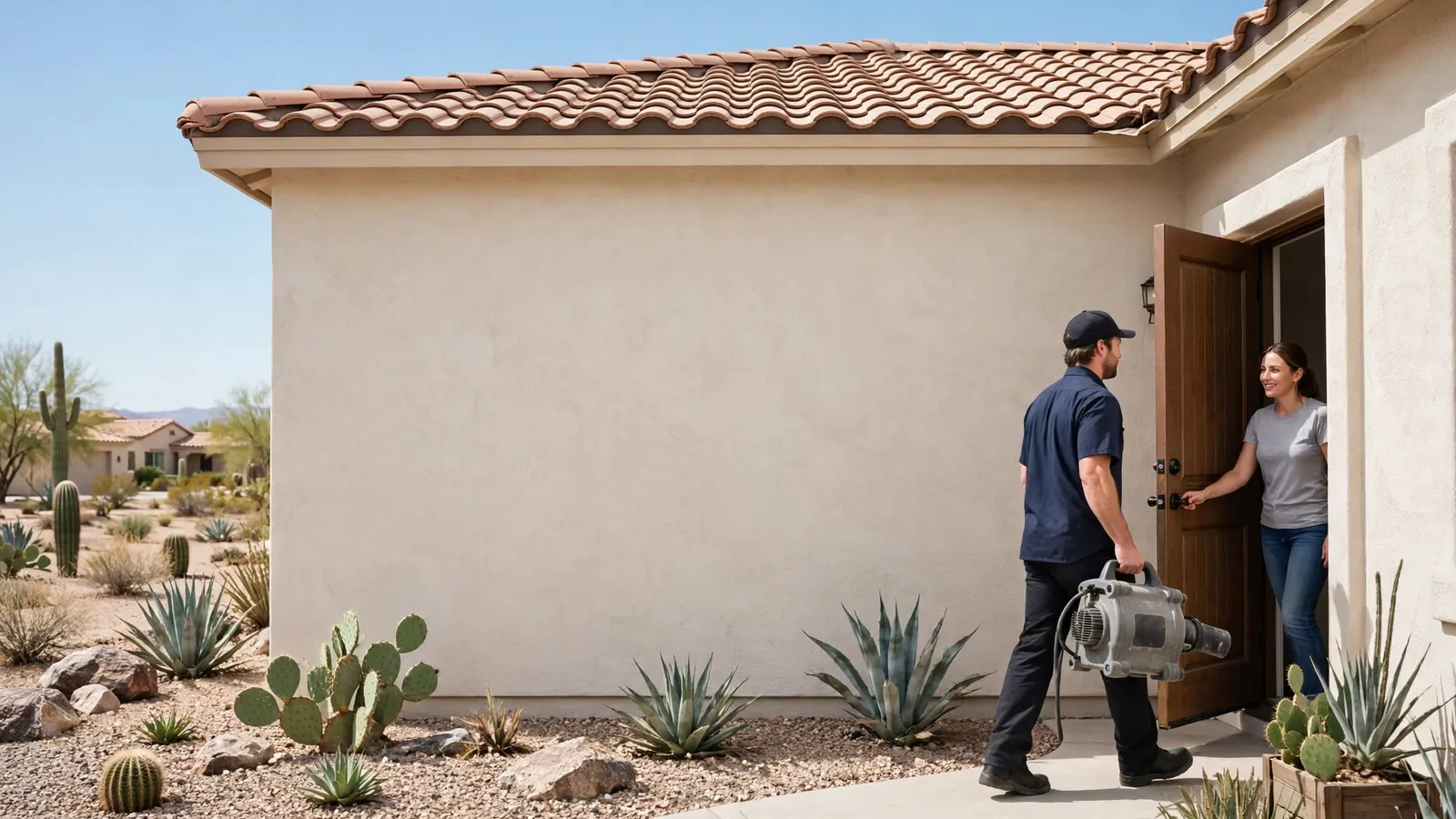
The call for a rental follows the same sequence as any water damage call, with one extra step: access. The caller describes where the water is, how deep it looks, whether it is still coming in, and what it has touched. Then comes the question of who lets the crew in — the tenant, the manager with keys, or the landlord. Sorting that out on the call saves a wasted trip.
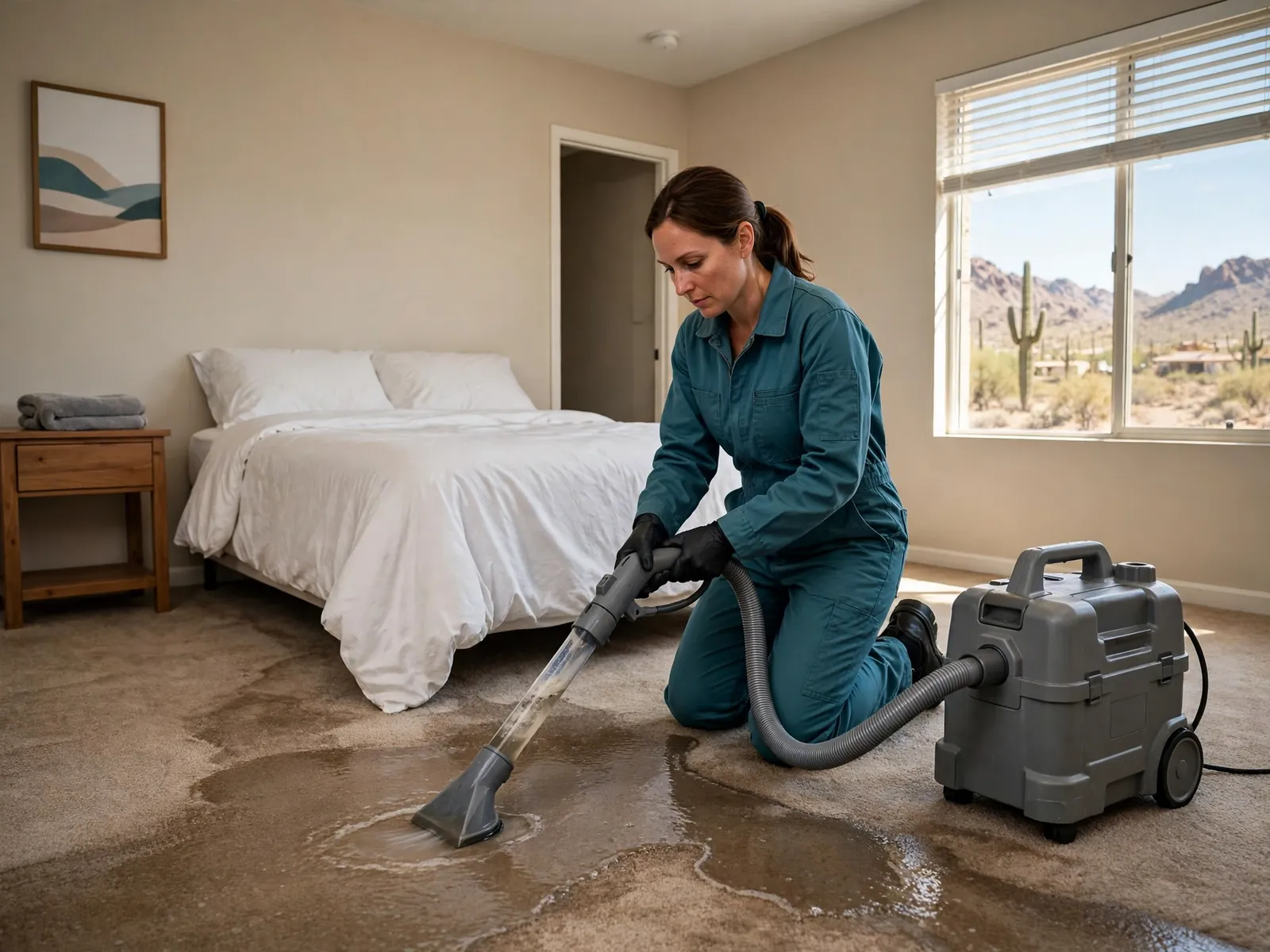
If the tenant is home, they can shut off the main water supply if it is safe to do so, move valuables and electronics off wet floors, and take photos before the crew arrives. If the unit is empty, the manager or landlord lets the crew in and the photos become even more important, because nobody was there to see how far the water spread. Either way, the crew starts with extraction of standing water, then maps the hidden water with moisture meters.
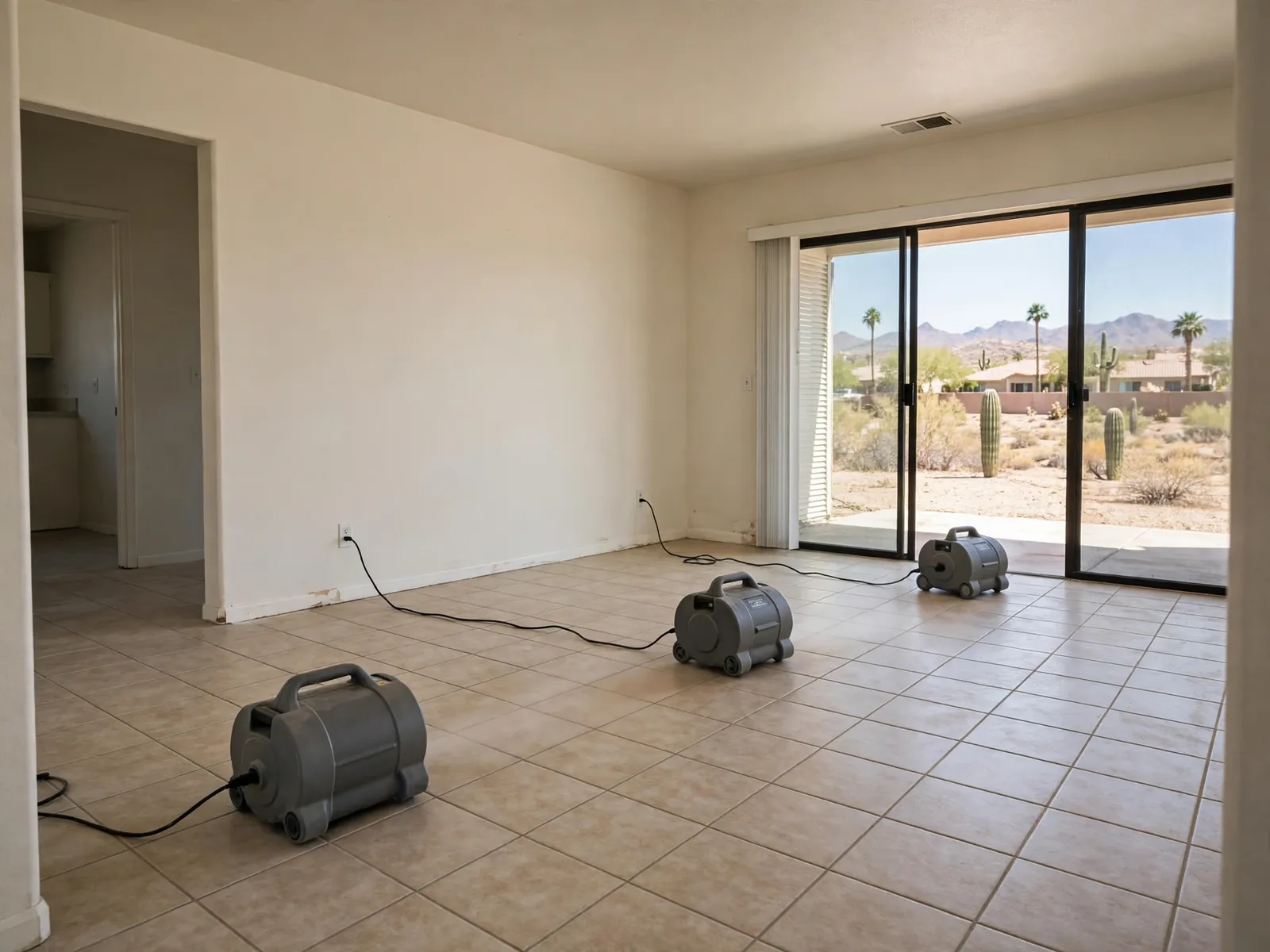
Tenant notice is part of the job in an occupied rental. The tenant needs to know when the crew is coming, how long drying equipment will run, and whether any rooms need to stay clear. Drying equipment runs for days, and it is loud — air movers and dehumidifiers are not quiet machines. A tenant who knows what to expect is a tenant who leaves the equipment running; a tenant who was not told may switch it off, and the drying stalls.
The call also sets expectations about what happens after drying. Wet drywall, baseboards, or flooring that cannot be dried is removed. The rooms are checked with moisture readings, not by looking at the surface. When the readings show the materials are dry, the drying phase is done — and the rebuild, if any is needed, is a separate step arranged separately.
Documentation for the claim
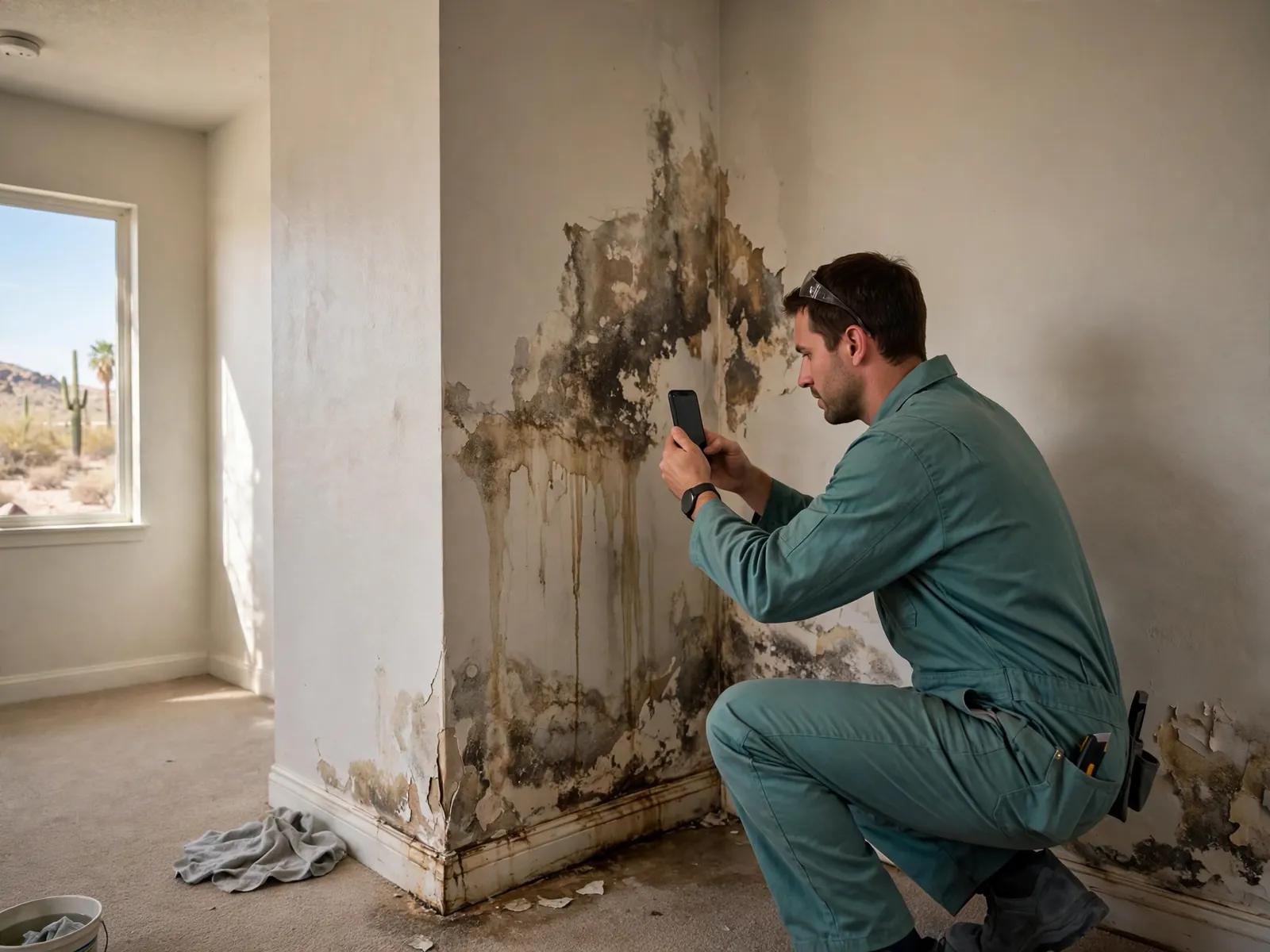
Documentation is what turns a wet rental into a claim that can be explained. Photos come first: the water itself, the source if it can be seen, every room the water reached, and the condition of flooring, walls, and belongings. Take them before anything is moved or dried, because the water level and the spread are the facts that disappear first.
Moisture readings are the second record. The crew writes down what was wet at the start, what the drying plan covers, and what the readings were when the job finished. Those readings are the proof that the drying happened — and the proof that it finished. Keep a copy with the photos, not only with the crew's paperwork.
The third record is the written scope: what work was done, which materials were removed, and what was dried in place. An insurer asks for this, and a landlord needs it to explain the work to the tenant and to the next tenant. If the question of who pays comes up later, the scope is the document that shows what was actually done and why.
Whose insurer pays is the question that follows, and it depends on the policy. Sudden, accidental water damage from inside the home is often covered by a standard homeowners policy, while flooding from outside usually needs a separate flood policy. A tenant's belongings are usually covered by the tenant's own renters policy, not the landlord's building policy. None of that is decided on the day of the leak — but the photos and readings taken on that day are what the claim is built on.
Between tenancies: stopping the next leak
The days between tenants are the right time to stop the next leak, because the unit is empty and every wall, floor, and fixture can be checked. Start under the sinks and behind the toilets: flexible supply hoses are the most common burst point in a Phoenix home, and a hose that is stiff, cracked, or bulging is a leak waiting for a tenant to move in. Washer hoses deserve the same look, and so does the dishwasher supply line.
The water heater deserves a look of its own. Most Phoenix rentals have the tank in the garage or a closet, and a tank that is past its early years can let go without warning — a puddle at the base, rusty water, or a damp wall behind the tank are the signs. The tank itself is a plumber's job; the water it leaves behind is a restoration job. Checking the tank between tenants costs a look; replacing a floor after it fails costs far more.
The AC condensate drain is the third check, and in Phoenix it is the one that gets missed most. Hard water leaves mineral buildup in the drain line, the line clogs, the pan overflows, and the attic air handler drips onto the ceiling below. Clearing the drain line and checking that the float switch — the device that shuts the AC off when the pan fills — actually works takes a few minutes and prevents the Valley's most common summer leak.
Finally, make sure someone in the unit knows where the main shutoff is. Most Phoenix homes have it at the meter box near the street or on the house wall near the water heater. A tenant who knows where it is can stop a leak in minutes; a tenant who does not will watch the water spread while they look for it. Put the shutoff location in the move-in notes, next to the breaker panel and the AC filter size.
Services used most
Emergency Water Extraction · Water Damage Restoration · Structural Drying & Dehumidification · Mold Remediation After Water Damage
Where we work
Related guides
Does Homeowners Insurance Cover Water Damage? · What To Do First When Water Floods Your Home
Related problems
Frequently asked questions
Questions people ask about water damage in rental properties, answered plainly.
It depends on the lease and the policies. In most rentals the landlord or property manager handles the building — pipes, water heater, walls and flooring — while the tenant handles their own belongings, usually through a renters policy. Sudden, accidental water damage from inside the home is often covered by a standard homeowners policy. Read the lease and the policy to see how your rental divides it.
A tenant can report the water the moment it is found — they are the one living with it. The landlord or property manager usually arranges the work on the building, but nobody needs to wait for the other side to make the first call. If water is still coming in, report it right away and shut off the main supply if it is safe to do so.
Then the source is upstairs and the damage shows downstairs, usually as a ceiling stain, a drip, or a sagging patch. Finding the source means checking the unit above, not only the room with the stain. The property manager's keys and both tenants' cooperation decide how fast the source is found.
Fast. According to the U.S. EPA, mold can begin to grow on damp surfaces within 24 to 48 hours, so extraction and drying start the same day where possible. Drying usually takes days, with moisture readings checked along the way. The readings decide when the materials are dry.
Photos of the water, the source if it can be seen, and every room the water reached — taken before anything is moved or dried. Then the moisture readings from the start of the job, the written scope of what was done, and the readings when the job finished. Those four records are what a claim is built on.
The drying itself is the same — extraction, moisture mapping, air movers and dehumidifiers, readings to confirm dry. What differs is the coordination: access through the manager or landlord, notice to the tenant about equipment noise and room access, and documentation that serves both the owner's claim and the tenant's record.
Belongings are moved off wet floors and out of wet rooms where possible, and photographed before they are moved. Whether damaged belongings are covered depends on the tenant's own renters policy, not the landlord's building policy. Wet items that cannot be dried are removed — the drying crew can advise on what the readings show, but the policy decides the claim.
Use the empty days to check what a tenant would never see: supply hoses under sinks and behind toilets, the water heater in the garage or closet, and the AC condensate drain line. An empty unit hides a leak — nobody is there to notice the damp patch or the smell — so a walk-through that checks those three spots catches what the next tenant would otherwise find.
The same causes as any Phoenix home, with a rental twist: AC condensate leaks from clogged drain lines in summer, slab leaks under concrete floors, burst supply hoses, and water heater failures in garages and closets. Older rentals in Mesa, Glendale and central Tempe add pre-1990 copper lines, and Tempe rentals near the university add upstairs-neighbour leaks in multi-unit buildings.
Water damage in your Phoenix home or business?
Call Now to reach a local water damage professional. Describe the water, where it is, and what it has touched.
Call now for water damage help
Tap Call Now to reach a local water damage professional. Tell them where the water is, what it has touched, and whether it is still coming in.
Hours: Mon–Fri 7:00 AM–10:00 PM ET · Sat 8:00 AM–10:00 PM ET · Sun 7:00 AM–9:00 PM ET
Before you call
- Shut off the main water supply if it is safe to do so.
- Move valuables, rugs and electronics off wet floors.
- Take photos of the water and the damage for your records.
- Stay away from wet outlets, switches and light fixtures.
- Note when the water started and what caused it, if you know.