Water Damage in Retail Shops in Phoenix, AZ
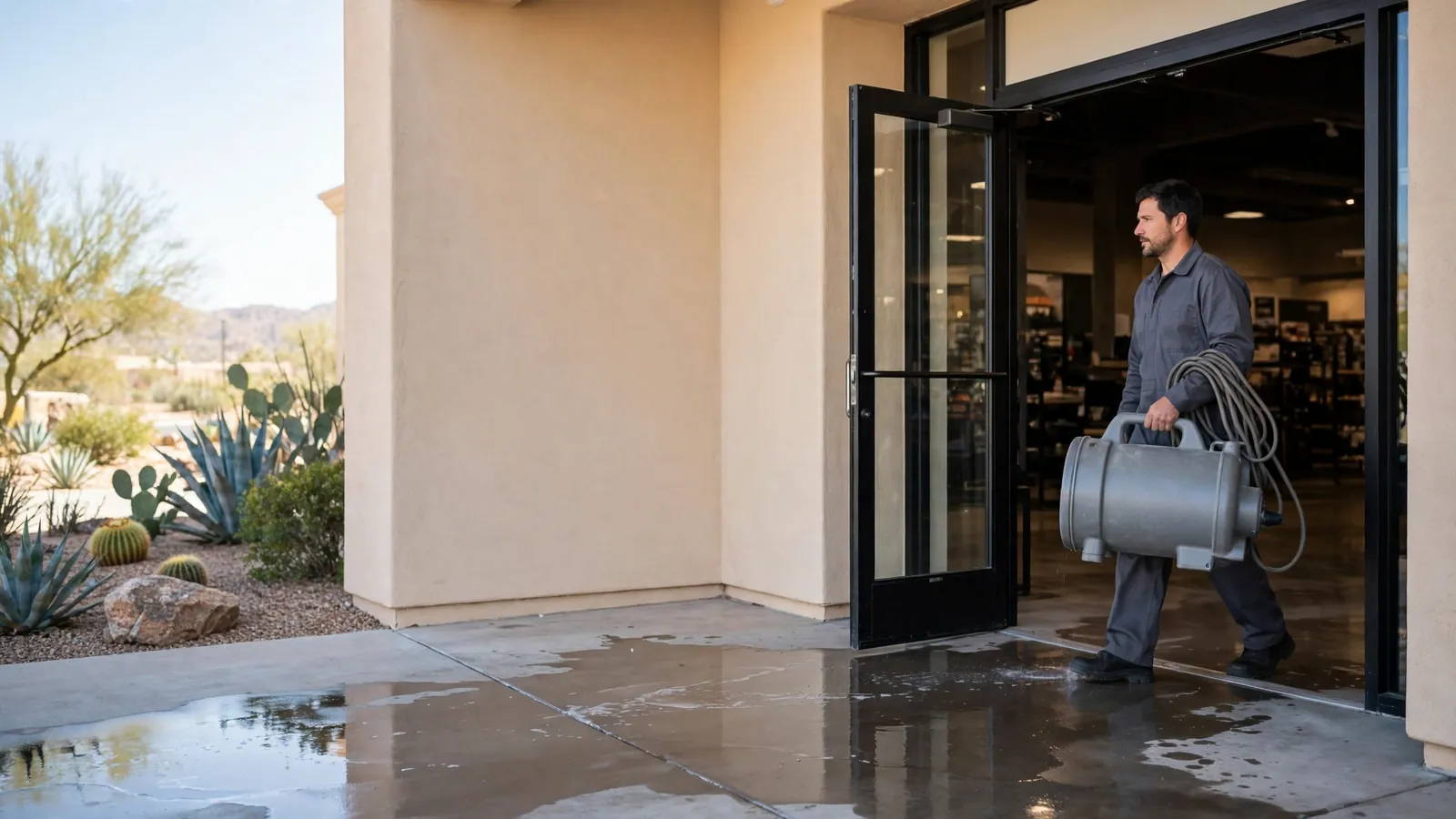
A retail shop has two things water can ruin at once: the building and the stock. A leak over the sales floor wets the carpet, the fixtures, and the goods on the shelves — and a shop that cannot open is a shop that cannot sell. This page explains how water damage works in Phoenix retail shops: stock and inventory, customer areas, after-hours work, shared mall plumbing, and the documentation a contents claim needs.
Need help with water damage?
Call Now to reach a local water damage professional. Describe the water, where it is, and what it has touched.
Hours: Mon–Fri 7:00 AM–10:00 PM ET · Sat 8:00 AM–10:00 PM ET · Sun 7:00 AM–9:00 PM ET
Stock and inventory water
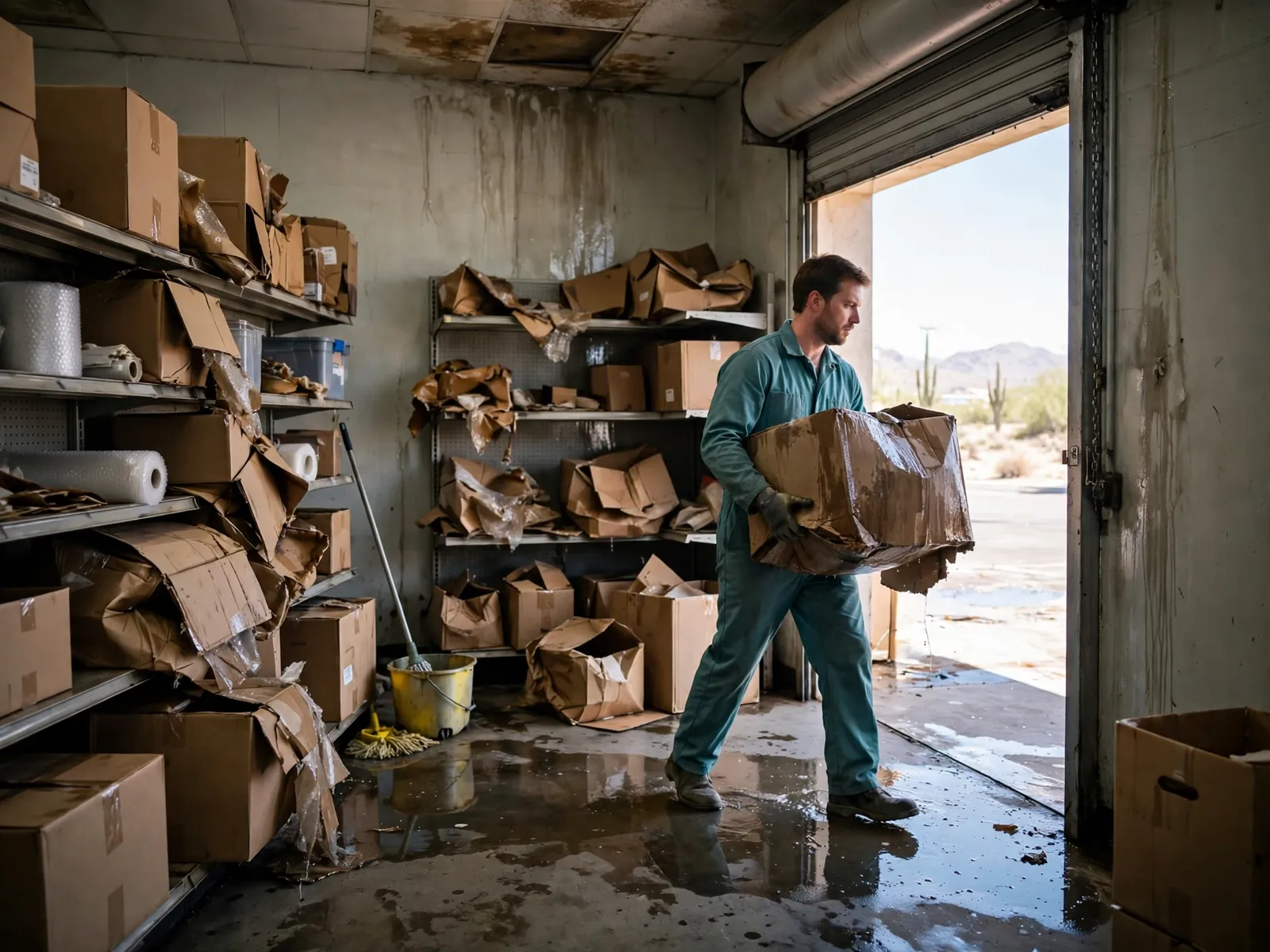
In a retail shop, the stock is often worth more than the room it sits in, and water reaches it first. A roof leak over the sales floor drips onto the top shelf, then the shelf below, then the floor — and by the time anyone notices, several shelves of goods are wet. A burst pipe in a back room soaks the stock stored on the floor before it soaks the floor itself. Cardboard boxes wick water upward from the floor line, so stock that looks dry on top can be wet underneath.
The first step is to move the stock, not to mop the floor. Dry goods are moved to a dry room or a dry shelf; wet goods are separated, photographed, and set aside — not thrown away before the claim is documented. What can be dried and what cannot depends on the goods: hard goods may dry, paper and fabric goods usually cannot, and anything that touched sewage or flood water is handled as contaminated.
Storage is where retail water damage hides. Back rooms, stockrooms, and storage areas are checked less often than the sales floor, and a slow leak behind a stack of boxes can run for weeks before anyone sees it. A monthly walk through the stockroom — looking for damp floors, musty smells, stained ceiling tiles, and boxes that feel damp at the base — catches what the daily sales-floor check never sees.
Phoenix retail adds its own causes. Shops in Glendale and the Westgate area sit in large retail buildings with long flat roofs, where a monsoon burst ponds water over the sales floor. Mesa malls and Phoenix retail corridors add shared plumbing — a burst riser in a mall wall can send water into several shops at once, and the source is in a shared space, not in any one shop.
Customer areas and safety
The sales floor is a public space, and water on a sales floor is a safety problem before it is a repair problem. Wet tile and wet smooth flooring are slip hazards, wet carpet hides the water underneath it, and a ceiling that drips over a walkway is a hazard to every customer who walks under it. The first decision in a retail leak is not how to dry it — it is which areas to close.
Closing an area is a judgment call the shop makes with the crew: the wet area is marked and closed, the dry areas stay open, and the walkway between them stays clear and dry. A ceiling that sags or bulges over a customer area is closed off entirely — stay out from under it, move the fixtures and stock out of the way if it can be done safely, and call. Do not put a bucket under a sagging ceiling and keep selling beneath it.
Wet electrical fixtures in a customer area need the same caution as anywhere else: stay away from wet outlets, switches, and light fixtures, and do not let customers near them. Display lighting, illuminated signs, and powered fixtures that got wet are checked before they are switched back on.
If the shop has to close entirely, the closure itself is part of the claim. Write down the day the water was found, the areas that closed, and the day each area reopened — with the moisture readings that supported each reopening. A retail claim is built on dates and areas, and the log is what proves the interruption.
After-hours work so trading continues
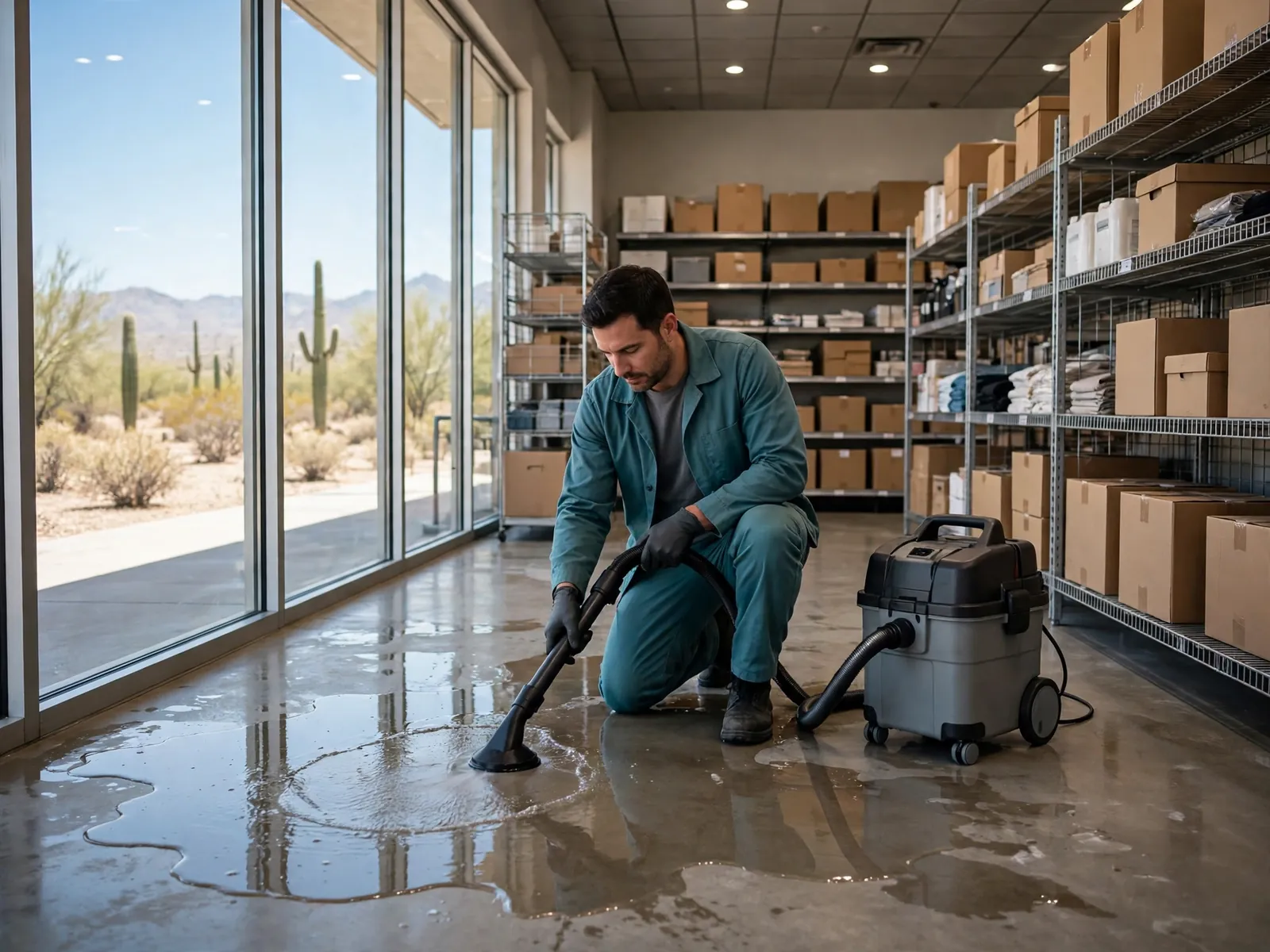
Most retail drying happens after hours, because that is when the shop is empty enough for the work to move fast. Extraction, removal of wet materials, and placement of drying equipment can all happen in an evening, and the readings can be taken the next morning before the doors open. After-hours work needs access — keys, alarm codes, and a contact who can be reached if the crew finds something unexpected.
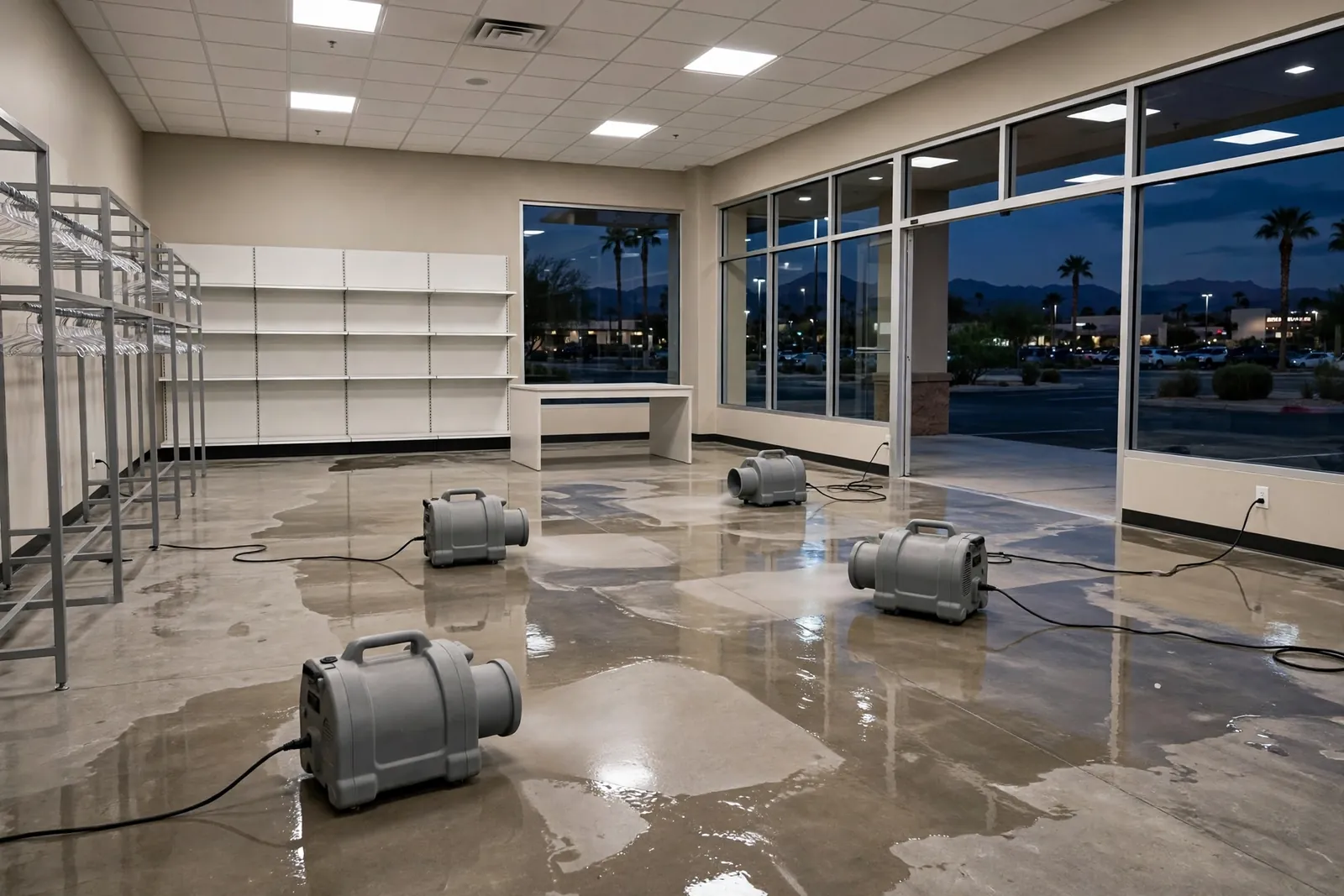
The drying itself does not stop for trading hours: air movers and dehumidifiers run for days, and they are loud. In a shop that means placing equipment where it dries the structure without sitting next to the till or the fitting rooms — or, where that cannot be done, scheduling the loudest work for the hours when the shop is closed. The placement is planned around the trading day, not the other way round.
Fitting rooms, display fixtures, and shelving need attention during after-hours work. Wet fixtures are moved or blocked up so air can circulate underneath them; shelving that sits on a wet floor is emptied and moved. The crew maps the wet area first, then places equipment where it dries the floor and the walls without blocking the next morning's opening.
A shop that reopens in the morning with drying equipment still running needs a plan for the customers: which areas are open, which are closed, and where the equipment sits. A short note at the door — or a word from the staff — keeps customers out of the wet areas and keeps the equipment running. Equipment that is switched off by a well-meaning member of staff is equipment that is not drying.
Shared mall plumbing and roof leaks
A shop in a mall or a retail centre shares its plumbing and its roof with its neighbours, and a leak in one shop can travel through shared systems into another's. A burst riser in a mall wall can send water into several shops at once. A roof drain that serves the whole centre can back up and send water over the shop at the low end of the roof. A drain line that serves several units can clog in one shop and back up in the next.
Shared systems also mean shared responsibility, and the lease and the centre's documents decide where one shop's responsibility ends and the centre's begins. This page does not give a rule for that — the documents do. What matters on the day of the leak is the order of operations: report it, stop it if it is safe, get the standing water out, and let the documents sort out the bill while the drying is already under way.
The centre manager is the key person on a retail job in a mall. They hold the keys to the shared spaces, they know the risers and the roof access, and they can tell the neighbouring shops what happened before the water reaches them. The shop should tell the manager right away — and the manager should tell the neighbours, because the shop next door may have a stain on its own ceiling and not know why.
Roof leaks are the most common mall pattern in Phoenix. Large retail buildings have long flat roofs, and monsoon rain that ponds on a flat roof finds the weak point — a scupper, a drain, or the underlayment — and comes in over the sales floor. Monsoon season runs June 15 to September 30, and a single heavy burst can overwhelm a roof drain that handled lighter rain all year. Checking the roof drains before the season starts is the one maintenance step that prevents the most retail leaks.
Documentation for stock and contents claims
A retail claim has two parts: the building and the contents. The building claim needs the photos, the moisture readings, and the written scope — what was wet, what was done, which materials were removed, and what the readings were when the job finished. The contents claim needs the stock record: what got wet, how much of it, and what it was worth.
Photograph the stock before anything is moved: the wet shelves, the wet boxes, the water on the floor, and the source if it can be seen. Then photograph each group of wet goods as it is separated — the labels, the quantities, and the condition. A photo of a wet box with its label visible is worth more to a claim than a photo of a wet floor.
Keep the stock list with the photos: the item, the quantity, and the value from your own records. Do not throw wet stock away before it is photographed and listed — once it is gone, the claim has no record of it. Wet stock that cannot be dried is set aside, not mixed back in with dry stock.
Sudden, accidental water damage from inside the building is often covered by a standard commercial policy, while flooding from outside usually needs a separate flood policy. Whether the stock is covered, and for how much, depends on the policy — and the policy is read against the photos and the stock list. That is why the documentation happens on the day of the leak, not a week later.
Services used most
Emergency Water Extraction · Water Damage Restoration · Structural Drying & Dehumidification
Where we work
Related guides
Related problems
Frequently asked questions
Questions people ask about water damage in retail shops, answered plainly.
Close the wet area to customers, move dry stock to a dry room or shelf, stay away from wet outlets and switches, and call. Do not keep selling beneath a ceiling that drips or sags — the wet area is closed until the water is out and the ceiling and floor are checked.
Often, yes. The wet area is closed and isolated while the dry areas stay open, and drying equipment is placed to keep walkways clear. The loudest work is usually scheduled for after hours. If the whole shop has to close, write down the dates each area closed and reopened — that log is part of the claim.
Wet stock is separated, photographed with its labels visible, and listed with quantities and values from your own records. What can be dried and what cannot depends on the goods — hard goods may dry, paper and fabric goods usually cannot, and anything that touched sewage or flood water is handled as contaminated. Do not throw wet stock away before it is photographed and listed.
Flat-roof leaks during monsoon bursts, shared mall plumbing — a burst riser in a mall wall can send water into several shops at once — burst supply lines in back rooms, and slow leaks behind stockroom shelving that run for weeks before anyone sees them. Monsoon season runs June 15 to September 30.
It depends on the lease and the centre's documents. The centre usually handles shared systems — risers, the roof, shared drains — while each shop handles what is inside its own unit. The centre manager is the key person on the day of the leak, because they hold the keys to the shared spaces and can warn the neighbouring shops.
Moisture readings map exactly which areas are wet, so only the wet areas are closed. Air movers and dehumidifiers are placed on the mapped wet areas, with walkways kept clear and dry. The readings are checked during drying, and each area reopens when its readings show the floor and walls are dry.
Photos of the wet shelves, the wet boxes with their labels visible, and the water on the floor — taken before anything is moved. Then a stock list: the item, the quantity, and the value from your own records. Keep the photos and the list with the moisture readings and the written scope of the building work.
Yes — and it usually does, because drying takes days and the equipment runs continuously. After-hours work needs access: keys, alarm codes, and a contact who can be reached if the crew finds something unexpected. Make sure staff know not to switch the equipment off in the morning.
Walk the stockroom every month and look for damp floors, musty smells, stained ceiling tiles, and boxes that feel damp at the base. Check the roof drains before monsoon season, know where the shop shutoff is, and keep stock off the floor on shelving or pallets — cardboard boxes on a concrete floor wick water upward from the floor line.
Water damage in your Phoenix home or business?
Call Now to reach a local water damage professional. Describe the water, where it is, and what it has touched.
Call now for water damage help
Tap Call Now to reach a local water damage professional. Tell them where the water is, what it has touched, and whether it is still coming in.
Hours: Mon–Fri 7:00 AM–10:00 PM ET · Sat 8:00 AM–10:00 PM ET · Sun 7:00 AM–9:00 PM ET
Before you call
- Shut off the main water supply if it is safe to do so.
- Move valuables, rugs and electronics off wet floors.
- Take photos of the water and the damage for your records.
- Stay away from wet outlets, switches and light fixtures.
- Note when the water started and what caused it, if you know.