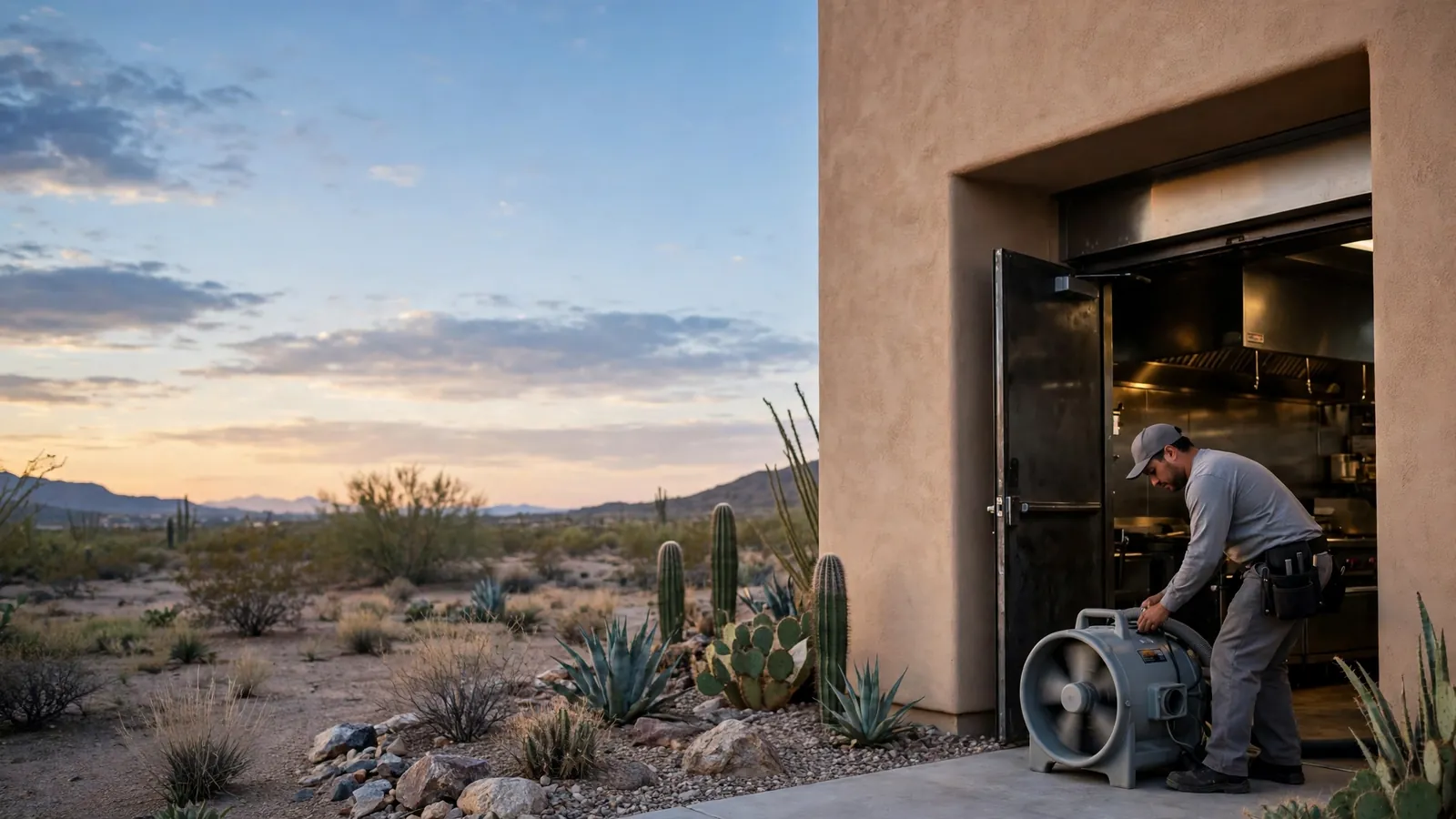
Water Damage in Restaurants and Hotels in Phoenix, AZ
A restaurant or hotel cannot close the way a home can wait. The kitchen has to serve, the guest rooms have to be slept in, and the dining room has to open — and water damage threatens all three at once. This page explains how water damage works in restaurants and hotels in Phoenix: kitchen lines, guest-room leaks, contaminated water, and the checks that have to pass before service resumes.
Need help with water damage?
Call Now to reach a local water damage professional. Describe the water, where it is, and what it has touched.
Hours: Mon–Fri 7:00 AM–10:00 PM ET · Sat 8:00 AM–10:00 PM ET · Sun 7:00 AM–9:00 PM ET
Kitchen supply and drain lines
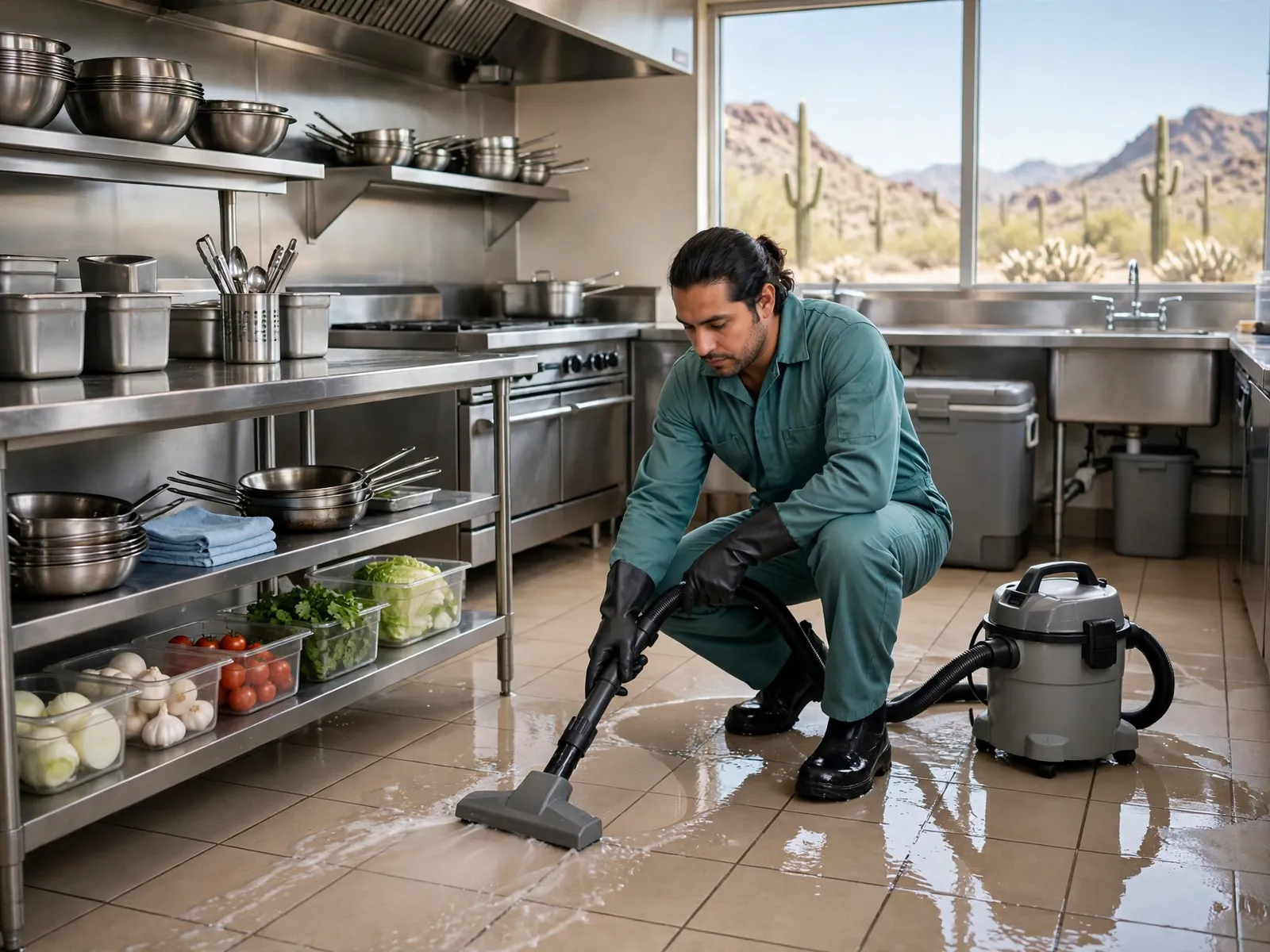
A restaurant kitchen is the wettest room in any commercial building in Phoenix. Supply lines feed sinks, dishwashers, ice machines, and steam equipment; drain lines carry grease, food waste, and hot water away. Both fail in their own way: supply lines split and spray, drain lines clog and back up, and a dishwasher drain hose that comes loose can flood a kitchen floor in minutes.
Grease is the kitchen's own cause. Drain lines that carry kitchen waste narrow with grease over time, and a line that drains slowly on a quiet day backs up on a busy night, when every sink and dishwasher is running at once. The backup shows up at the lowest drain first — usually a floor drain near the dish station — and the water it brings is not clean water. It is treated as contaminated water, and the cleanup is a different job from a clean supply-line leak.
Ice machines and beverage stations add a quiet leak of their own. A supply line to an ice machine or a soda system drips slowly behind the equipment, where nobody sees it, and the floor underneath stays damp for weeks. The first sign is often a smell, or a floor tile that has lifted, or a stain on the ceiling of the room below. A monthly look behind the ice machine and under the dish station catches what the daily cleaning never sees.
When a kitchen line fails during service, the first steps are the same as any water damage: shut off the supply if it is safe to do so, move what can be moved off the wet floor, stay away from wet outlets and switches, and call. The kitchen stays closed until the water is out and the floor is checked — a wet kitchen floor is a slip hazard and a contamination risk, and service does not resume over it.
Guest-room leaks and ceilings
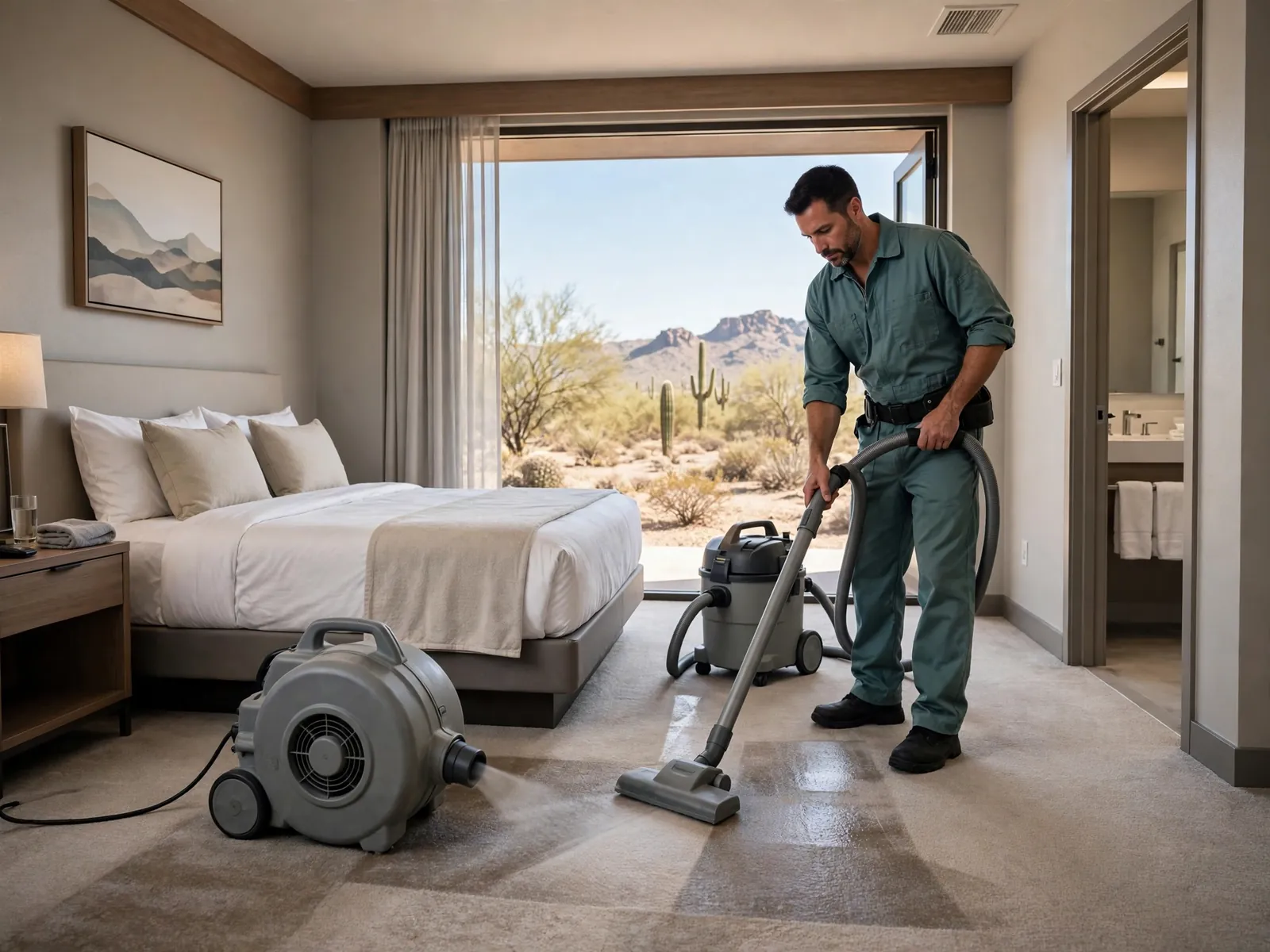
In a hotel, the most common water damage call is the guest-room ceiling. A supply hose, toilet valve, or shower drain in the room above lets go, and the water comes through the ceiling of the room below — often while the room is occupied. The guest reports a drip or a stain; the room above reports nothing, because the leak is behind their wall or under their floor.
A wet guest room is a room that cannot be sold, and a wet room above it is a room that cannot be sold either until the source is found. That is why the first step is to check the room above, not only the room with the stain. Turning off the water to the upstairs fixture stops the flow; drying the ceiling below is the second job, and it starts only once the flow has stopped.
Ceilings in hotels carry more than drywall — they carry insulation, ductwork, and cabling, and water that sits in a hotel ceiling spreads sideways through all of it. Moisture readings are taken from below, through the drywall, and the insulation above the ceiling is checked. A ceiling that sags or bulges is holding water: stay out from under it, move the guest, and call. Do not put a bucket under it and wait — the weight of trapped water can bring a section of ceiling down.
Scottsdale resort and hotel properties add their own pattern: large flat roofs, rooftop pool equipment, and long runs of guest-room plumbing. A monsoon burst that ponds water on a flat roof finds the weak point over a top-floor room, and a pool equipment leak on a roof deck sends water down through the floors below. Tempe and Mill Avenue restaurants add the other pattern — older buildings with older lines, in the middle of a busy dining strip where a closed kitchen is a lost night.
Contaminated water: sewage and flood water
Not all water in a restaurant or hotel is the same, and the difference decides the cleanup. Clean water from a supply line is one job. Sewage water from a backed-up drain or a toilet overflow is another: it is treated as contaminated water throughout, and the cleanup involves removing contaminated materials, not only drying them. Flood water from outside is treated the same way.
In a restaurant, contaminated water is also a food safety problem. Water that reaches food preparation surfaces, food storage, or clean dishes means those items are handled as contaminated — the drying crew handles the building, and the kitchen team handles the food and the surfaces, following the health rules that apply to the business. Do not try to save food that touched flood water or sewage water.
In a hotel, contaminated water in a guest room means the room stays closed until the cleanup and the drying are complete and the readings show dry. Guests are moved, not kept in a room next to the work. Hallways and lobbies that take contaminated water are closed off until they are cleaned — a wet lobby floor is a slip hazard and a contamination risk at once.
The first steps for contaminated water are simple and strict: keep people and pets away from it, do not run taps or flush, do not try to clean it with household tools, and call. The crew that handles sewage and flood water brings its own equipment and its own protection, and the job is not finished until the contaminated materials are removed and the area is cleaned and dried.
Reopening checks: drying readings before service resumes
A restaurant or hotel reopens on readings, not on looks. The floor can look dry while the subfloor underneath is still wet; the ceiling can look dry while the insulation above it is still wet; the wall can look dry while the inside of the drywall is still wet. Moisture readings are taken during drying and again at the end, and the rooms reopen when the readings show the materials are dry.
The reopening check covers more than moisture. In a kitchen, the floor has to be clean and dry, the drains have to run, and the equipment that got wet has to be checked before it is used again. In a guest room, the ceiling has to be dry and sound, the carpet or flooring has to read dry, and the room has to smell clean — a musty smell is a sign that something is still damp, even when the surfaces look dry.
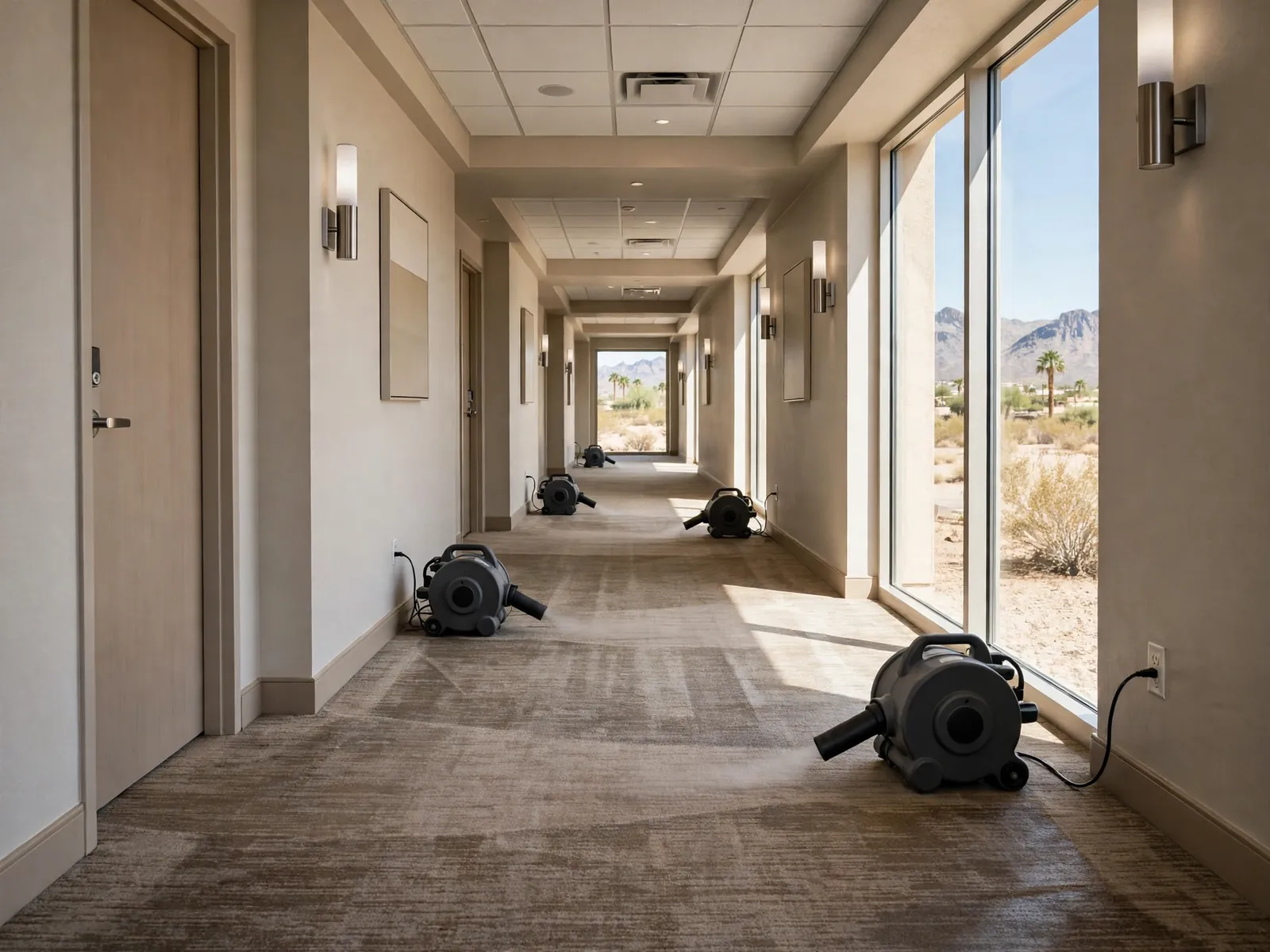
Drying equipment runs for days, and it is loud — air movers and dehumidifiers are not quiet machines. In a hotel that means placing equipment where it dries the structure without sitting next to a guest room that is still occupied, or scheduling the loudest work for the hours when the affected rooms are empty. The drying does not stop for check-in time, but the placement can be planned around it.
Keep the reopening record with the claim: the photos from the day the water was found, the moisture readings from the start, the written scope of what was done, and the readings when each room reopened. A hotel or restaurant claim involves the rooms that closed and the nights or services that were lost, and that record is built on dates and readings.
Documentation for restaurants and hotels
Documentation in hospitality serves two claims at once: the building claim and the business claim. The building claim needs the photos, the moisture readings, and the written scope — what was wet, what was done, which materials were removed, and what the readings were when the job finished. The business claim needs the dates: which rooms or tables closed, for how long, and when each one reopened.
Photos come first and fast: the water, the source if it can be seen, every room it reached, and the condition of flooring, walls, equipment, and stock. Take them before anything is moved or dried, because the water level and the spread are the facts that disappear first. In a kitchen, photograph the equipment and the floor; in a guest room, photograph the ceiling and the carpet; in a dining room, photograph the tables and the floor beneath them.
The moisture readings are the second record. The crew writes down what was wet at the start, what the drying plan covers, and what the readings were when the job finished. In a hotel the readings should cover both the room with the stain and the room above it, so that neither side has to guess whether the structure between them is dry.
Sudden, accidental water damage from inside the building is often covered by a standard commercial policy, while flooding from outside usually needs a separate flood policy. Which policy answers depends on where the water started — another reason the source matters, and why it is written down on the day of the leak, not reconstructed a month later.
Services used most
Sewage Cleanup · Emergency Water Extraction · Water Damage Restoration
Where we work
Related guides
Related problems
Frequently asked questions
Questions people ask about water damage in restaurants and hospitality, answered plainly.
Shut off the supply if it is safe to do so, move what can be moved off the wet floor, stay away from wet outlets and switches, and call. The kitchen stays closed until the water is out and the floor is checked — a wet kitchen floor is a slip hazard and a contamination risk, and service does not resume over it.
Yes. Sewage water is treated as contaminated water throughout, and the cleanup involves removing contaminated materials, not only drying them. In a restaurant it is also a food safety problem: food and surfaces that touched sewage water are handled as contaminated. Keep people away from it, do not run taps or flush, and call for help rather than cleaning it with household tools.
The guest is moved, the room above is checked first — the source is usually a supply hose, toilet valve, or shower drain upstairs — and the ceiling below is dried only once the flow has stopped. A ceiling that sags or bulges is holding water: stay out from under it and call. The room stays closed until the moisture readings show the ceiling and the floor are dry.
When the moisture readings show the affected areas are dry, the floor is clean and dry, the drains run, and any equipment that got wet has been checked. The floor can look dry while the subfloor underneath is still wet, so the readings decide the reopening — not the look of the surface.
Kitchen drain lines narrowed by grease, dishwasher drain hoses, ice machine supply lines, guest-room supply hoses and toilet valves upstairs, and flat-roof leaks during monsoon bursts. Scottsdale resort properties add rooftop pool equipment; Tempe and Mill Avenue restaurants add older lines in busy dining buildings.
Usually, yes. A leak in one guest room sends water through the floor into the room below, and a burst riser can affect several rooms on several floors. The drying plan covers both the room with the stain and the room above it, so the structure between them is checked as well.
Photos of the water, the source if it can be seen, and every room it reached — taken before anything is moved or dried. Then the moisture readings from the start, the written scope of what was done, the readings when each room reopened, and the dates each room was closed. That record serves both the building claim and the business claim.
Often, yes. The wet rooms are closed and isolated while the rest of the hotel keeps operating, and drying equipment is placed to keep hallways passable. The loudest work is scheduled for the hours when the affected rooms are empty. Guests are moved out of wet rooms, not kept next to the work.
Look behind the ice machine and under the dish station every month — slow drips hide there for weeks. Keep drain lines clear of grease buildup, check dishwasher and sink supply hoses for stiffness or cracking, and know where the kitchen shutoff is. A floor drain that drains slowly on a quiet day will back up on a busy night.
Water damage in your Phoenix home or business?
Call Now to reach a local water damage professional. Describe the water, where it is, and what it has touched.
Call now for water damage help
Tap Call Now to reach a local water damage professional. Tell them where the water is, what it has touched, and whether it is still coming in.
Hours: Mon–Fri 7:00 AM–10:00 PM ET · Sat 8:00 AM–10:00 PM ET · Sun 7:00 AM–9:00 PM ET
Before you call
- Shut off the main water supply if it is safe to do so.
- Move valuables, rugs and electronics off wet floors.
- Take photos of the water and the damage for your records.
- Stay away from wet outlets, switches and light fixtures.
- Note when the water started and what caused it, if you know.